




創業からの10年。その先へ。ASNOVA Companiesが描く次の成長戦略
- レンタル事業
- 持株会社
- 新規上場




PROFESSIONAL
Text: Sayaka Mitsuda
Photo: Sho Kobayashi


PROIFILE





ASNOVA has reached 3,500 contractors. Behind these numbers is the trust that our seniors have built up and the efforts of each and every one of us who are struggling in the field right now.
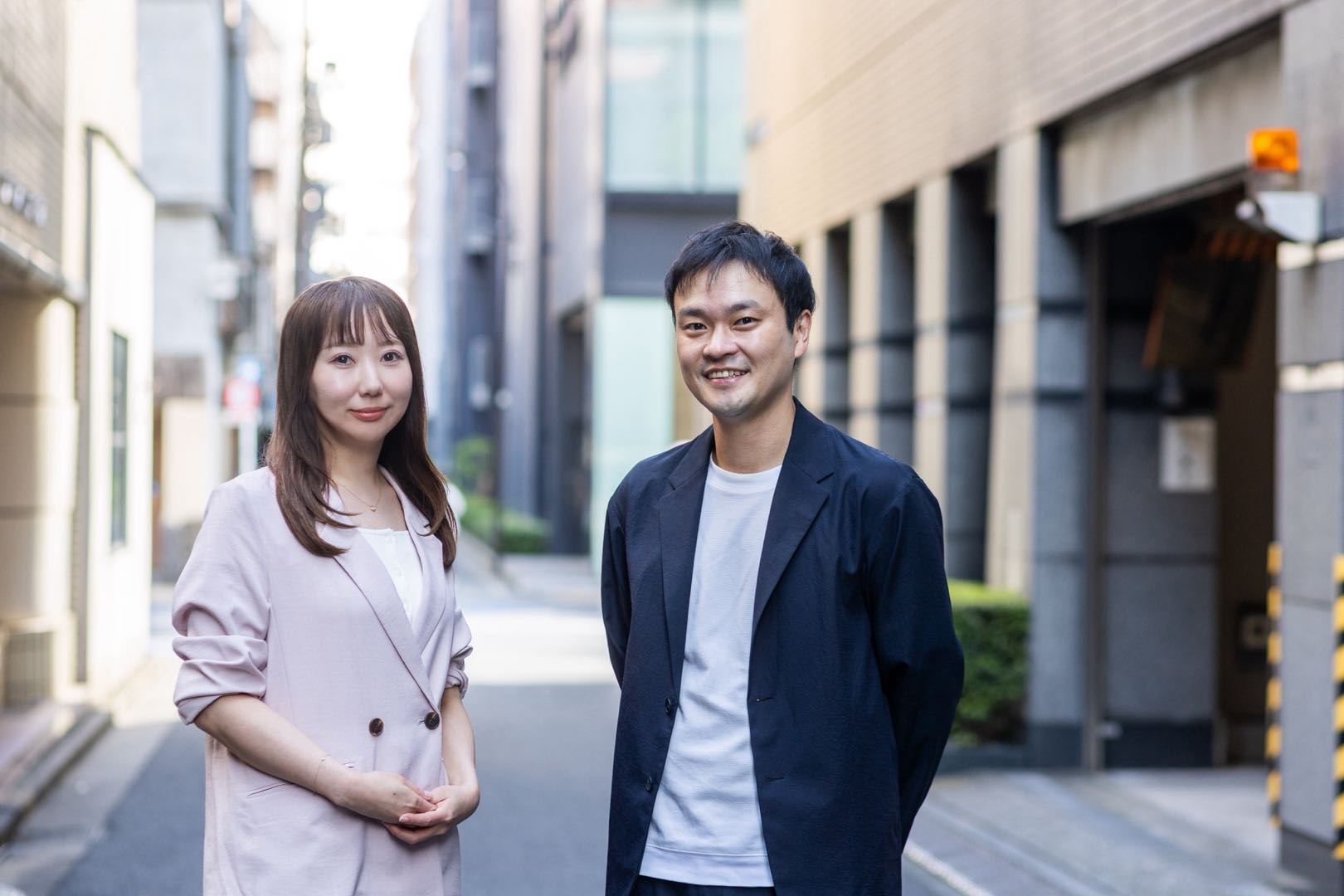
This time, we interviewed young female employees who are active in such a momentum Sales Department, Osaka Sales Office Sakura Suzuki and Tokyo Sales Office Juri Watanabe. He talked about his real feelings of continuing to grow and challenge while struggling every day.
Text: Sayaka Mitsuda
Photo: Sho Kobayashi

PROFILE
Suzuki: I have always liked talking to people and was interested in a sales job. My brother is in the painting business, so I had a sense of familiarity with construction-related work, so I applied for ASNOVA. The final deciding factor was the interview. The atmosphere at Sales Manager, Senior Manager, and General Manager was very good, and I thought, "I would be happy if I could work with these people." Actually, I was a kindergarten teacher at my previous job, so I tried changing jobs to a different industry with no experience!

Watanabe: In my previous job, I began to feel that there were issues with the way of working, and I thought about changing jobs because I wanted to work in an environment where I could stay for a long time. I like interacting with people, so I wanted to try a sales position, and I thought about changing jobs at the time when I was a second-year graduate. My previous job was in an all-female workplace, so I decided to change my environment drastically and narrowed my search to sales positions in the construction industry.
Among them, ASNOVA was very attractive because it allowed me to take on challenges even if I had no experience, had a lot of time off, and had bonuses. But the most decisive factor is the interview for me. During the interview, the atmosphere of the Sales Manager and Supervisor people was very good, and we talked for two hours. In the midst of this, being able to naturally imagine myself working here gave me a boost.
Before joining the company, I had the image that "construction workers are a bit difficult to deal with," but in reality, it's completely different; everyone is very friendly and approachable. Also, when I heard about female sales positions, I imagined someone wearing a suit and pumps, with a very formal demeanor, but in reality, it's a job where people are much closer to each other and you can have natural conversations. That was a really pleasant surprise.

Suzuki: Even in sales, I imagined a job where I "sold things" like a sales job. So at first, I thought it was a new sales job, saying, "Please borrow a scaffolding." But in reality, it was a job to listen carefully to what needs existing customers had and where they were having trouble in addition to new sales, and to be close to the situation. I learned that it is important to explore issues together and build a long-term relationship that can be trusted, and I felt that it is a "close-knit sales".
Suzuki: After joining the company, I was taught the basics of the scaffolding business, the rental mechanism, the names of the equipment, and how to use it. On top of that, I accompanied my seniors to business negotiations and learned "what kind of proposals they are making" and "where they are looking" in the actual field. It was important that I was not only able to learn, but also to be involved with the stance of "let's try it together first." I joined the company in May and have been in charge of customers since October, so I gained experience while accompanying my seniors for about 5 months.

Watanabe: Since I had very little experience as a working adult, I was taught the very basics of being a working professional, such as how to exchange business cards and how to interact with customers.
Everyone at Tokyo Sales Office was very kind and I was grateful that they taught me carefully one by one. At first, I was just like Mr. Suzuki, and I was desperate just to remember the names of the equipment, and since different customers called the equipment differently, I learned through interactions with customers each time. There are still many things I don't understand, so I feel like I'm studying every day.
Suzuki: When I was able to listen to the customer's needs and handle everything from ordering to receiving the order all by myself, I was of course happy, but even more than that, I felt a great sense of relief that I had "done it properly" and "finished it successfully."
The construction industry is male-dominated, so sometimes customers would express concern, wondering, "Is it really okay to have a female salesperson?" The fact that they chose me and entrusted me with handling their inquiries truly boosted my confidence.
Also, it was a great support to hear my seniors say, "It's okay to make mistakes." They encouraged me to think for myself and take action, telling me that even if it was a failure, it would still be a valuable experience. When I secured my first order, they said, "You did a great job!" and I felt that it was a very warm and supportive workplace.
Watanabe: I was very reassured that Sales Manager told me, "I will take responsibility no matter what." I think it's the same not only for Tokyo Sales Office, but also for other Sales Office, and I have a sense of security that Sales Manager protects me. Of course, they don't do everything, but they let me do what I want, and on top of that, I have a sense of security that supports me when something happens. That's why I think that's why I can take the plunge.
Also, there was a time when I was so busy that I missed lunchtime, and everyone waited for me to eat, saying things like, "It tastes better when we eat together," and "Let's go to lunch together." Those little acts of kindness made me so happy.

Suzuki: What I focus on most is finding the "unspoken problems" of our customers. Instead of just lending out what they ask for, I try to ask them "what kind of work site they'll be using it in" and "what the situation is," and then I think about whether there's anything I can suggest myself, such as "do you need this part?" or "this might be more appropriate." Sometimes they actually say, "Oh yeah, we were missing that! Maybe I should ask you to do it," so I want to continue doing this consciously.
Watanabe: There is a word that I always try to say in conversations with customers. It is a word such as "We also sell, so please call out to us if you have anything" and "If there are customers looking for scaffolding, please introduce them."
I think ASNOVA has a strong impression of being a scaffolding rental company, so I think it is necessary to convey that we are also selling and that there is anything we can do to help other customers. While taking advantage of the frankness unique to women, I am conscious of not being taken seriously by conveying it brightly from the flow of small talk.
Suzuki: I feel every day that this job can't be done with just a love of talking to people. I'm always worried that my lack of knowledge might cause trouble for both the company and our customers.
That's why I make sure to think things through on my own when necessary, and I value being honest and asking questions when I don't understand something. My boss also taught me that "pretending to know everything is the worst thing you can do." As I grow step by step in this way, it makes me really happy when customers say "thank you" or "you were a great help," and it gives me a great sense of fulfillment.

Watanabe: Whenever I can meet a customer's needs, I always feel a sense of accomplishment. On the other hand, sales is a job that involves standing between the customer and the company, so there are many times when I feel like I'm caught in the middle. Of course, I want to prioritize the customer, but I also want to cherish the relationships within the company. When I can successfully balance both and get it done, I think, "It was all worth it." The moment I feel like I've become a "bridge" connecting the customer and the company is what makes this job rewarding.
Suzuki: I've received orders from clients who also deal with other companies, citing reasons like "the response was quick" and "the service was courteous." I was truly happy that they appreciated the interaction itself, rather than the price or delivery time.
What I focused on at that time was the speed of my response. Construction sites often have tight deadlines, so even a one-day delay in responding can halt the progress of the entire project. That's why I make it a point to respond immediately when a project comes in! I not only send emails, but also explain things properly over the phone. I think that accumulation of effort has led to my positive evaluation.
Watanabe: I had a client that I inherited from a senior colleague. They didn't rent much, and they didn't have any sales record. At the end of last year, when I was a little short of my sales budget, I asked them, not expecting much, "Is there anything you're missing?" and they said, "You're always working so hard, I'll support you," and they ended up purchasing more than my budget. They really helped me out at that time, and it made me think, "I want to give back to many more people besides this client."
When I first took over, I wasn't confident I could explain the work properly, so I started by getting to know them, including talking about personal things. I think that gradually leading to discussions about work from there helped build trust.

Suzuki: I was honestly surprised. I think that behind this number there are 3,500 different ways of thinking and doing things, and 3,500 different relationships. I want to do my best so as not to break the customer relationships that my predecessors have carefully cultivated over time, and so that we can add another company to our network.
Watanabe: To be honest, I didn't expect it to be this many. In actual work, even when we receive inquiries, there are many cases where it doesn't lead to a contract and ends with just the initial contact. The fact that we have contracts with 3,500 companies is truly proof of the trust that our predecessors have built. I feel that behind this number there are many more companies with whom we have made contact and built relationships, and that the trust built through those interactions is what has led to this number of "3,500".
Suzuki: I think their quick response time and flexible approach are major advantages. For example, even if they don't have stock in the Kansai region, they can sometimes send items from other areas to fulfill the order. They don't just say, "We can't do it because we don't have stock," but instead try to find a way to help.
Furthermore, I believe that the speed and accuracy of the daily inspections conducted by everyone at the center contribute greatly to building trust. I feel that these figures are achieved through the collaboration of various departments.

Watanabe: I think it's a big plus that the equipment is clean and of high quality, and that the center staff can respond to urgent orders on the same day. Furthermore, I feel that having centers all over the country to handle requests is one of ASNOVA's strengths.
scaffolding is an important part of the construction process, so it is most important to be able to leave it to you with peace of mind. I think that it is precisely because of the security that our seniors have built up that sense of security that many customers have chosen us.
Suzuki: I want to be someone that people say, "I want to entrust this to you because it's you," not because "you're a woman." To achieve that, I still need a lot more knowledge and experience, and I want to become someone who can think one step ahead of the customer.
And I want to be like a role model who will make me think, "I want to be like this" when a junior girl comes in someday. I would like to contribute to the creation of a company that not only within the construction industry but also outside the industry will think, "scaffolding is ASNOVA."
Watanabe: I want to be someone that both customers and colleagues can trust and rely on. As a salesperson, it's important to pursue numbers, of course, but I also want to value the process and actions that lead up to those numbers. I aim to be a salesperson who works closely with customers, responds quickly, and makes them think, "I want to entrust this to Watanabe," or "If I contact Watanabe, I can't go wrong."

INDEX