




"Cherishing the products and the people behind them." ASNOVA and Enkuru share their thoughts on shareholder benefits.
- monotomoi
- Enkul
- Social Good
- Shareholder benefits




RECRUIT
Text: Sayaka Mitsuda
Photo: Sho Kobayashi


PROIFILE




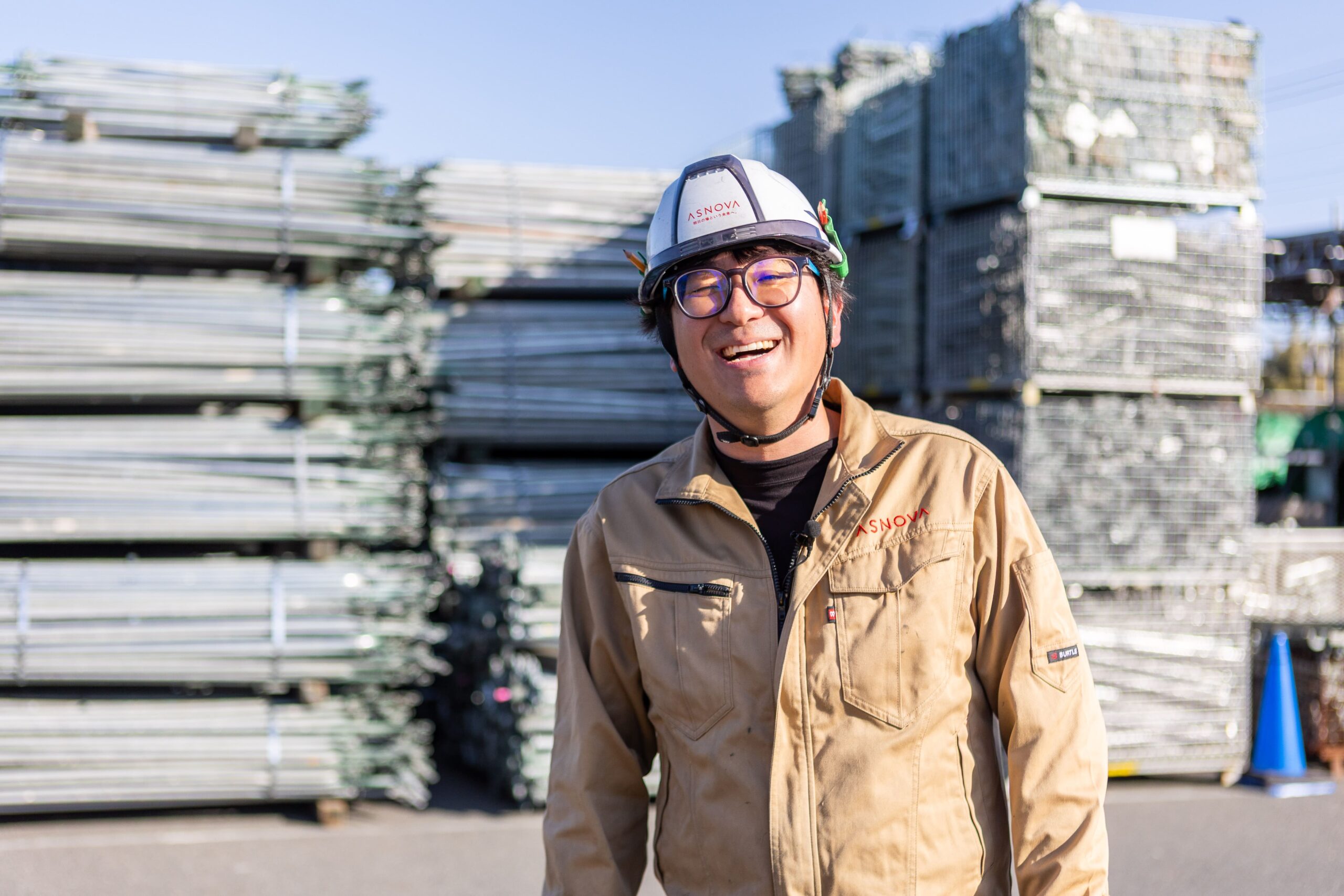
In his previous job, he worked as a forklift operator, handling home appliances and food. I jumped into the world of scaffolding materials with no experience, and as I gained experience in Chiba Noda Center, I was promoted to Center Manager deputy. The foundation of this is ASNOVA's corporate culture, which does not judge based solely on age or experience, but rather gives opportunities by looking at daily attitudes and actions. This time, through the journey of Chiba Noda Center Center Manager deputy Yuto Tachibana, we will tell you how to create a workplace that encourages challenges.
Text: Sayaka Mitsuda
Photo: Sho Kobayashi

PROFILE
In my previous job, I worked as a forklift operator, handling home appliances and food. Basically, it was pallet management, so I wanted to handle something different from what I had done before. When I was looking at job openings in such a situation, I first became interested in it when I learned that it was a job that dealt with "scaffolding materials" that I had never encountered before. I had no experience in the rental industry, so I was attracted to entering a new world.
In addition, the working hours and holidays suited my lifestyle, which was a major reason why I decided to join the company. I felt that I could utilize my past experience while also challenging myself with new things, and that I could also value my time outside of work, so I decided to join ASNOVA.
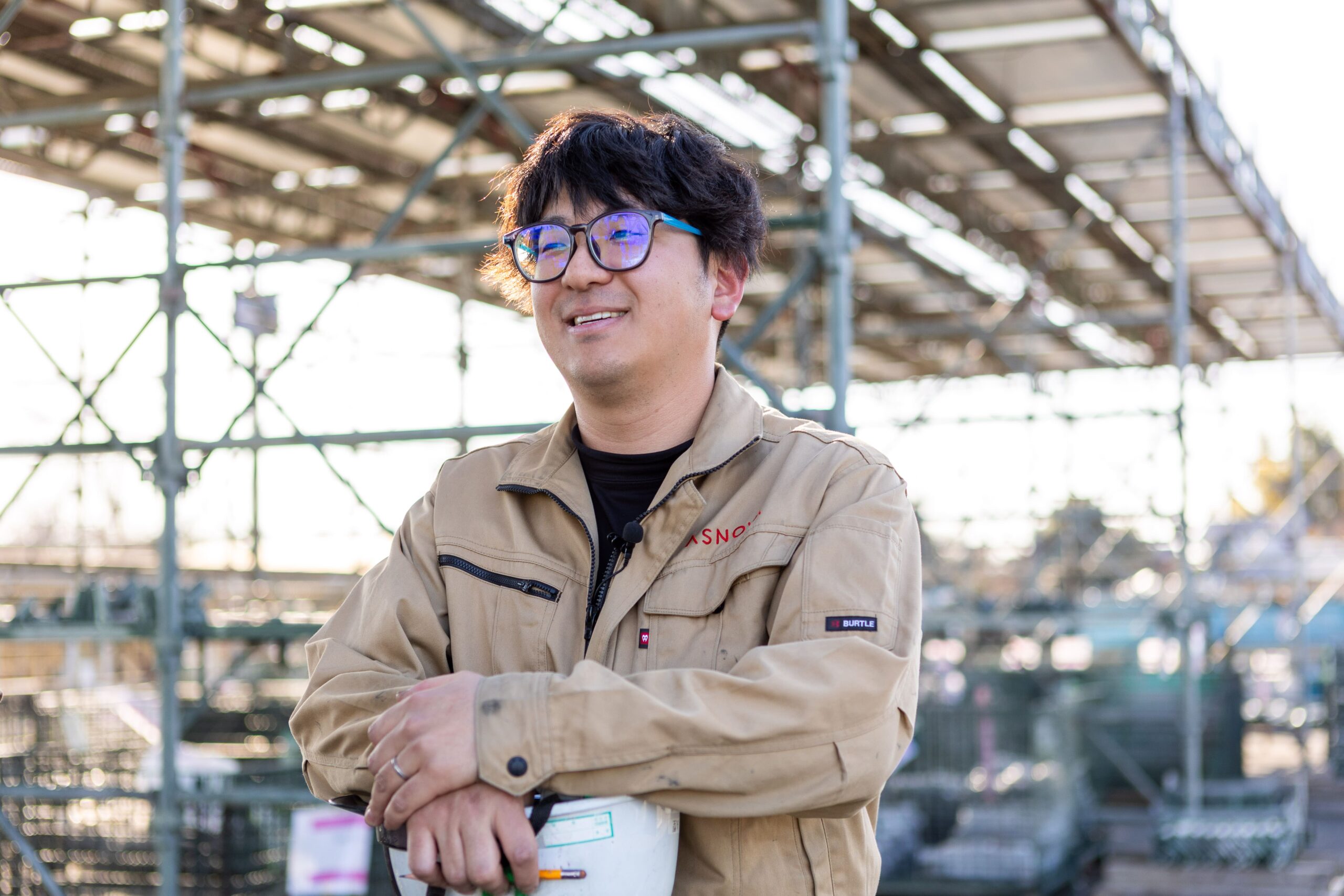
At my previous workplace, I often had to work overtime, which inevitably caused me to lose focus. However, at ASNOVA, I feel that there is a strong emphasis on working efficiently and with full concentration within a set time frame. Working long hours without a clear purpose, rather than giving my all within a limited time, suits me very well.
I can now take proper days off, which means I have more time for my hobbies and more time to spend with my family. Before, I was always too tired even on my days off, so we couldn't go out together often. This has been a big change not only for me but also for my family.
To be honest, I was confused at first. scaffolding It was my first time working with the material itself, and the forklift claws were 2 meters wide and long, which was completely different from what I had handled before. It was difficult to grasp the sense of depth, and at first I was very worried about whether I could do it properly.
However, my predecessor, Mr. Nishino, and Mr. Fukano, who was a Center Manager Area Manager, taught me really carefully and the atmosphere was very good, so I was able to ask questions casually without leaving anything I didn't understand. They said, "It's okay to make mistakes, so keep trying," and I think that led to the speed at which I got used to it.
I made sure to create flowcharts of what I was taught so that I wouldn't have to ask the same questions over and over again. I organized them in a way that I could easily review later, and gradually got used to them while devising my own methods for memorization.
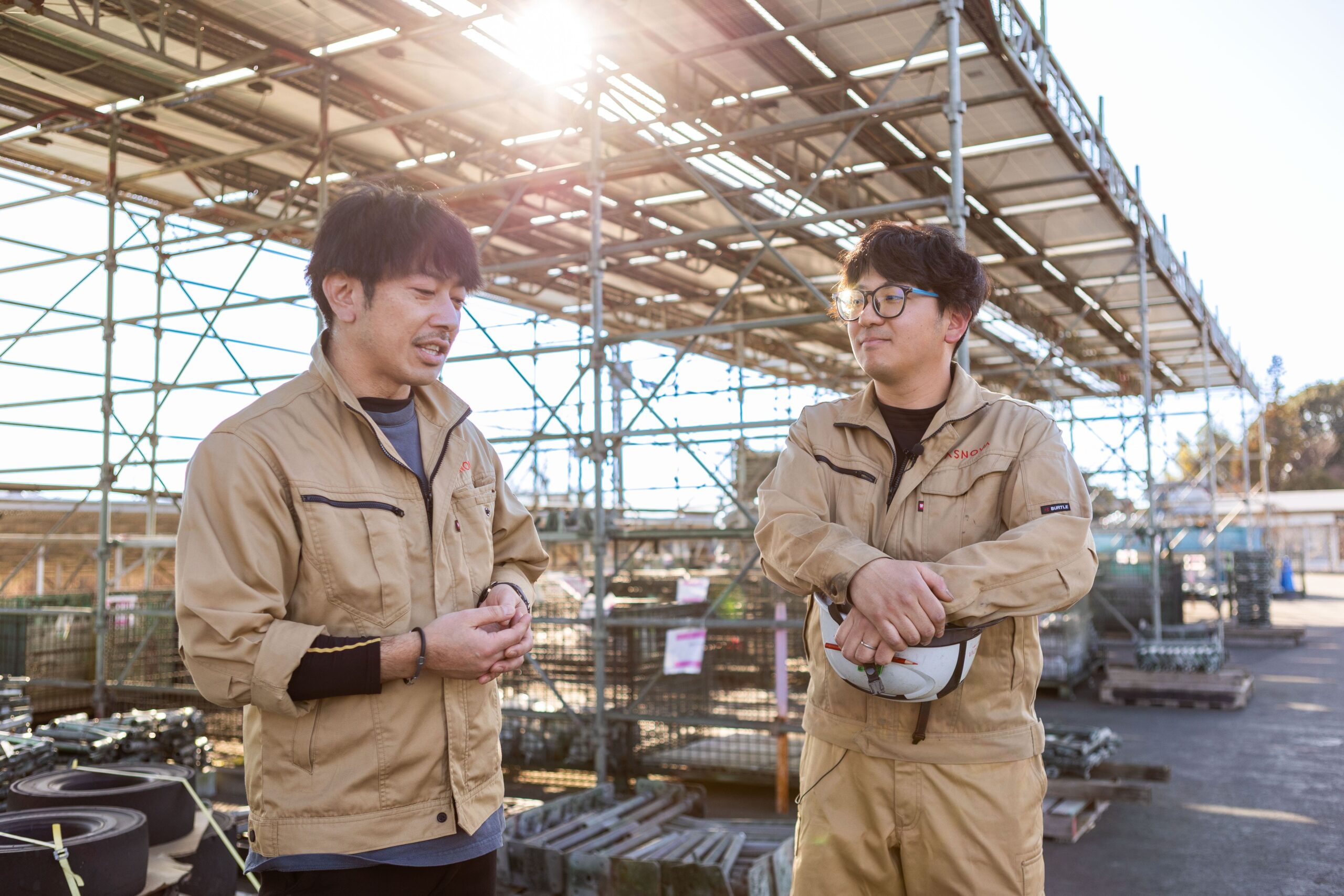
At first, there was a lot of pressure. I was originally nervous, and my predecessor, Center Manager Nishino, was running a very complete center, so I was worried about whether I could do the same.
However, Area Manager Fukano and my colleagues at the center noticed my anxiety and said, "If you have any questions, please come and talk to me." I was very supported by those words, and it was very important that I felt that I didn't have to carry everything on my own.
I'm the type of person who works quietly and diligently, but in addition to reliably completing the tasks assigned to me, I made it a point to voice any ideas I had, such as "Wouldn't it be better if we did this in the yard?" or "Wouldn't it be easier for everyone to work if we had something like this?"
Rather than consciously appealing, it feels like I was doing it naturally when I realized it. I would be very happy if you had appreciated such a thing, and I think that accumulation of such things led to the call for Center Manager deputy.
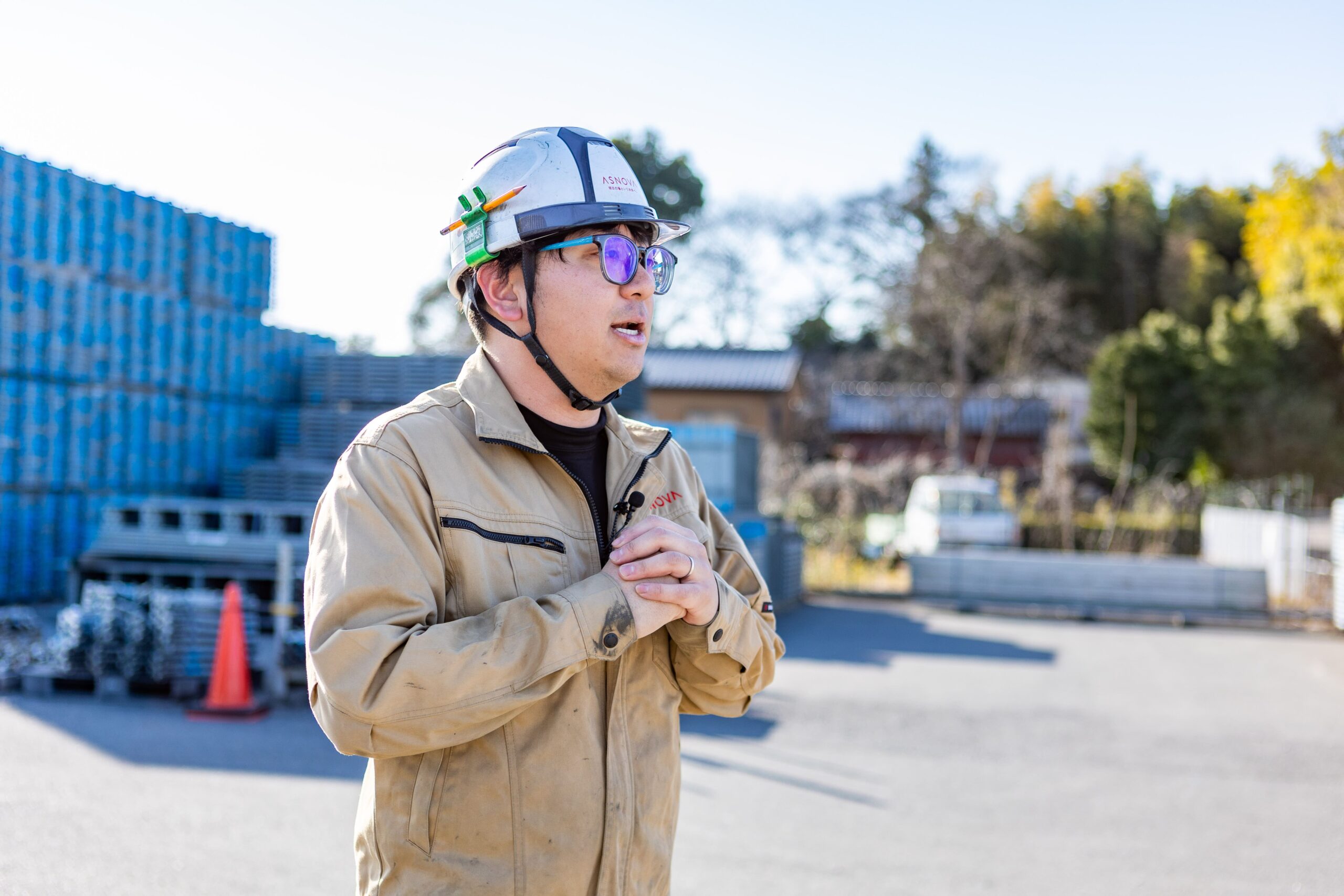
I think the biggest change is my "perspective on people." With new employees joining my team, and then temporary staff joining as well, I can no longer just focus on my own work as before. I've started thinking about how to ensure everyone can work without stress and grow properly, what kind of encouragement is necessary, and how to teach in a way that is effective.
It's challenging, but I believe it's important to focus on "how to guide" rather than simply scolding, as I've been taught myself. I think that's what it means to be in a leadership position.
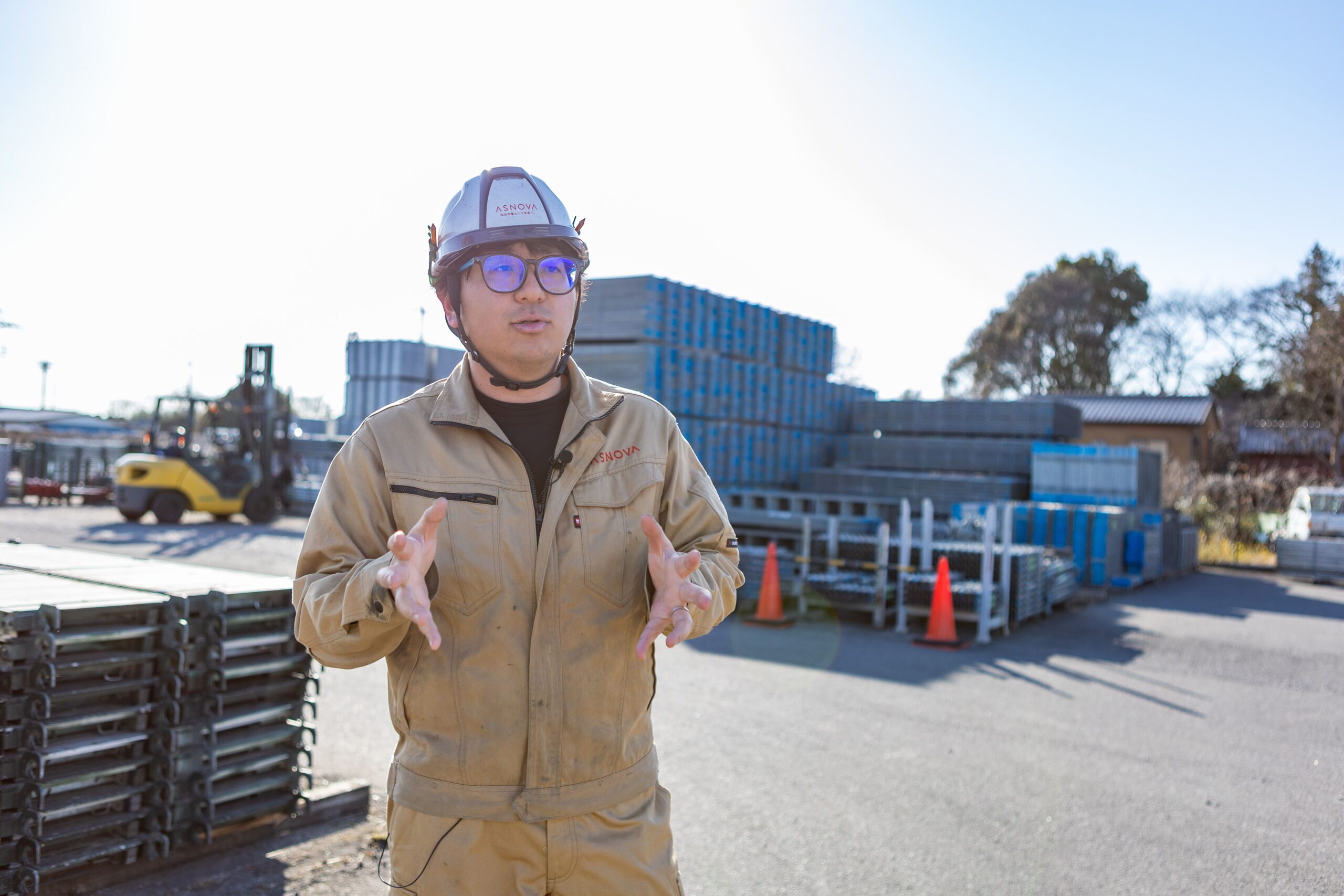
What we value most is maintaining quality. Of course, speed is important in any job, but even more important is carefully ensuring that no damaged items are included in the parts we lend to the next customer, and that there are no discrepancies during inspection and inventory. We believe that this accumulation of careful work will lead to customers thinking, "I want to rent from ASNOVA again."
When interacting with people, I make a point of not starting with negativity. When someone asks a question or gives an opinion, if the first thing you say is "no" or "that's not it," I think that alone makes it difficult for the other person to continue talking. ASNOVA has an initiative called "MOKKEI (In-house Mokkei Meeting)," where we learn "focusing on the positive," so I consciously try to focus on the good points. I try to acknowledge their point of view by saying things like, "That's good," or "That's certainly one way of looking at it," and then I add, "I think it could be even better if I did it this way."
First and foremost, we're looking for someone who is serious about their work. Beyond that, we believe that those who don't hold back because they lack experience, but instead step forward and express their opinions, will thrive at ASNOVA. ASNOVA provides an environment where every opinion is valued and listened to carefully. The more opinions are shared through daily communication, the more new insights for efficiency improvements and innovations that make work easier will emerge.
I believe that as we increase the number of such individuals, each person will be able to act proactively and share their opinions, and the company will become a stronger organization where everyone can see the same direction. If this kind of environment continues, ASNOVA should be able to grow even more.
INDEX