




Ten years since its founding. Looking ahead. ASNOVA Companies' next growth strategy.
- Rental business
- Holding company
- New listing



PROFESSIONAL
Text: Sayaka Mitsuda
Photo: Sho Kobayashi


PROIFILE




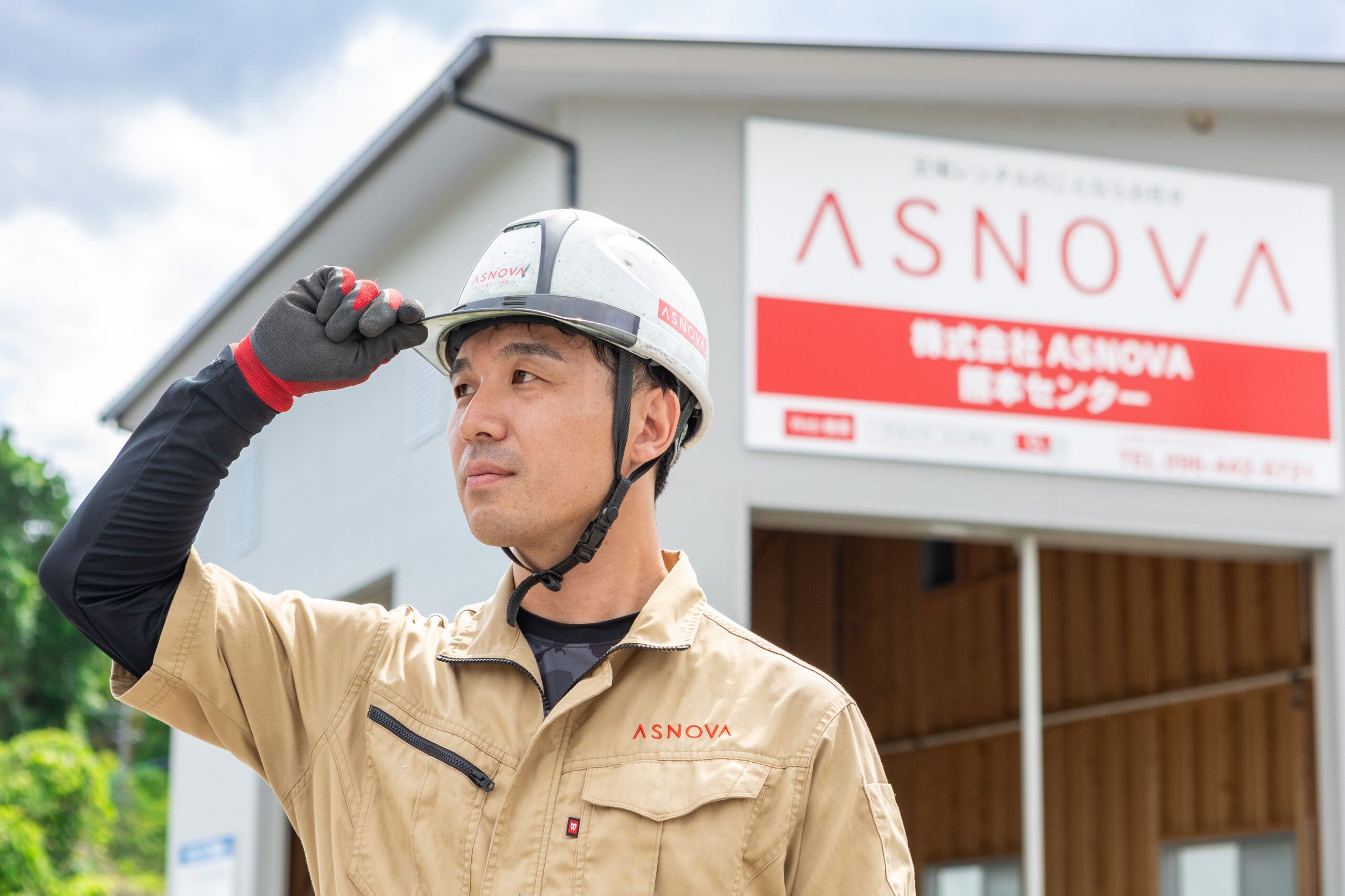
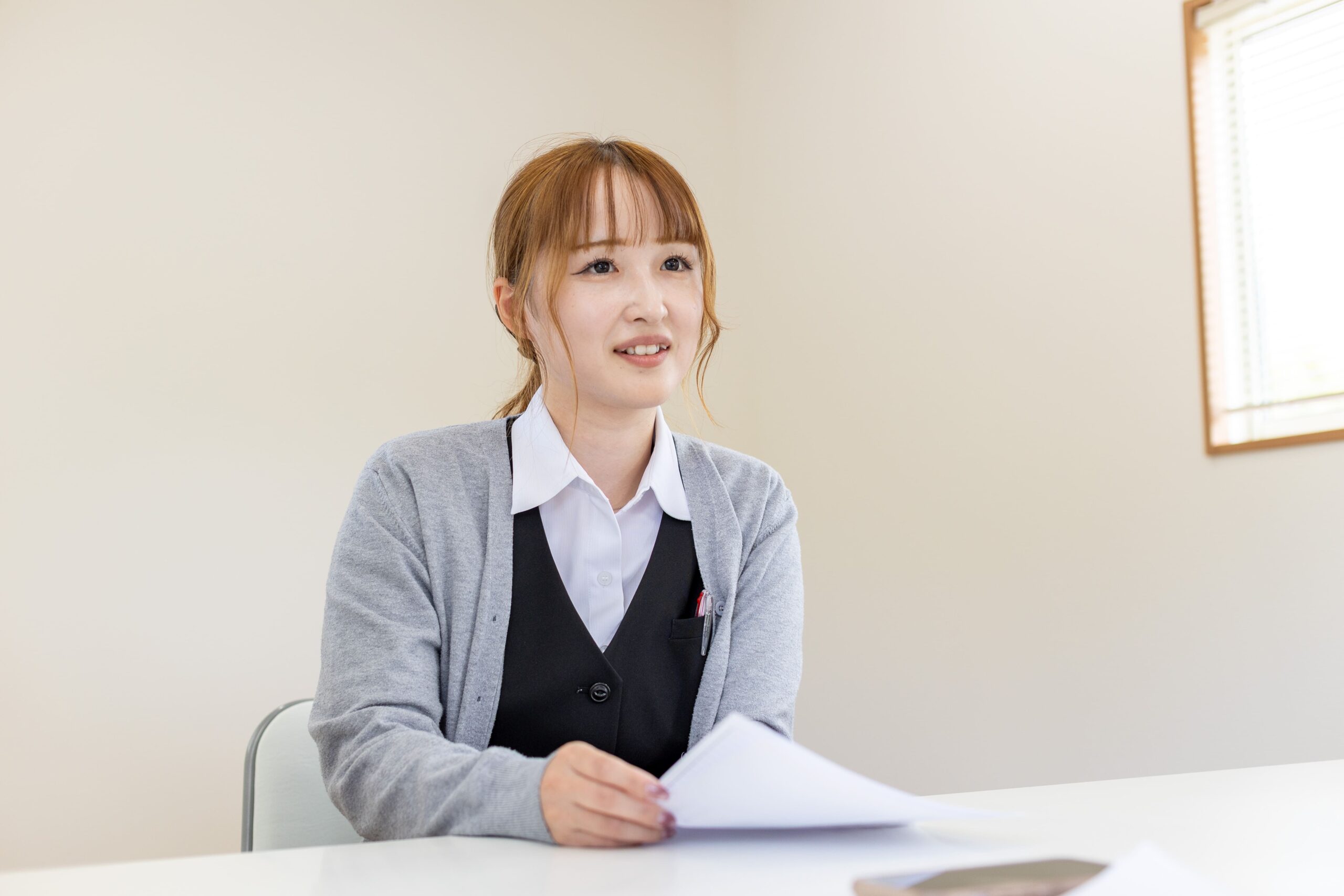
Shunsuke Yasuda from Kumamoto Center joined the company with no industry experience. At first, he had a preconceived notion that 'manual labor would be tough,' but after about a year and a half at the company, he has grown to the point where he can operate forklifts and handle scaffolding equipment rental and return operations alone.
We spoke carefully with Mr. Yasuda, who has been dedicated to supporting the field, about his honest feelings before joining, the daily job rewards, and what lies ahead.
Text: Sayaka Mitsuda
Photo: Sho Kobayashi

PROFILE
In my previous job, I was involved in maintenance and inspection of infrastructure facilities such as water distribution ponds and water treatment plants. I joined ASNOVA in January 2025 and have been working at Kumamoto Center since joining.
The trigger for changing jobs was the birth of my child. I started wanting to value time with my family and began exploring a way of working that prioritizes work-life balance. Of course, I was not dissatisfied with my previous workplace. However, since it was a job where you could be called up at any time, I wanted to work in an environment where there was little overtime and I could secure proper days off.
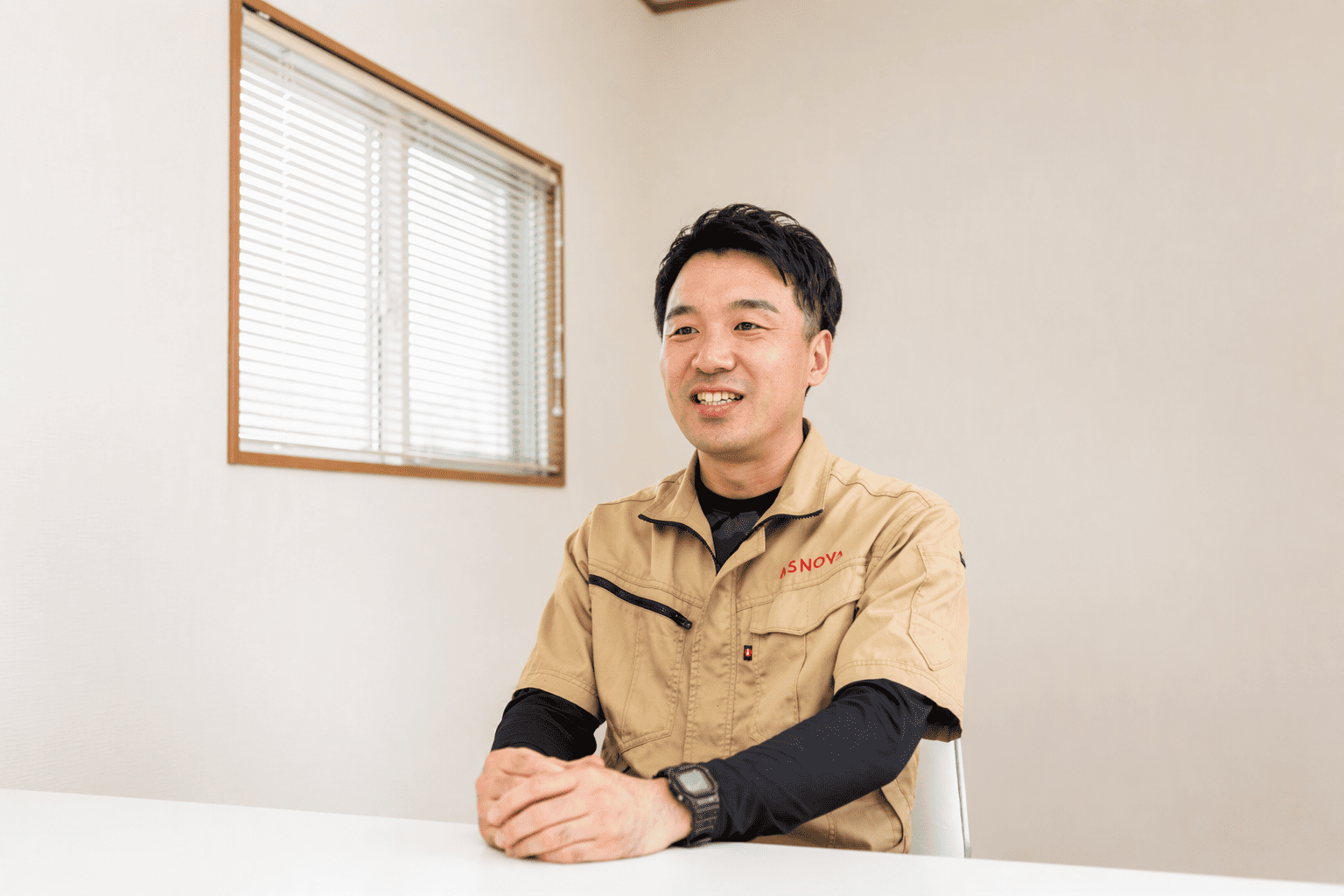
I actually visited several companies and listened to what they had to say. In terms of conditions, work-life balance was my top priority, but the deciding factor in the end was the feeling that "I could be myself here." It wasn't just the conditions; when I listened to them, I somehow felt like I could picture myself working there.
To be honest, I had the impression that it might be tough physical labor. I was used to moving my body in my previous job, so I didn't mind it, but I thought scaffolding materials were heavy and hard to handle, so I was worried if I could handle them. But in reality, equipment isn't carried by human power; it's operated by forklift, so I didn't feel like I needed to be so prepared.
Also, I had the impression that there were many intimidating-looking people, such as craftsmen and contractors. I'm not very good at talking to people, so I was worried about that aspect as well.
However, when I actually interacted with customers and business partners, I found that they were all very kind. Many of them were so polite that I felt embarrassed, and I was pleasantly surprised by the contrast.
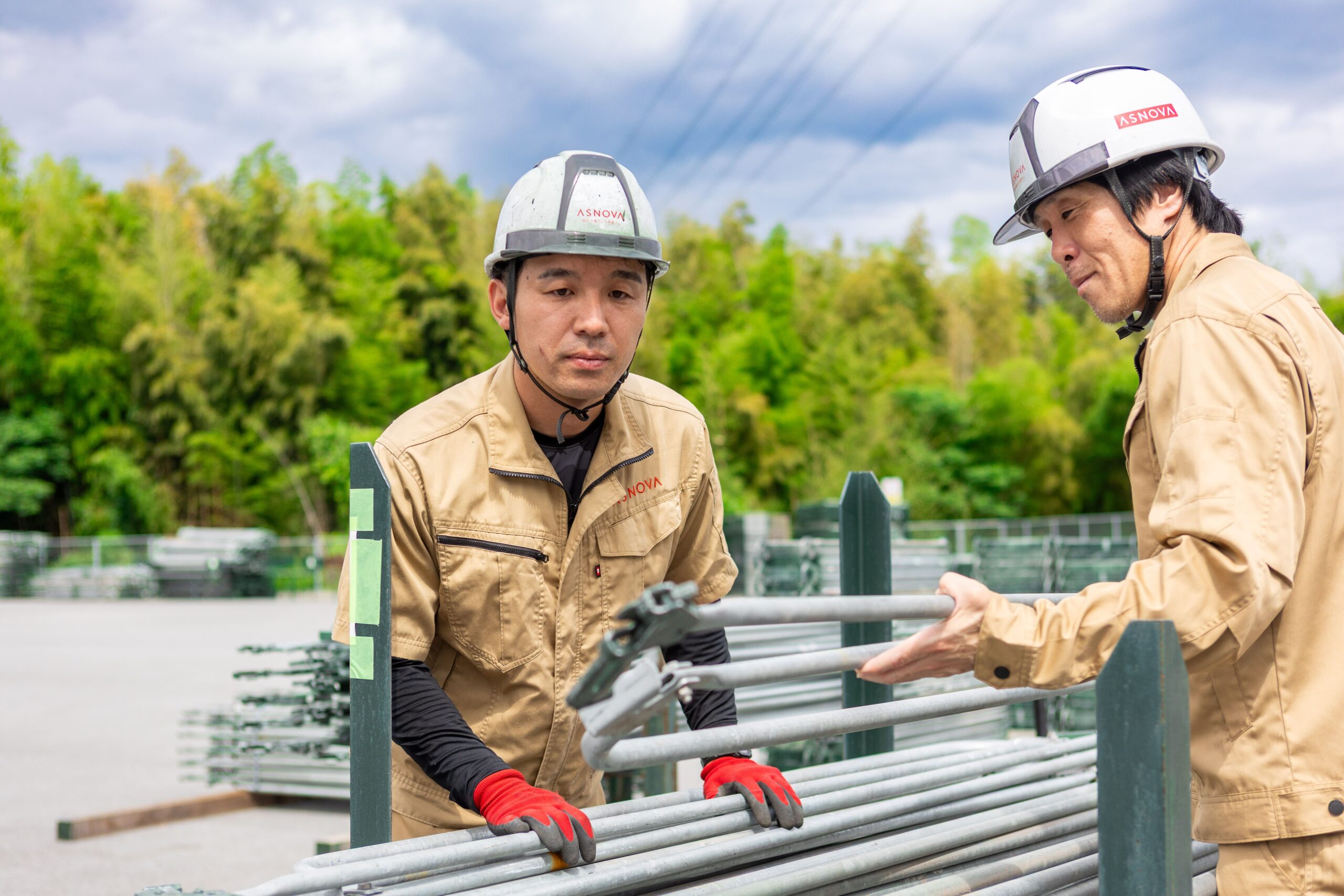
When I joined, the Kumamoto Center had just opened, so there weren't many customers yet, so things were relatively calm. At that time, Area Manager Hirata said, 'Why don't you go to the Saga Tosu Center next door to study?'
At Saga Tosu Center, truck loading and unloading were actively conducted, so I was able to learn the work by seeing the actual site. It continued for about two to three months by going on days when I said, "Today, the Kumamoto Center 's work is calm down," not every day. I think it was truly great to learn in person.
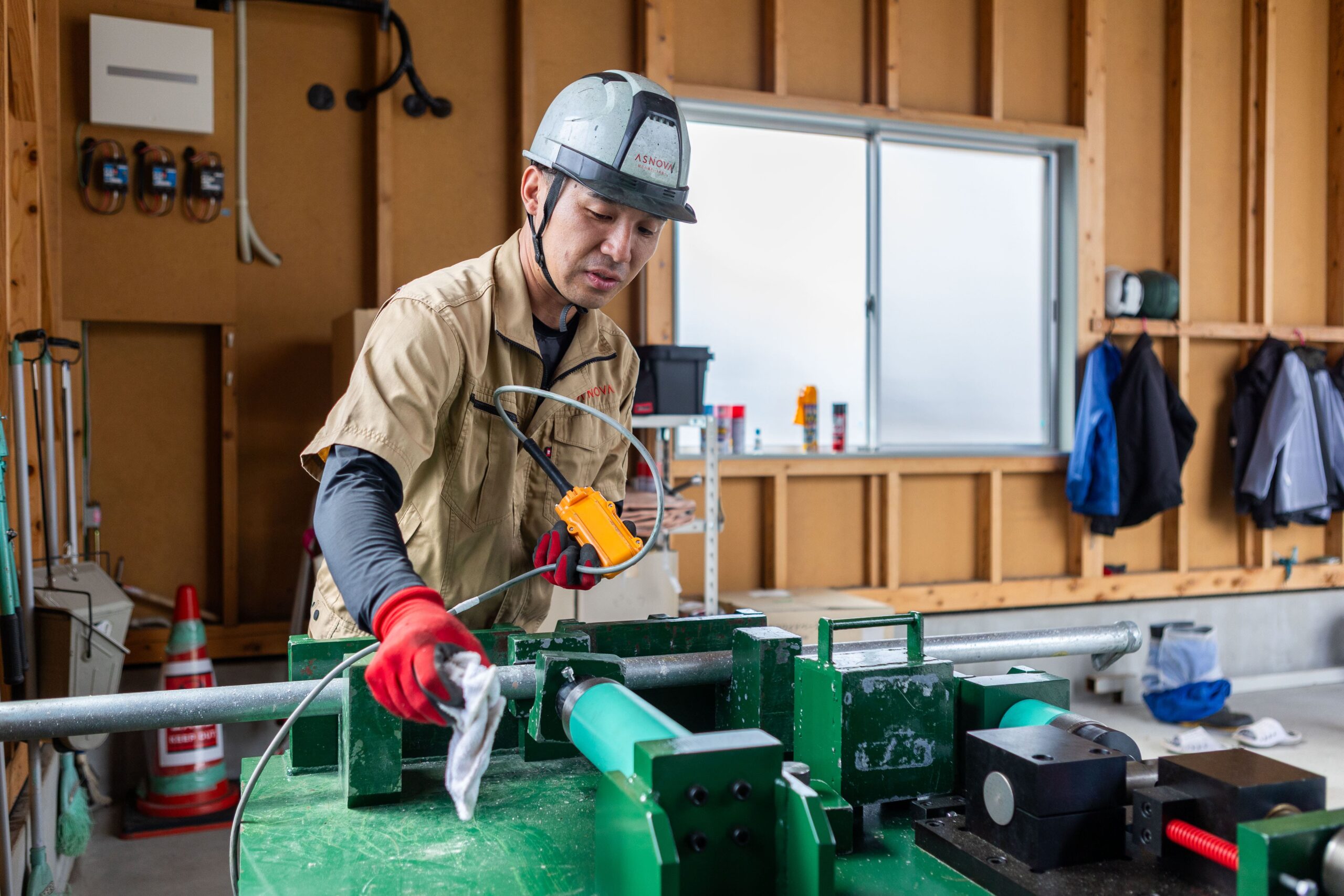
I also obtained a forklift license after joining the company. I started from scratch without ever handling the actual equipment and no license, but as I gained practical experience, I got used to operating it.
Mainly, scaffolding I am responsible for tasks related to the lending and return of equipment. In addition to loading and unloading onto trucks using forklifts, we also check the condition of the equipment while preparing for shipment.
Since I started this job, when I see scaffolding assembled at a construction site while walking around the neighborhood, I sometimes think, "The equipment I shipped is also being assembled and used somewhere in Japan." Although I am not directly on the site, in those moments, I can truly feel that my work is connected to some site, and it gives me a great sense of fulfillment.
First, I try to figure out why the mistake happened. I can identify the causes, such as "I should have done this" or "This is where I went wrong," and then I break them down and organize them so that I don't repeat them in similar situations next time. If it goes well, I learn from it, and even if it doesn't, I gain new insights from it. I make a conscious effort not to let failures end as just failures.
Area Manager Hirata also says, "What's happened is inevitable. It's important not to fail next time." Those words have become one of my guiding principles.
He's someone who knows everything. Not only about the yard, but even when Mr. Nishiguchi at the front desk asks questions, he answers almost everything. There's a sense of reassurance that with this person, things will work out.
For example, Area Manager Hirata quickly checked and fixed equipment that I couldn't solve even after about 20 minutes, and it was fixed in no time. I truly realized what it means to accumulate knowledge and experience.
However, there are parts where I tend to rely entirely on Area Manager Hirata, so I need to develop the ability to make decisions myself. When Area Manager Hirata is not around, I first discuss and decide with those around me, and now, more than a year after joining, I have gradually become able to judge whether something is appropriate.
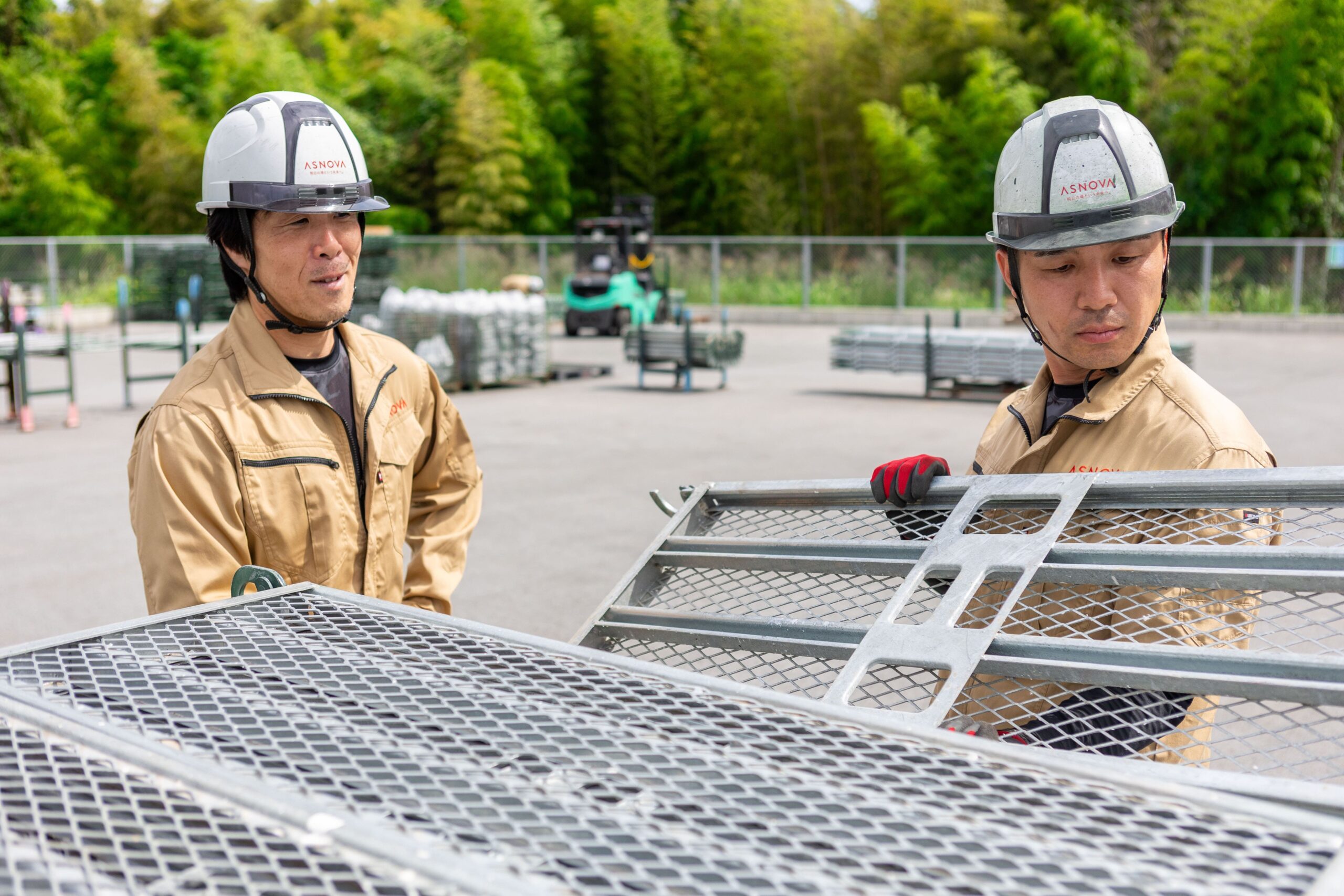
First, I want to further improve my forklift skills. I used to think, 'I'm getting pretty good at it,' but when I see Area Manager Hirata and the seniors operate them, both the speed and accuracy are completely different. I feel there's still someone above me, so I want to aim for that level.
Furthermore, I believe that in the future, I will also be in a position to mentor younger colleagues and subordinates. Even now, there are members who joined the company after me. When I think that "someone might be watching how I behave," I naturally want to be a senior colleague who can set a good example. I want to become someone who can properly pass on the experience and knowledge I have cultivated so far to the next generation.
INDEX