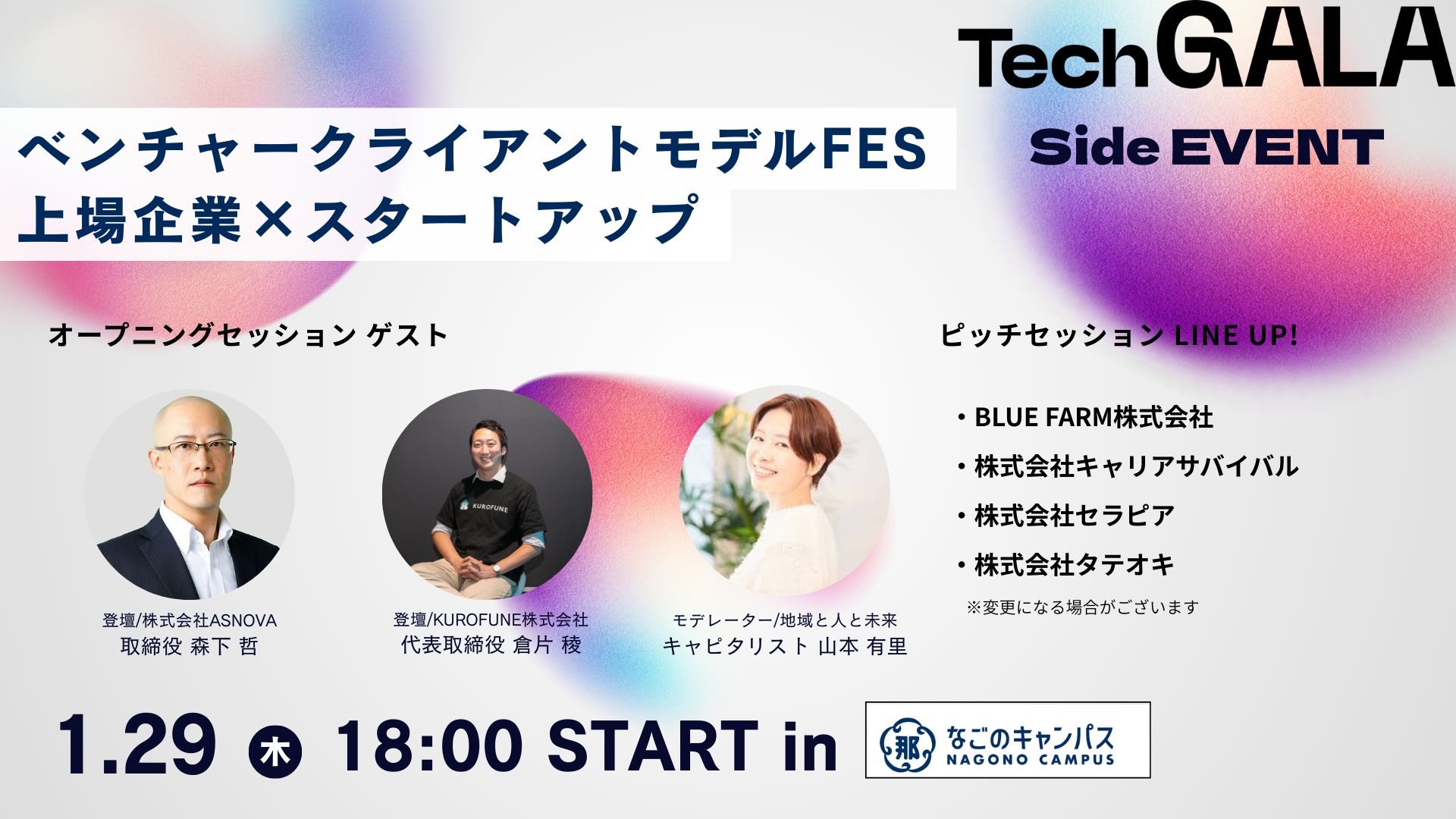





TechGALA Side Event Held! Expanding the "Related Population" through ASNOVA x KUROFUNE
- TechGALA
- event
- Nagoya Campus
- Venture Client Model
- Recruitment




SOCIETY
Text: Sayaka Mitsuda
Photo: Sho Kobayashi


PROIFILE




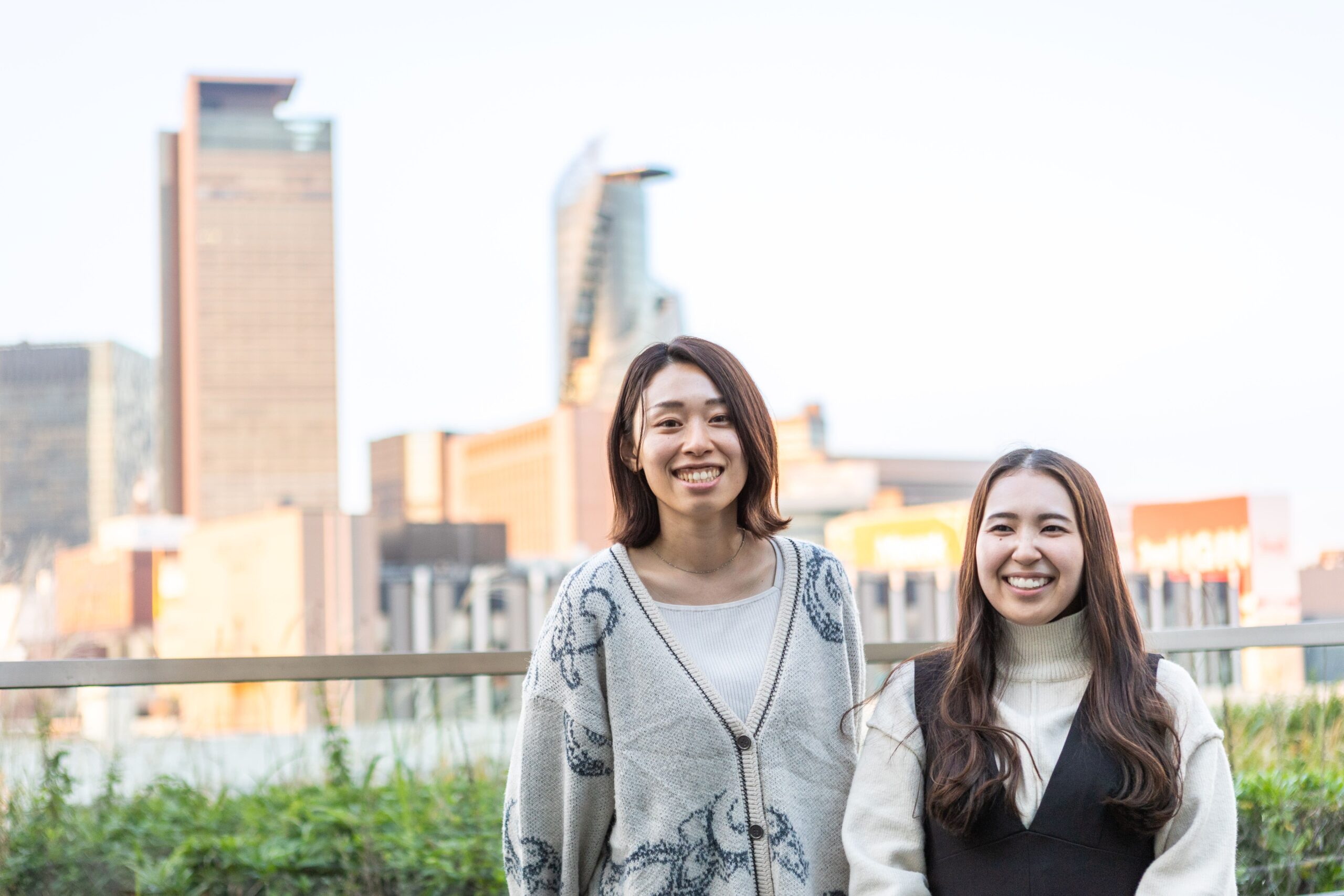
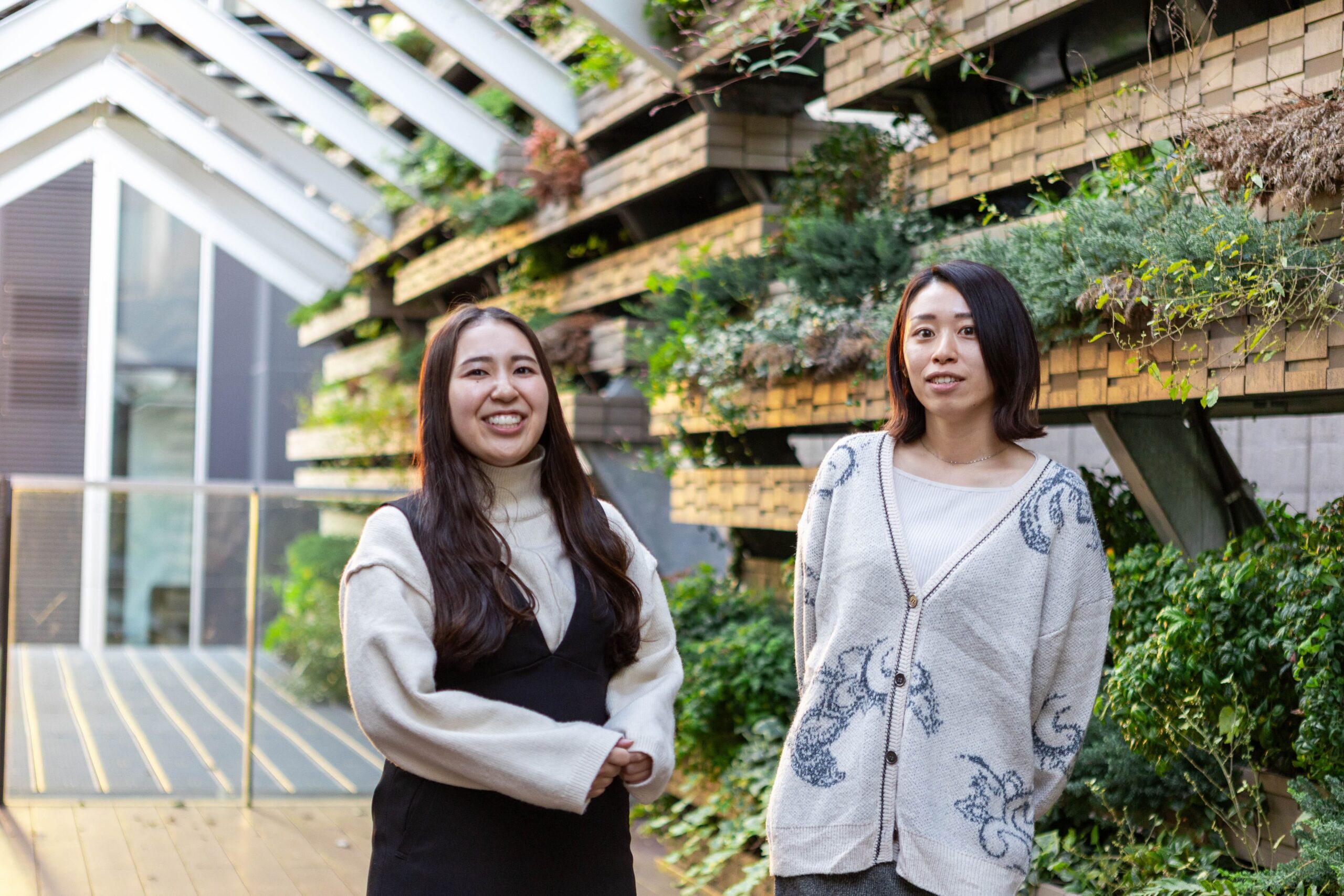
ASNOVA's "Circular Business Exploration Project" is progressing steadily. In the final episode, vol.3, we spoke with Yui Sato and Nao Furuyama of Corporate Planning Office, who are participating as project members. We will look back on their honest feelings when they were assigned, new discoveries, and changes that occurred to them from their life-size perspectives.
Please also take a look at the circular project interview articles, Vol. 1 and Vol. 2.
[Circular Economy Project Discussion Vol. 1] The first step towards a circular economy. ASNOVA's sustainable growth curve
[Circulation Project Discussion Vol. 2] Starting from ASNOVA's culture, depicting the future of "circulation" from diverse perspectives
Text: Sayaka Mitsuda
Photo: Sho Kobayashi

PROFILE
Sato: I was on maternity leave until April of this year, but even before I returned to work, I heard that a new project was about to begin. I thought the project was a major initiative that would shape the company's direction, so I was honored when I was asked to be a part of it. More than anything, I was excited to be involved in the challenge of creating the company's future so soon after returning to work.

Furuyama: I was originally in the Human Resources Department and was transferred to Corporate Planning Office in April 2025. Shortly after my transfer, my direct supervisor approached me to participate in this project, and I was told that I would like you to be actively involved in creating changes in the company as a member of Corporate Planning Office in the future.
I was a little worried about whether I was the right person for the job, but I thought it would be a lot of fun and a valuable opportunity to hear directly from management. Up until then, the majority of my work had been "executing predetermined tasks," so I never thought I'd be able to take part in a forum to create the future. I was surprised and anxious when I was asked to participate, but ultimately, my excitement won out, and I decided to participate.

Sato: Since I was in charge of IR work before, I have explained to investors that the scaffolding rental business itself is a circular business in the first place, so I didn't feel particularly uncomfortable with the word "circular type" itself.
On the other hand, with this project in mind, I was left wondering, "What will we do?" and "What will we explore?"
Furuyama: On the other hand, I wasn't very familiar with the term "circular economy," and to be honest, at first I didn't really understand what they were trying to create. However, I had received the materials in advance, so I prepared in advance by saying, "I'll make sure there are no words in these materials that I don't understand."
Compared to the other participants, I had almost no knowledge, so I thought it would be nice if I could add some spice to the project. But honestly, there was a lot of katakana, and it was really hard (laughs).
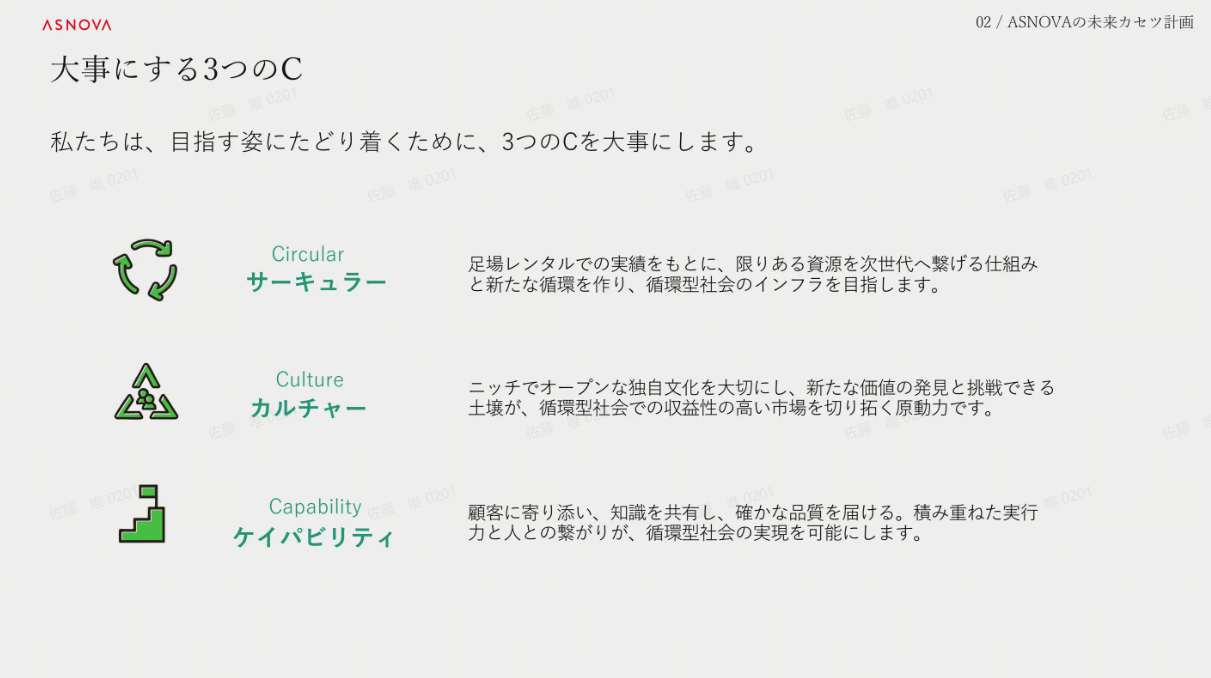
Sato: I was in the same situation; there were many words I had never heard before, so I looked them up every time. One of them was "capability," which came up many times within the project (laughs).
Furuyama: But now the word "capability" is being heard in human resources work as well. I feel that the word was introduced through the project and is now beginning to take root in the context of specific work.
Sato: The most memorable experience was playing a game that allowed me to experience the circular economy. I created a fictional town and ran a company while building a business. I held cards as assets, earned money, and collaborated with others. It was a lot of fun. I personally earned a lot of money, so I wondered if I had a knack for being a manager (laughs). It wasn't just about making money, but also about learning about each person's role in society, which was another reason why I enjoyed it.
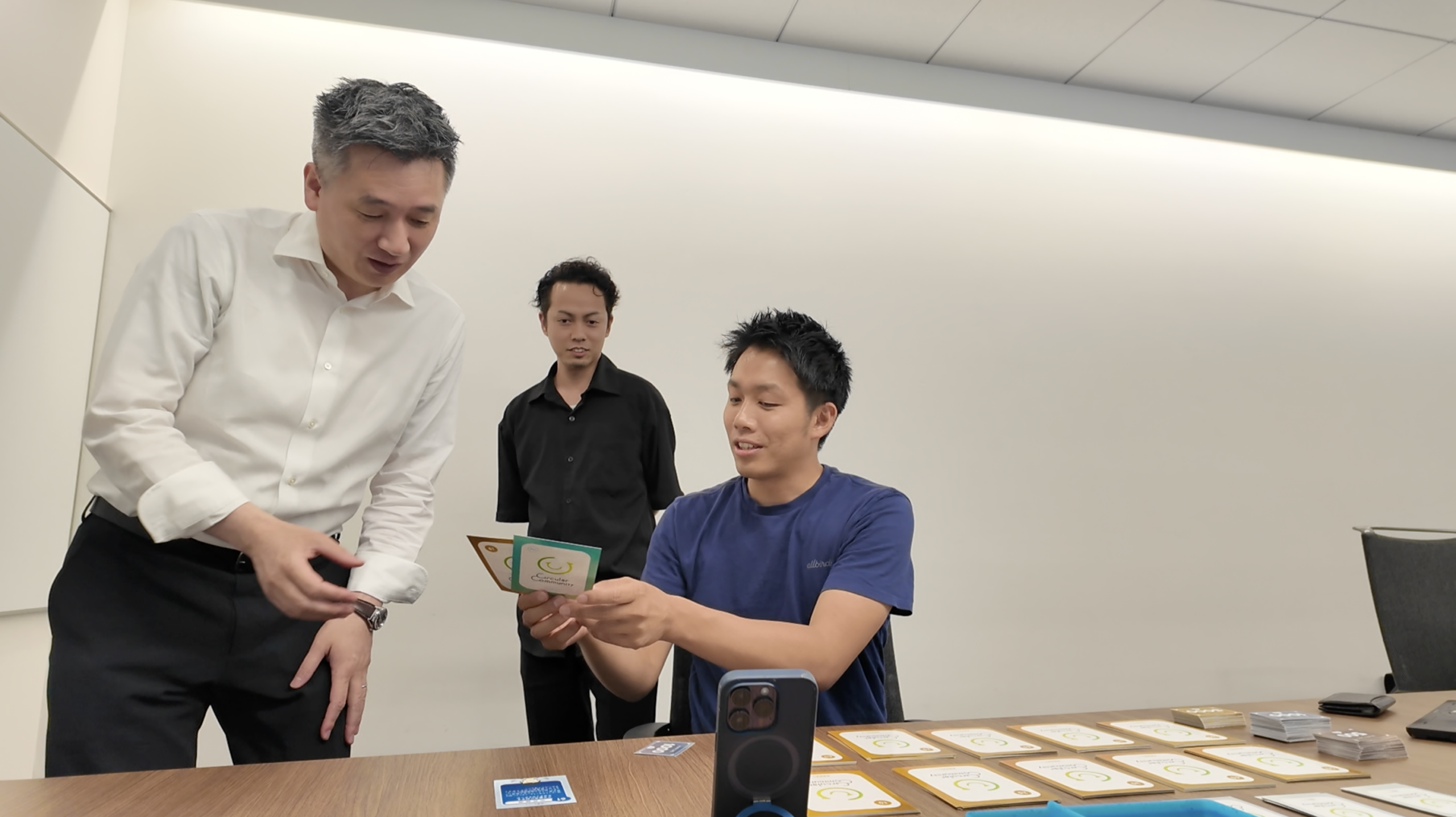
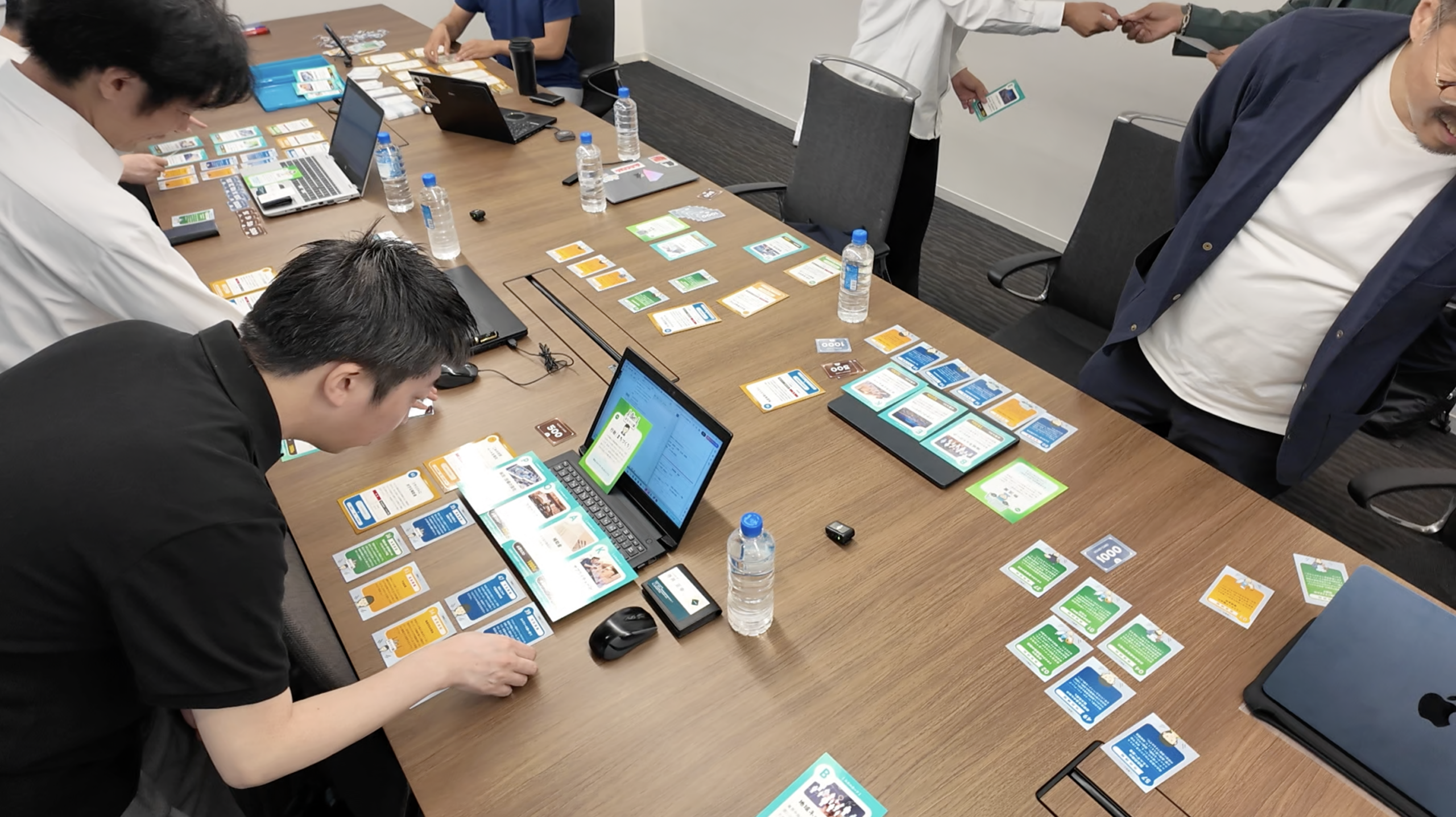
Furuyama: In the end, Sato-san became someone who was out of my reach as an ordinary citizen (laughs). But that game made the circular economy feel immediately familiar to me.
What impressed me was that I was introduced to many companies that do business I had never heard of before. By looking at things and events that we take for granted from a different perspective, I was surprised by many examples of ideas like "Who knew there were ideas like that!" and it was a lot of fun and exciting to be able to discover new things. There are many different companies in the world that are developing unique businesses from their own perspectives, and it was an opportunity to broaden my own horizons.
Sato: Based on the circular business examples presented by Loftwork, we held a workshop to consider the compatibility with our company in light of ASNOVA's "3Cs (Culture, Capability, Circular)." What was striking was the realization that people perceive "culture" differently.
I had thought of ASNOVA's culture in terms of its values, but President Ueda spoke about it based on "ASNOVA-ness." I learned a lot from his perspective. My own way of thinking had been a little rigid, so I realized, "I can think more flexibly."
In our relationship with Loftwork, we were impressed by the opportunity they presented us with specific examples of circular business, which gave us a chance to reexamine ASNOVA's strengths and values.
Furuyama: For me, being on the same team as President Ueda during one workshop was a really great experience. I was happy to hear casual comments that I wouldn't normally hear. Things like, "Even the president worries about what to do with socks that have holes in them."
I was happy that people responded to my opinions with comments like, "I didn't know you had that thought," and "That's a good idea." I'm glad I spoke out so boldly.
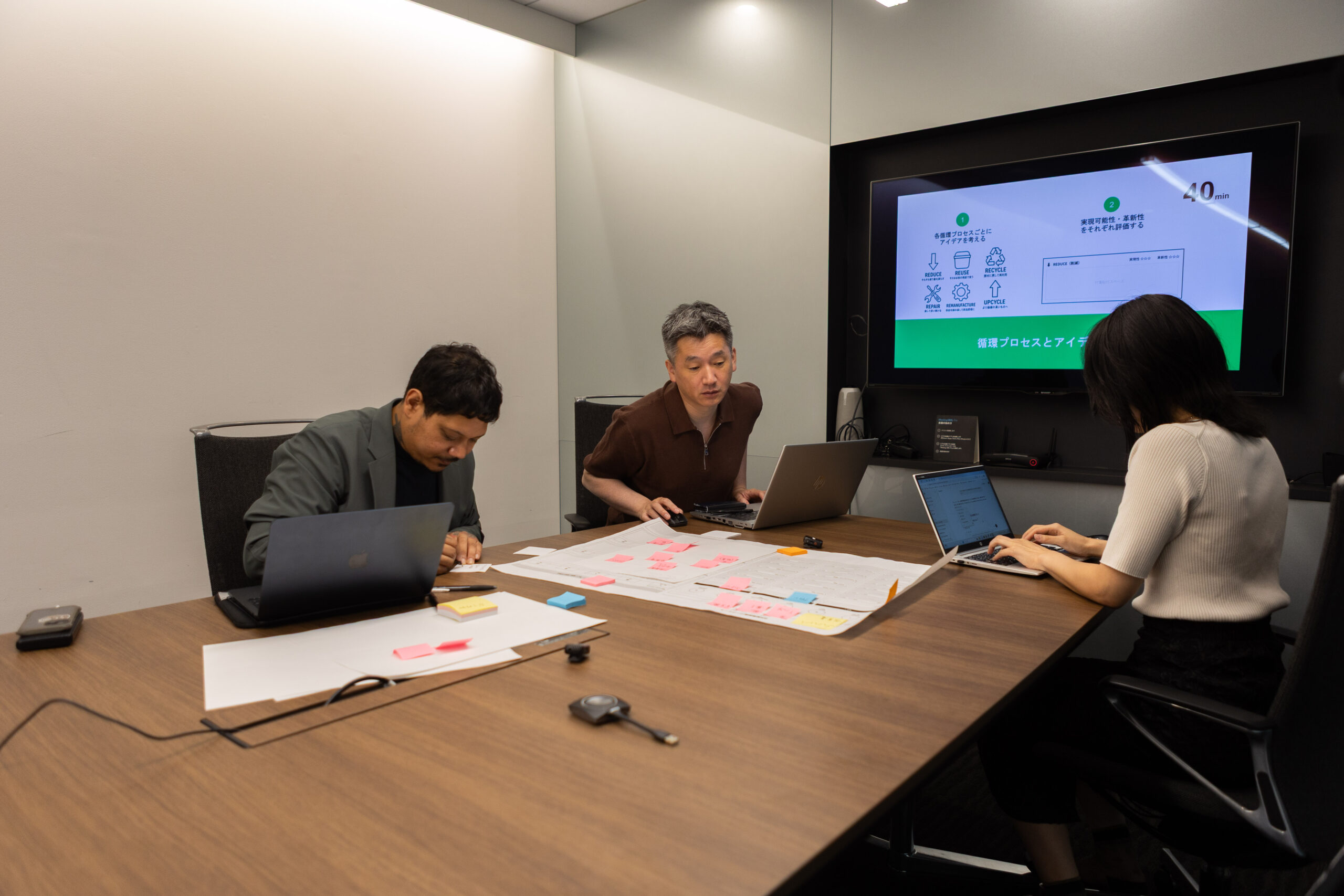
Furuyama: Working with Loftwork taught us a lot about the "order of thought." There were many things we wouldn't have been able to come up with on our own, and although the theme was vague at first, it felt like we were able to break it down into a surprisingly clear form in the end.
I felt a sense of accomplishment that I had reached my goal, and the thought process that led to it was particularly memorable.
Sato: From a public relations perspective, I learned a lot. During the workshop, several keywords that symbolize the project emerged, such as "3C," "quick wins" (initiatives that produce immediate results), and "scaling up" (expanding the initiative). I felt that these words were extremely important in clearly communicating the significance of the initiative both inside and outside the company.
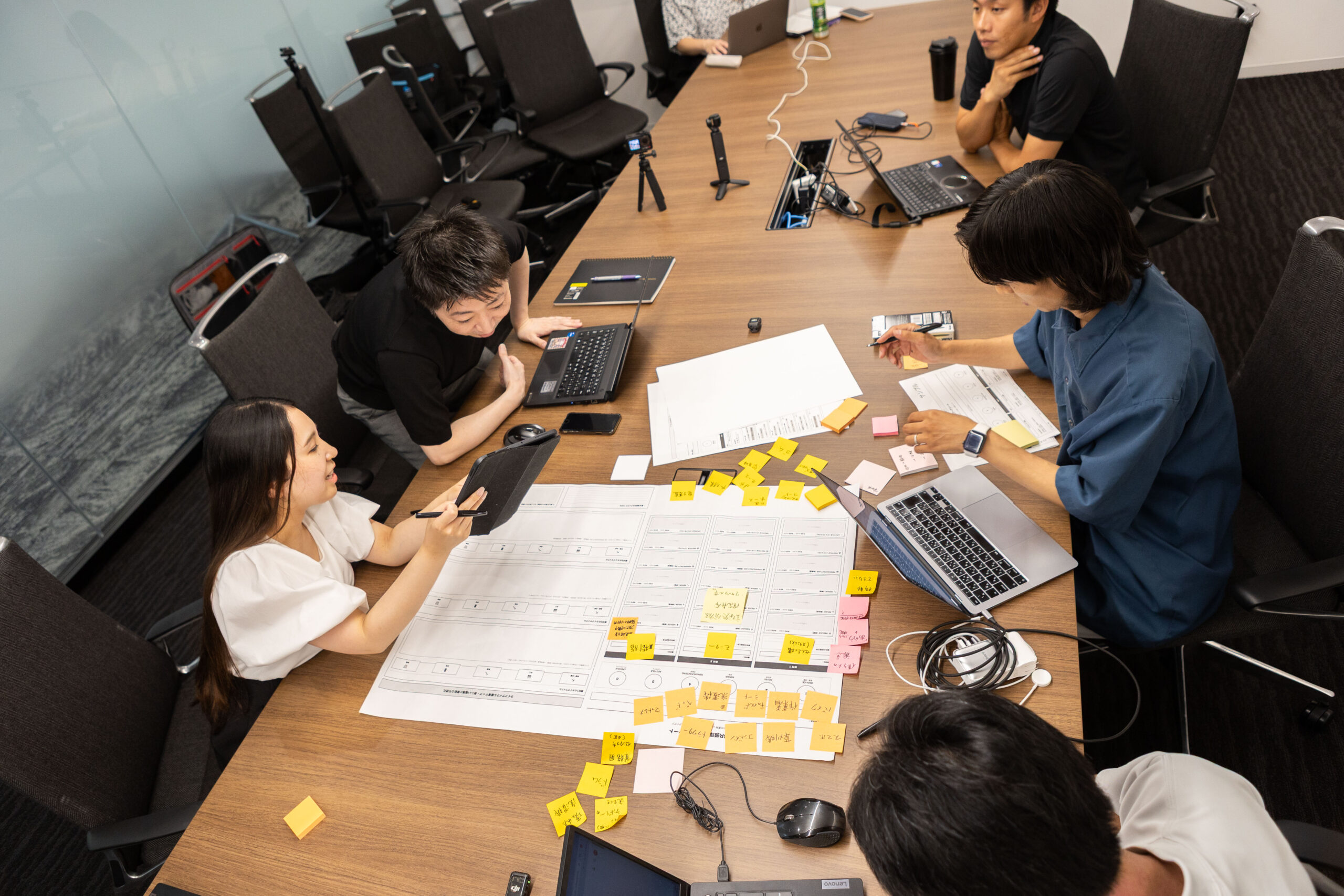
Up until now, I'd placed importance on detailed explanations, but this experience made me realize that "short, powerful words move people." Just having keywords makes it possible to communicate the direction and value of a project at a glance, and I think this will naturally spread throughout the company. As a change in my way of thinking, I've become more aware that "public relations is not just about delivering information; it's important to choose words that create empathy." In the future, I'd like to be conscious of these words and aim for better public relations that get the message across.
Sato: Through this project, we started to think about what makes us "ASNOVA-like." We started to pursue that "likeness" more than ever before in our owned media, and we became more conscious of doing things that are typical of ASNOVA.
When I look into the circular economy, I often feel like "this is also circular." The concept of "circulation" has become more familiar in my daily life, and I have started to think, "How can I make this circular?"

Furuyama: It's the same for me. For example, I recently bought a new smartphone, and there's a service these days that lets you return the one you've used for two years and buy a new one without paying the remaining value, so even if the old one is still in good condition, you end up buying a new one. I thought this service might eventually go out of fashion if the idea of a circular economy becomes more widespread. When I realized that the smartphone I replaced was actually still usable, I started to pay more attention to the wasteful things in my daily life, and being conscious of circulation made me reflect on my own actions that I used to take for granted.
Furuyama: I think it's a diverse group of people with unique values. President Ueda often says, "I want people to say I'm not like you," and I feel like this is a company where many people think that being "different" is a good thing.
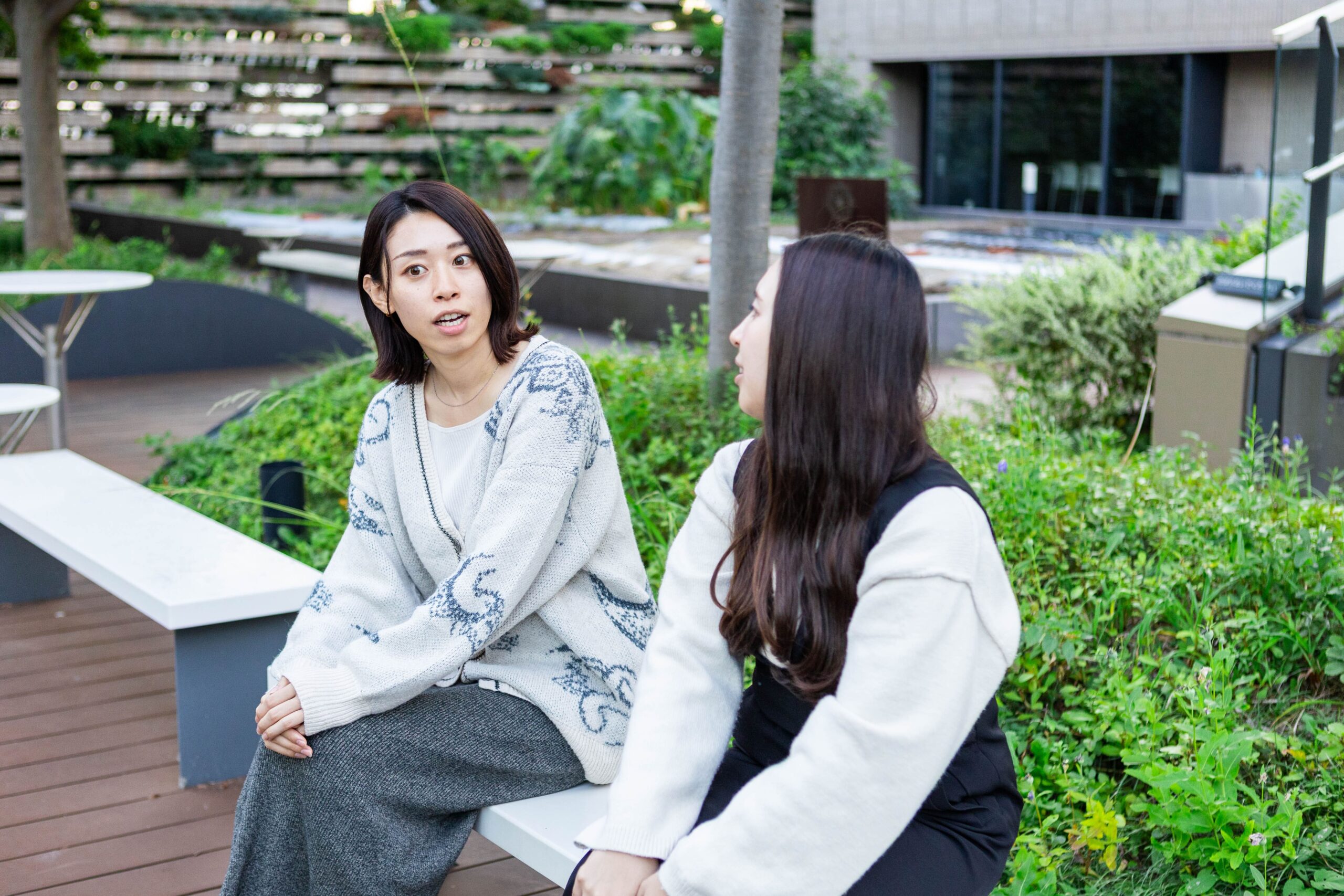
Sato: As the final step of this project, we are compiling a document outlining ASNOVA's philosophy to be used to explain to companies acquiring us through M&A. Among other things, we are conveying that "ASNOVA values culture."
However, this is apparently not a very common practice. I think that's what makes ASNOVA unique. Normally, in M&A, the future benefits and business prospects are emphasized, but they say, "We look at compatibility of corporate cultures." I think this is a company that really looks at "people."
Sato: Through this project, I realized the importance of respecting and fusing cultures. In the future, when new companies join the ASNOVA group, I would like to respect each culture and combine it with the "ASNOVA style" to spread it. Connecting cultures and having a flexible mindset are two things I would like to utilize in my future work.
Furuyama: Projects are launched frequently at ASNOVA, but to be honest, some people may feel like, "Oh, they're doing something that has nothing to do with me again." By participating in this project, I was able to get a firsthand feel for the determination and passion with which the management team is trying to create ASNOVA's future. Thanks to this, I can now imagine the future of ASNOVA more clearly than before.
In the future, I would be happy to act as a bridge for people who find it difficult to relate to the company's policies and vision. I feel that this is a role that only I, as an ordinary employee, can play.
I would like to grow together with the company by effectively linking the changes in the company with the actions I need to take.

INDEX