




"Cherishing the products and the people behind them." ASNOVA and Enkuru share their thoughts on shareholder benefits.
- monotomoi
- Enkul
- Social Good
- Shareholder benefits




PROFESSIONAL
Text: Sayaka Mitsuda
Photo: Sho Kobayashi


PROIFILE




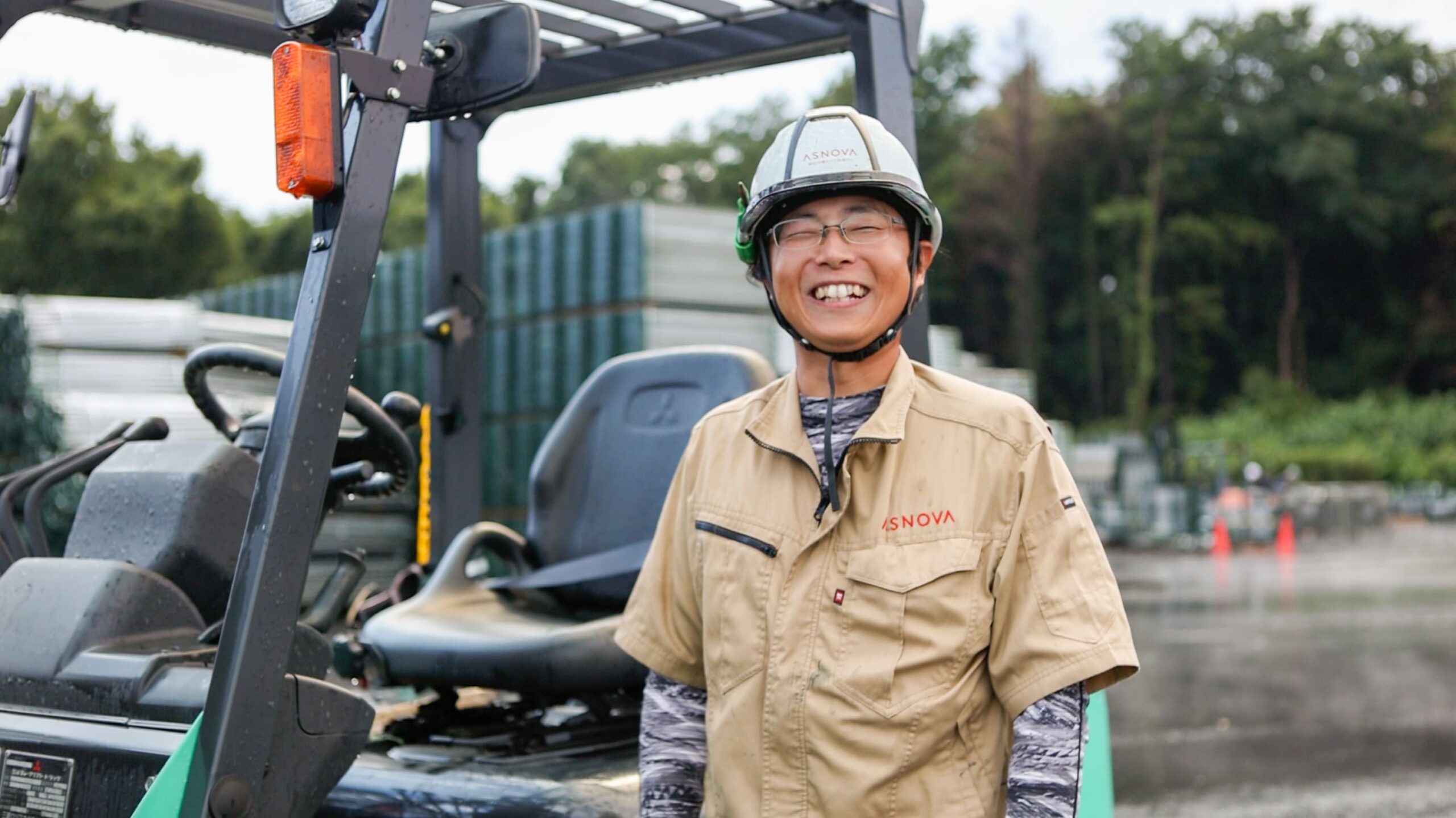
Forklift operators play a vital role in the loading and unloading of equipment at ASNOVA, a company specializing in scaffolding rental business. While their job may seem straightforward—just moving cargo—their responsibilities go far beyond that. They are key players in ensuring daily safety and boosting overall team efficiency on-site.
In this article, we spoke with Ryuta Toriumi, Center Manager of the Chiba Kashiwa Center in Chiba, and Kodai Okamoto, to learn more about the realities of their day-to-day work and the pride they take in their roles.
Text: Sayaka Mitsuda
Photo: Sho Kobayashi

PROFILE
Toriumi: At our equipment centers, we handle the rental of scaffolding materials for our customers. Forklift operators are responsible for loading equipment for delivery to construction sites and unloading returned items. In other words, they are the first point of contact between ASNOVA and our customers. You could say they help shape the first impression of our company. I started working as a forklift operator when I joined ASNOVA, and I quickly realized how deep and meaningful this role is.
Since I had no prior experience operating forklifts, I needed to take a four-day training course and pass a certification exam. Fortunately, ASNOVA covered the cost. The course provides solid technical knowledge, so even beginners can feel confident getting started.
To be honest, I wasn’t very comfortable with driving vehicles in general, and I thought forklifts would be difficult to operate. But I was surprised at how quickly I got the hang of it.
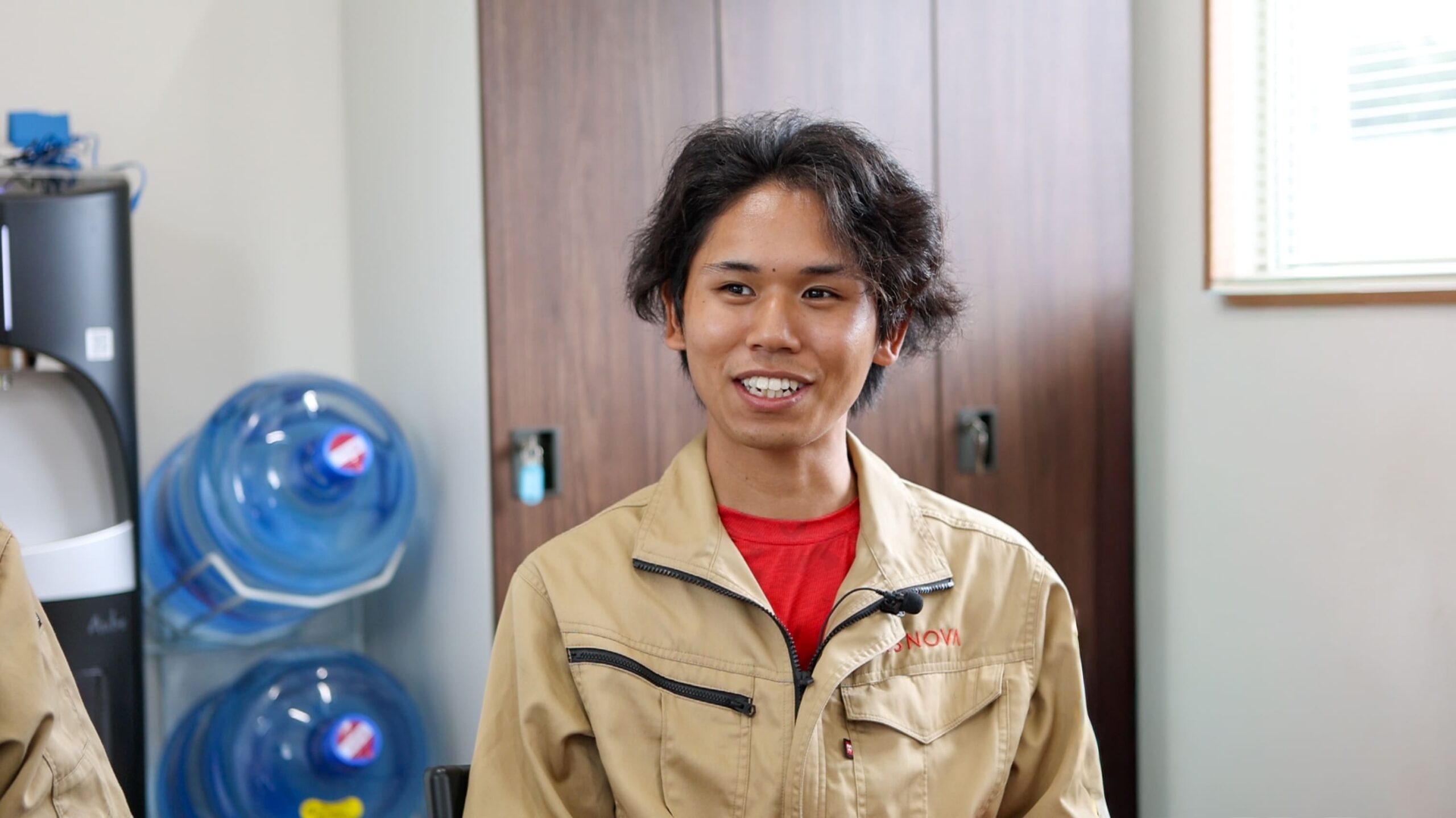
Okamoto: In my previous job, I only operated forklifts under one ton, so I had to obtain a new certification after joining ASNOVA. Even though I had prior experience, the forklifts here are much larger, and I found the transition a bit challenging at first. The volume and weight of the equipment we handle at ASNOVA are significantly greater, so it took me some time to get used to it and develop the right techniques. It wasn’t easy at the beginning, but I gradually learned how to manage the equipment safely and efficiently.
Toriumi: I believe anyone can learn to operate a forklift. But once you get used to it, it’s easy to forget the basics. Many accidents—whether traffic-related or involving dropped cargo—often stem from overconfidence or complacency. That’s why people who consistently stick to the fundamentals are best suited for this role.
Okamoto: It’s important to be highly aware of your surroundings and to rely on visual checks. There are blind spots where someone might suddenly appear, so you need to constantly think, “Someone could come out from anywhere at any time.” People who can maintain that level of awareness and caution are ideal for this job.
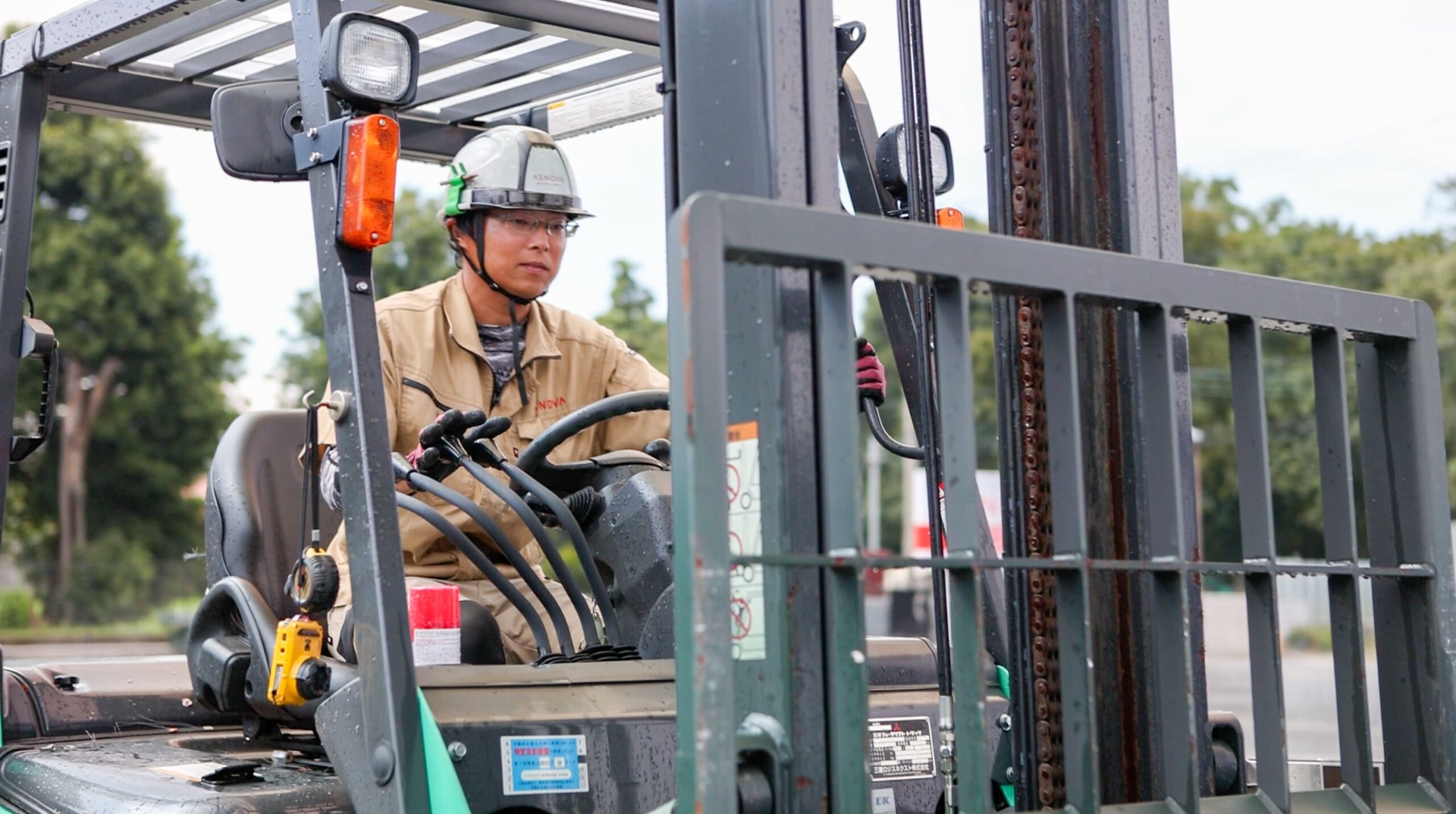
Toriumi: Yes, I truly believe that attention to detail is essential in this role. For example, on rainy days, the forklift’s forks can become slippery, increasing the risk of dropping cargo. That’s why I make it a rule to avoid sudden starts or sharp turns under such conditions. Even though it may seem obvious, I always remind the team during our morning meetings: “Let’s be extra careful on rainy days.” It’s these small, consistent reminders that help maintain a safe working environment.
Toriumi: Yes, I think there definitely are. Experienced operators tend to work faster—not just because they’re more familiar with driving the forklift, but because they’ve memorized the dimensions and weights of each type of equipment. Even when multiple items are stacked together, they can quickly assess: “This weighs about this much, it’s about this wide, so the center of gravity is here. If I position the forks like this, I can move it all at once.” That kind of quick judgment comes from experience.
Okamoto: Handling the forklift forks properly actually requires a lot of skill. At ASNOVA, our forklifts have forks that are two meters long. In my previous job, the forks were only one meter, so the feel is completely different. But I’ve learned that you shouldn’t rely on instinct alone—you need to understand the equipment and think carefully about how to move it.
Toriumi: When someone can operate the forklift efficiently and thoughtfully, it gives you peace of mind. But that confidence comes from knowing the equipment—its appearance, its characteristics. If you rely only on instinct, you risk not supporting the load properly with the forks, which can lead to dropped cargo or even a forklift tipping over. That’s why, whether you’re new or experienced, understanding the equipment is absolutely essential.
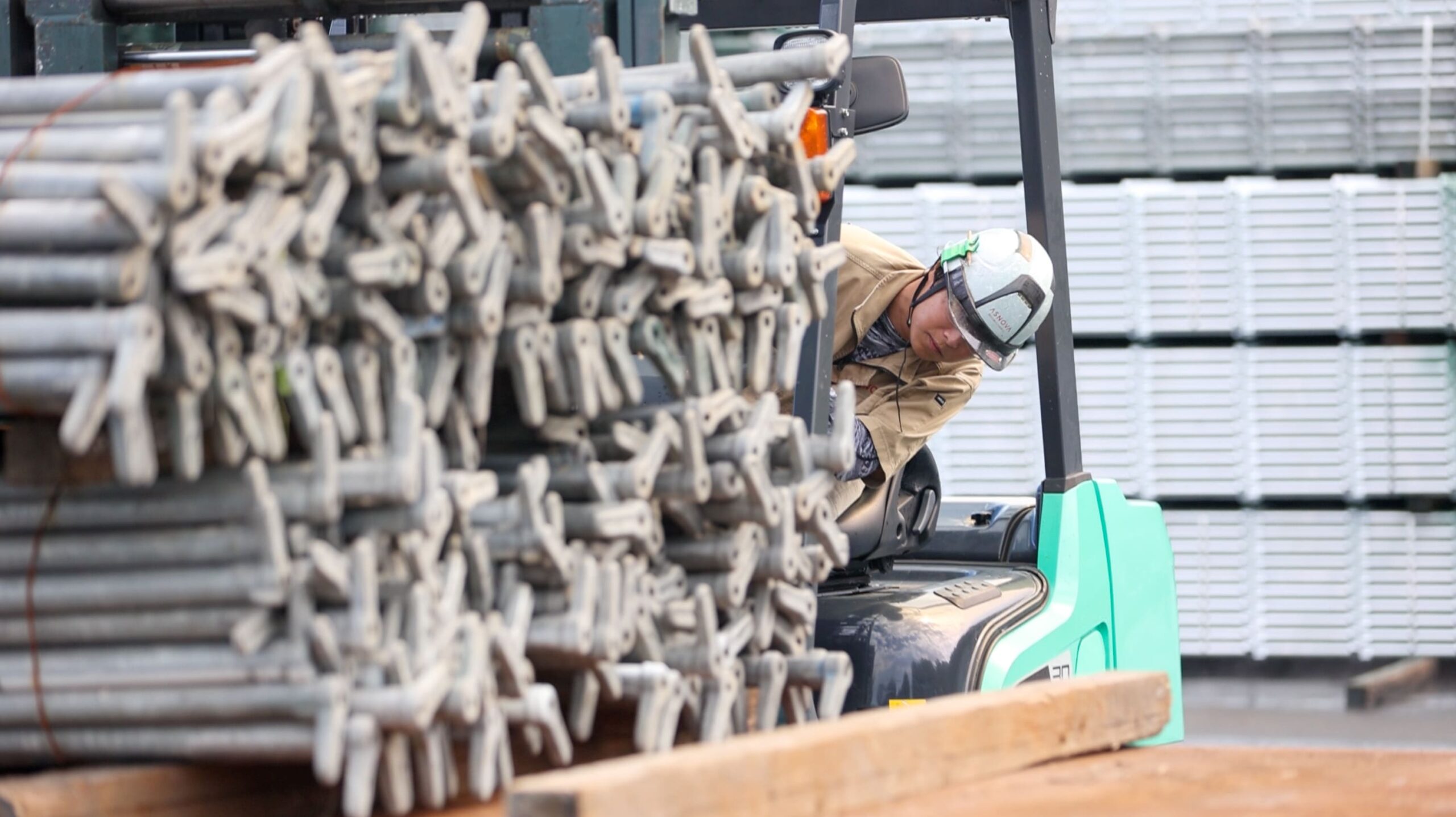
Toriumi: It may sound basic, but we inspect our forklifts every single day. We check for unusual noises, oil leaks, and other small details that could indicate a problem. If a forklift were to stop suddenly while in motion, it could pose serious risks—damaging cargo or even injuring someone. We also make sure to follow monthly and annual inspection schedules to keep operations safe and reliable.
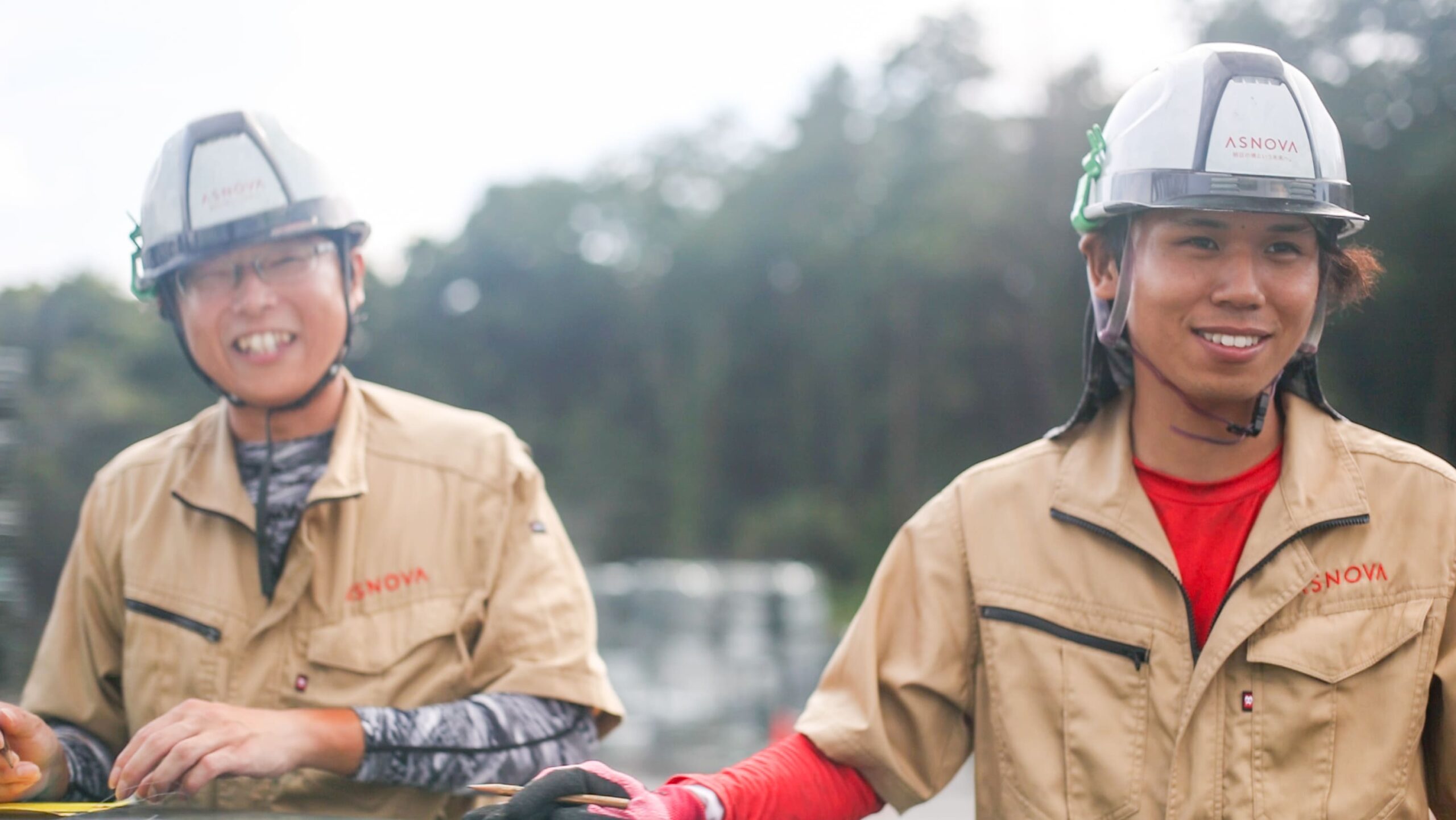
Okamoto: When it comes to forklift checks, I always make sure the forks are perfectly level. If they’re not, they could scrape the ground when lifting cargo or even damage a customer’s truck.
To ensure both safety and efficiency, we also ask customers to fully open the side panels (called aori) of their truck beds when returning equipment. If we start working without realizing the panels are closed, it can be dangerous for both sides. That’s why I believe close cooperation with our customers is just as important as internal safety measures.
Toriumi: We sometimes see news reports about accidents caused by using equipment in ways it wasn’t intended. That’s why we make a point to share such information regularly. Even if it seems obvious, verbalizing and sharing these reminders helps reinforce hazard awareness.
Okamoto: When transporting equipment, it’s extremely dangerous to think, “This should be fine,” and exceed the load limits. I’ve heard of accidents like that in my previous job. Overconfidence in your skills or underestimating the risks can lead to serious incidents.
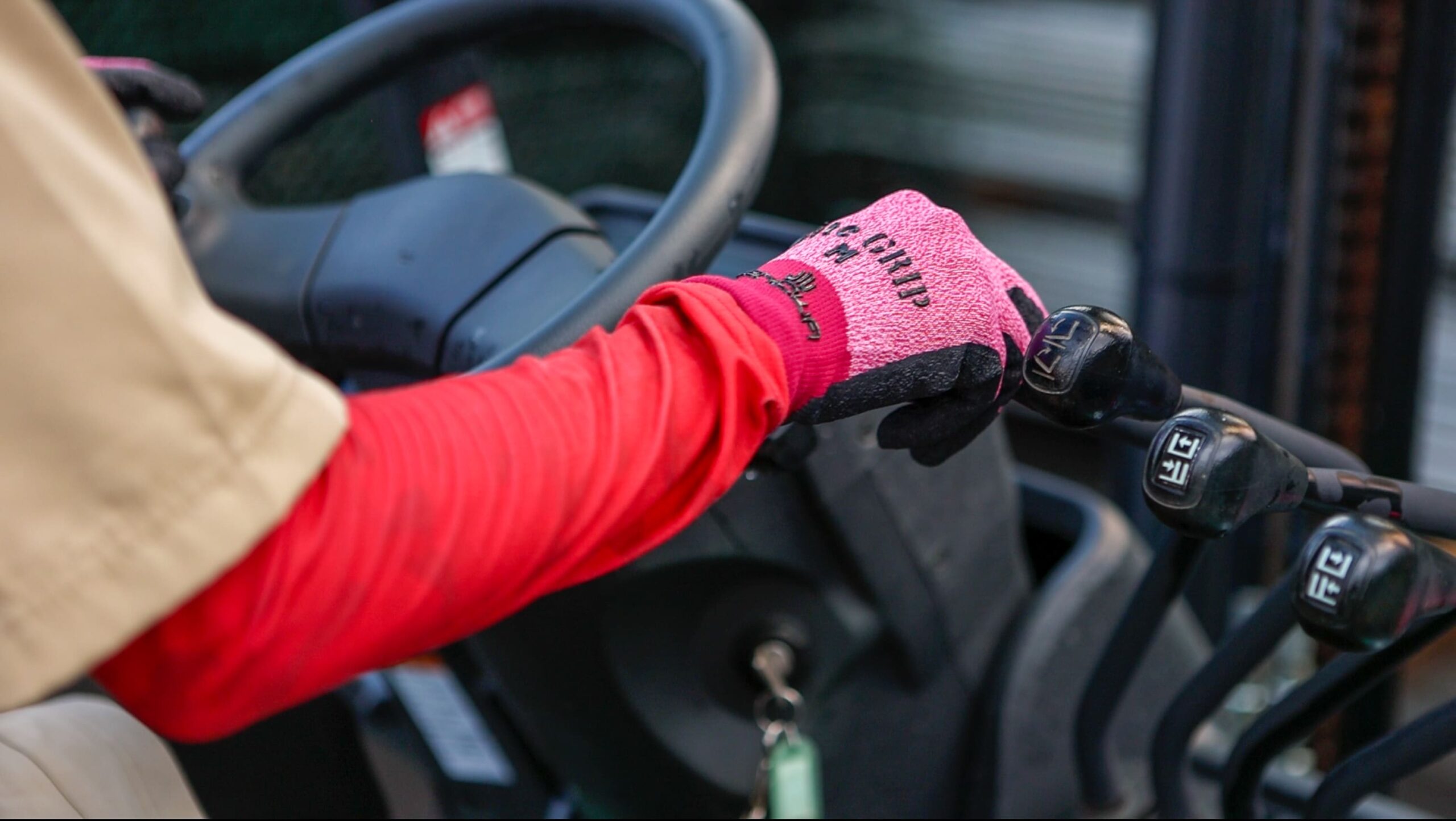
Toriumi: At ASNOVA, we conduct daily hazard prediction activities during our morning meetings. We discuss potential risks for the day, what precautions to take, and how to act safely. Once a month, we also watch safety videos and share “near-miss” incidents from the previous month to keep safety awareness high across the team.
Okamoto: I feel a real sense of accomplishment when I successfully load or unload a large truck. Being able to complete the task safely and efficiently boosts my confidence. I also enjoy interacting with customers—it's a great moment when someone says, “ASNOVA’s forklift operators are really pleasant to work with.” That kind of feedback makes me happy.
Torikai: When I first joined the company, I was honestly terrible at operating a forklift. But now, as the Center Manager, I oversee the site while still handling forklift tasks myself—and we’ve maintained a record of zero accidents. That’s something I’m truly proud of.
Also, when I’m working outside, sometimes elementary school kids pass by and say, “Cool!” Hearing that kind of comment is genuinely uplifting. As a forklift operator at ASNOVA, responsible for both safety and efficiency, I want to continue raising the value of what we do.
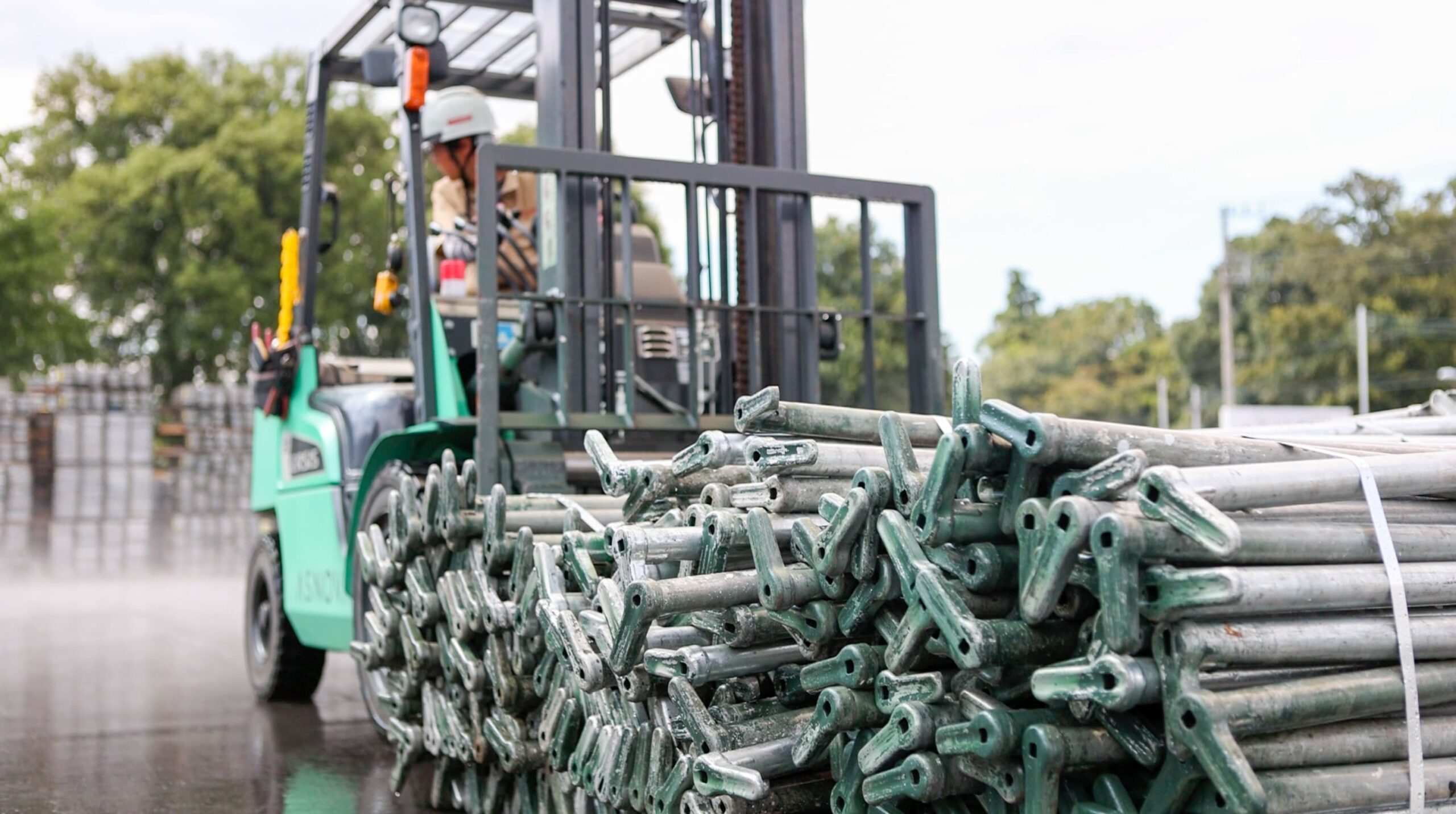
Toriumi: Through my forklift work, I’ve gained a clear understanding of how the entire center operates. As a Center Manager, I want to continue growing while ensuring safety remains a top priority. I take pride in being a forklift operator who’s not just fast, but someone others can trust to handle the job with care.
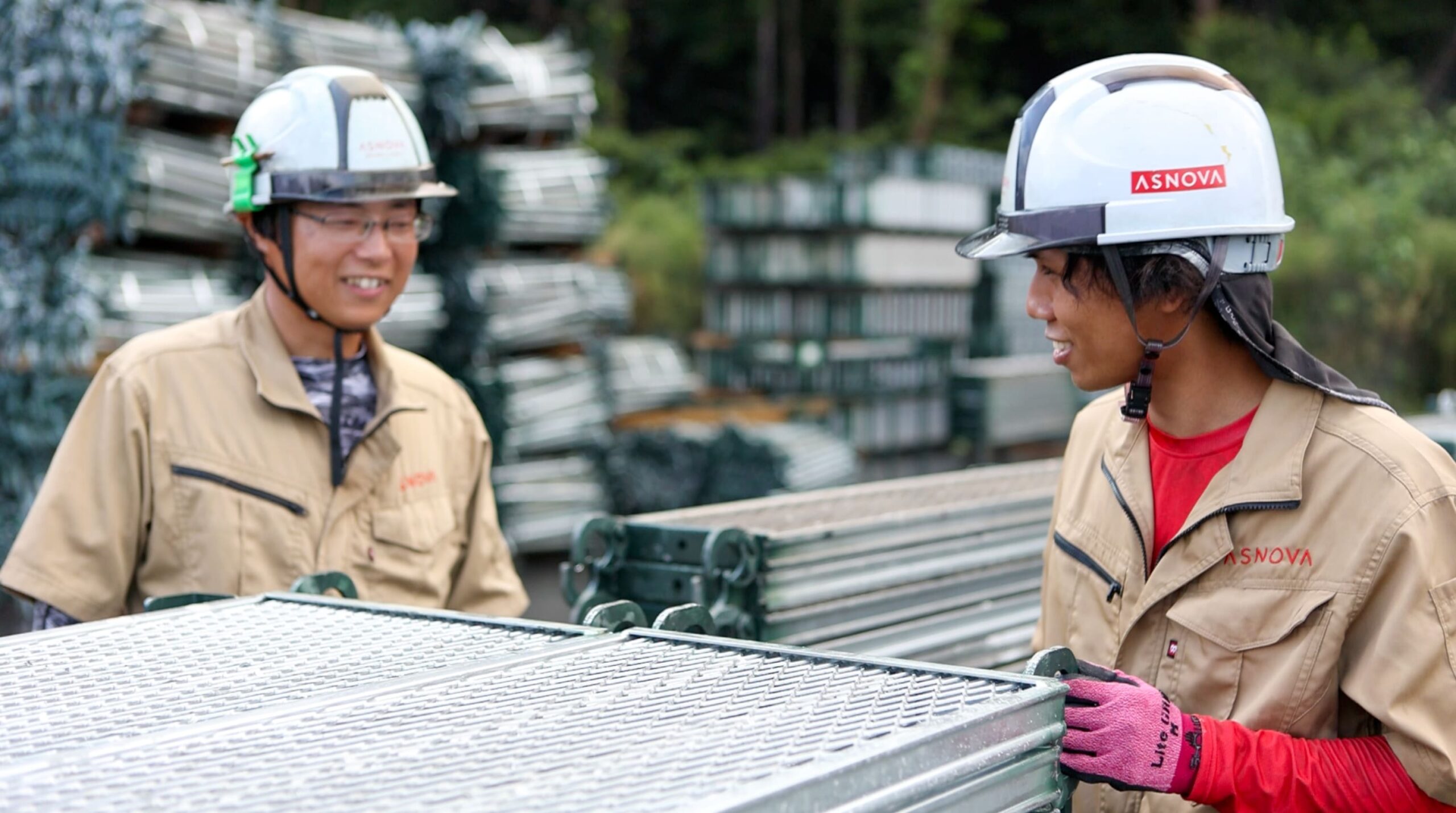
Okamoto: One of the best parts of this job is being able to communicate closely with customers while working. As a forklift operator at ASNOVA, I want to become someone who earns the trust of both our customers and my colleagues.
INDEX