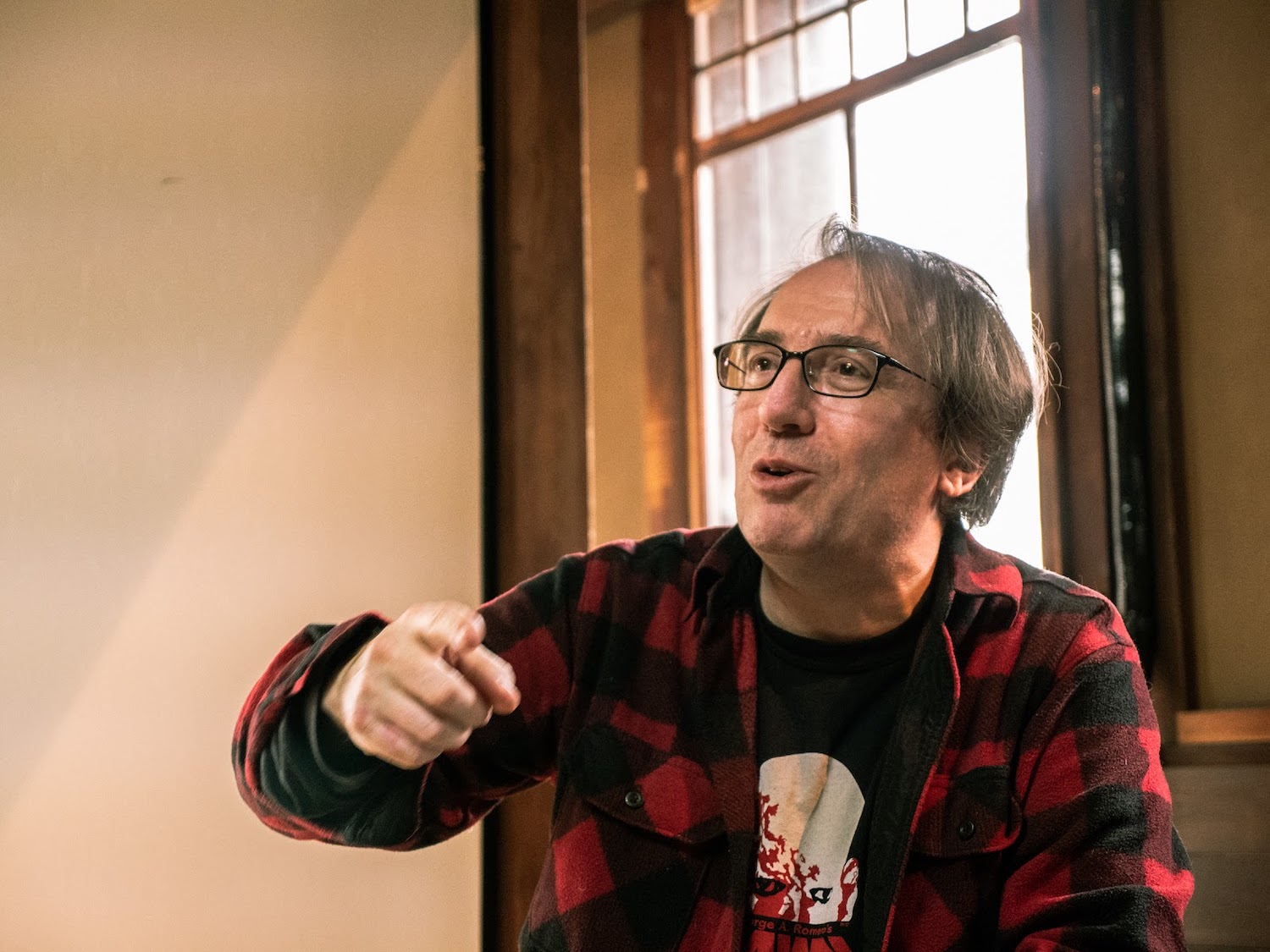
Born in California and raised in New York. A genuine zombie researcher who launched the world's second zombie website in the 80s. Since the 90s, he has reported on many Japanese film sets as a writer for the USA magazine Fangoria. After coming to Japan, he serialized "Grindhouse USA" in the magazine Eiga Himitsu. He has written and supervised many zombie-related magazines. In 2019, he supervised "The Ultimate Zombie Reader" (Yosensha). He also does a lot of work as a subtitle translator.
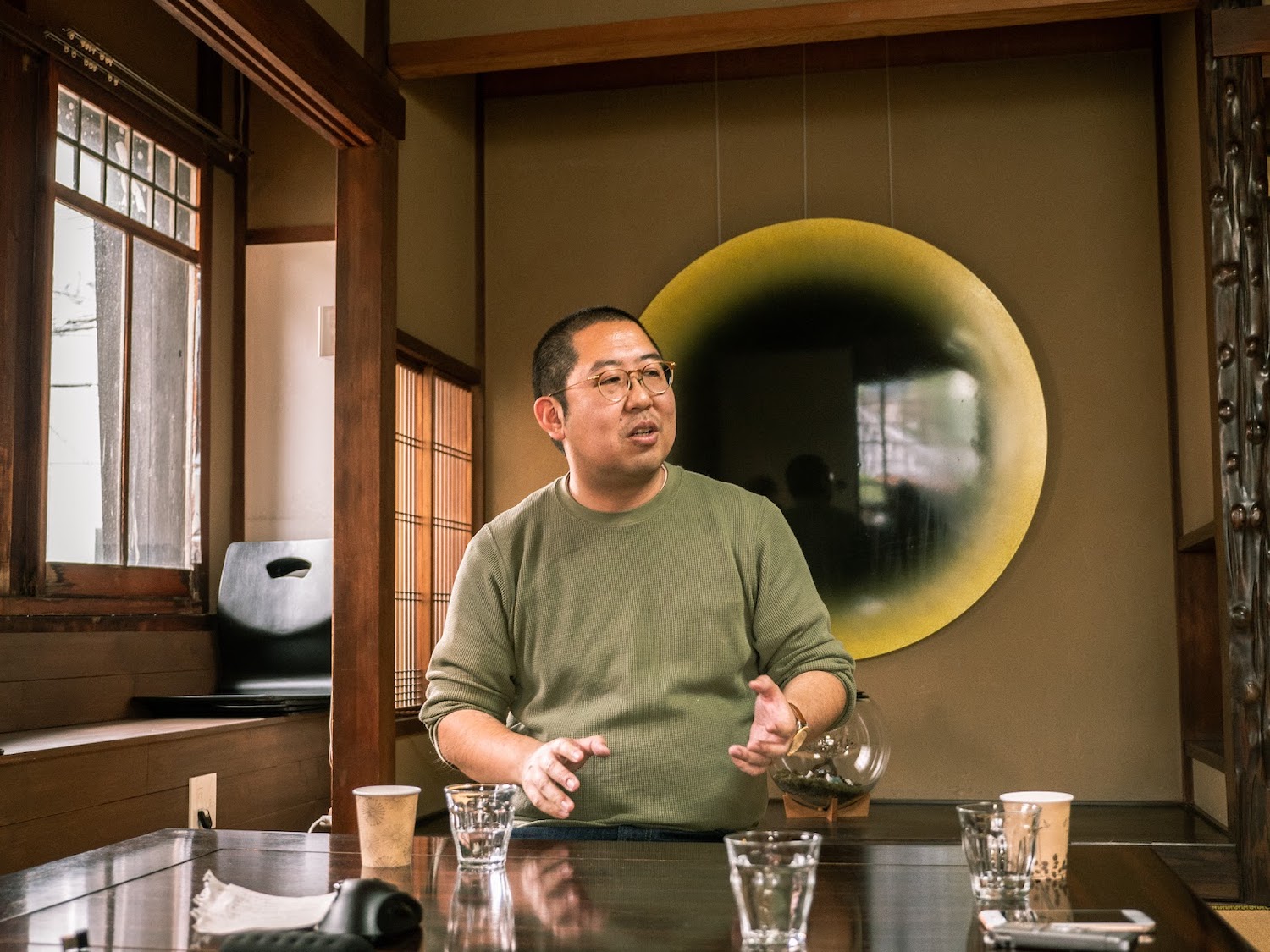
Takeshi Okamoto
Associate Professor, Kinki University, School of Integrated Sociology. Born in 1983. Graduated from Hokkaido University's Graduate School of International Media, Public Relations, and Tourism Studies, majoring in tourism creation, where he researched anime pilgrimages and obtained a doctorate in tourism. After that, he continued his zombie research while working as a university professor, and published "Zombie Studies" (Jinbun Shoin). His other works include "Pilgrimage Business" (KADOKAWA).
Zuiki Inada
A Buddhist monk. Born in 1992 at a temple in Kyoto, he is the deputy chief priest, but does not stay at the temple and is currently active as a creator of worldly desires, planning projects that are full of worldly desires. In addition to his writing career, which includes serializing columns, he also plans real events such as the temple musical film festival "Ter La Land" and the heartbreak cleansing bar "Shitsuren Kuyo". Editor-in-chief of the Freestyle Monks website. https://twitter.com/andymizuki
Zombie movies depict a life of survival where danger is always close at hand. The characters make quick decisions and use things around them to take defensive measures. Perhaps zombie movies contain wisdom for protecting ourselves from sudden danger. In this article, we will discuss hypothetical ways to deal with the danger of zombies with two zombie experts.
Born in California and raised in New York. A genuine zombie researcher who launched the world's second zombie website in the 80s. Since the 90s, he has reported on many Japanese film sets as a writer for the USA magazine Fangoria. After coming to Japan, he serialized "Grindhouse USA" in the magazine Eiga Himitsu. He has written and supervised many zombie-related magazines. In 2019, he supervised "The Ultimate Zombie Reader" (Yosensha). He also does a lot of work as a subtitle translator.
Takeshi Okamoto
Associate Professor, Kinki University, School of Integrated Sociology. Born in 1983. Graduated from Hokkaido University's Graduate School of International Media, Public Relations, and Tourism Studies, majoring in tourism creation, where he researched anime pilgrimages and obtained a doctorate in tourism. After that, he continued his zombie research while working as a university professor, and published "Zombie Studies" (Jinbun Shoin). His other works include "Pilgrimage Business" (KADOKAWA).
Zuiki Inada
A Buddhist monk. Born in 1992 at a temple in Kyoto, he is the deputy chief priest, but does not stay at the temple and is currently active as a creator of worldly desires, planning projects that are full of worldly desires. In addition to his writing career, which includes serializing columns, he also plans real events such as the temple musical film festival "Ter La Land" and the heartbreak cleansing bar "Shitsuren Kuyo". Editor-in-chief of the Freestyle Monks website. https://twitter.com/andymizuki
What if zombies suddenly appeared?
In my case, I can only see a future where I'm bitten by a zombie while my mind goes blank and I'm screaming. I remember when a big typhoon approached Tokyo last October, I didn't know how to put masking tape on the window, and I simply prepared myself for death, thinking, "This is bad, I'm going to die."
In contrast, the characters in zombie movies use ingenuity to protect themselves in desperate situations, and I'm always impressed by how quick and resourceful they can be.
In other words, if we look at it from a different perspective, we can reevaluate zombie movies as "textbooks on how to protect yourself from sudden danger." In a crisis situation, they make weapons, shields, and even fortresses out of whatever is available on the spot. Isn't there a lot we can learn from their DIY spirit?
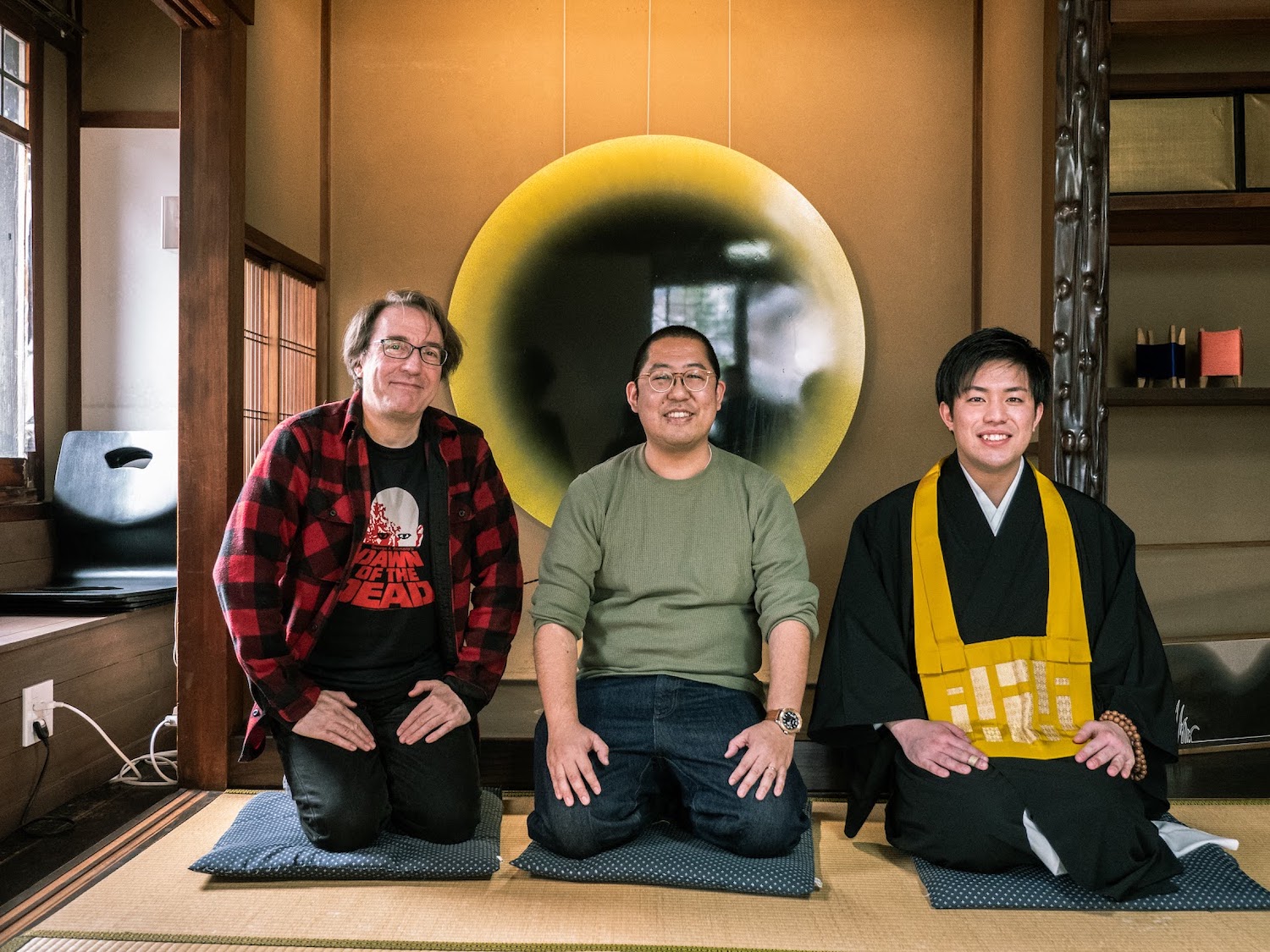
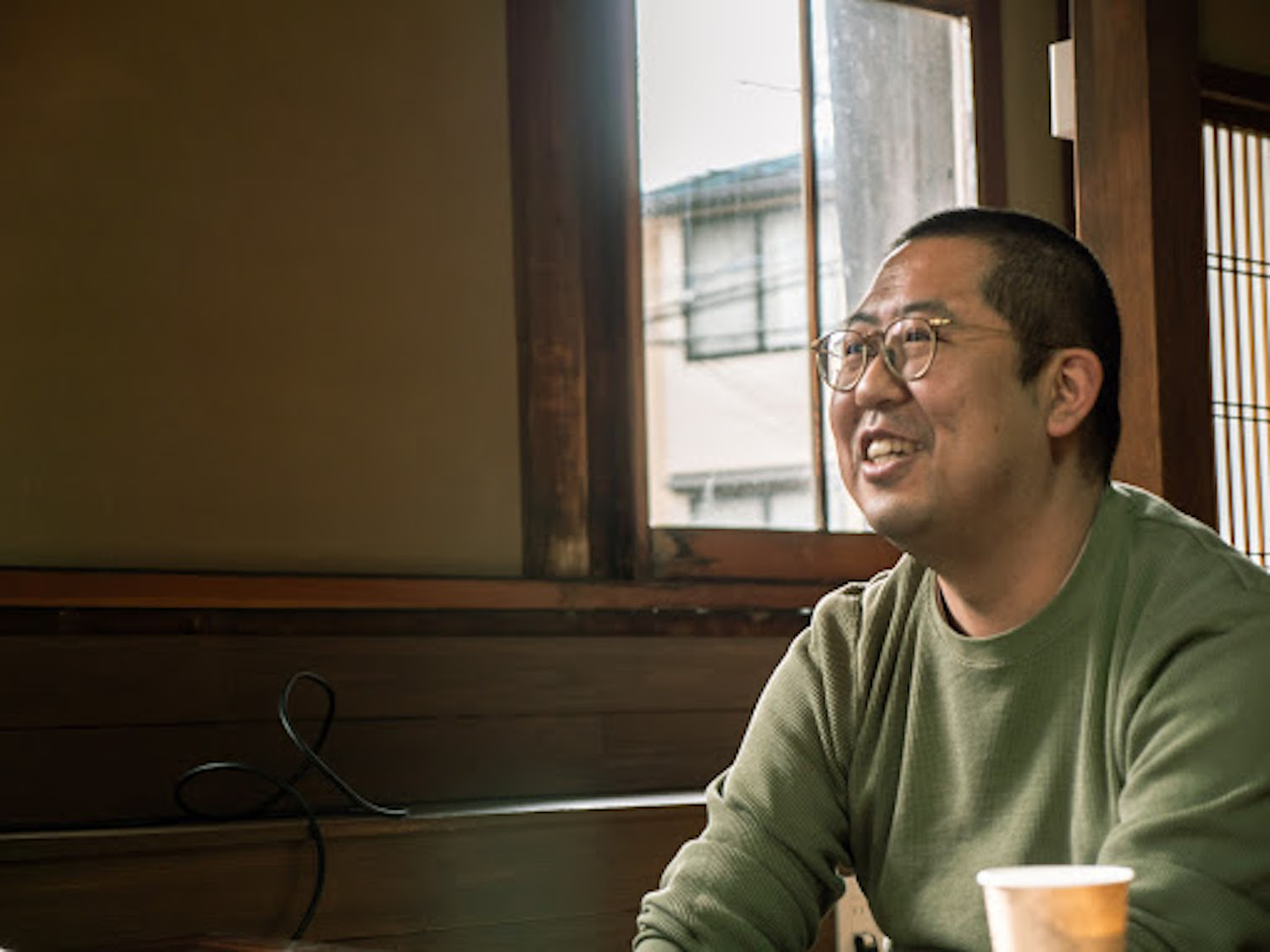
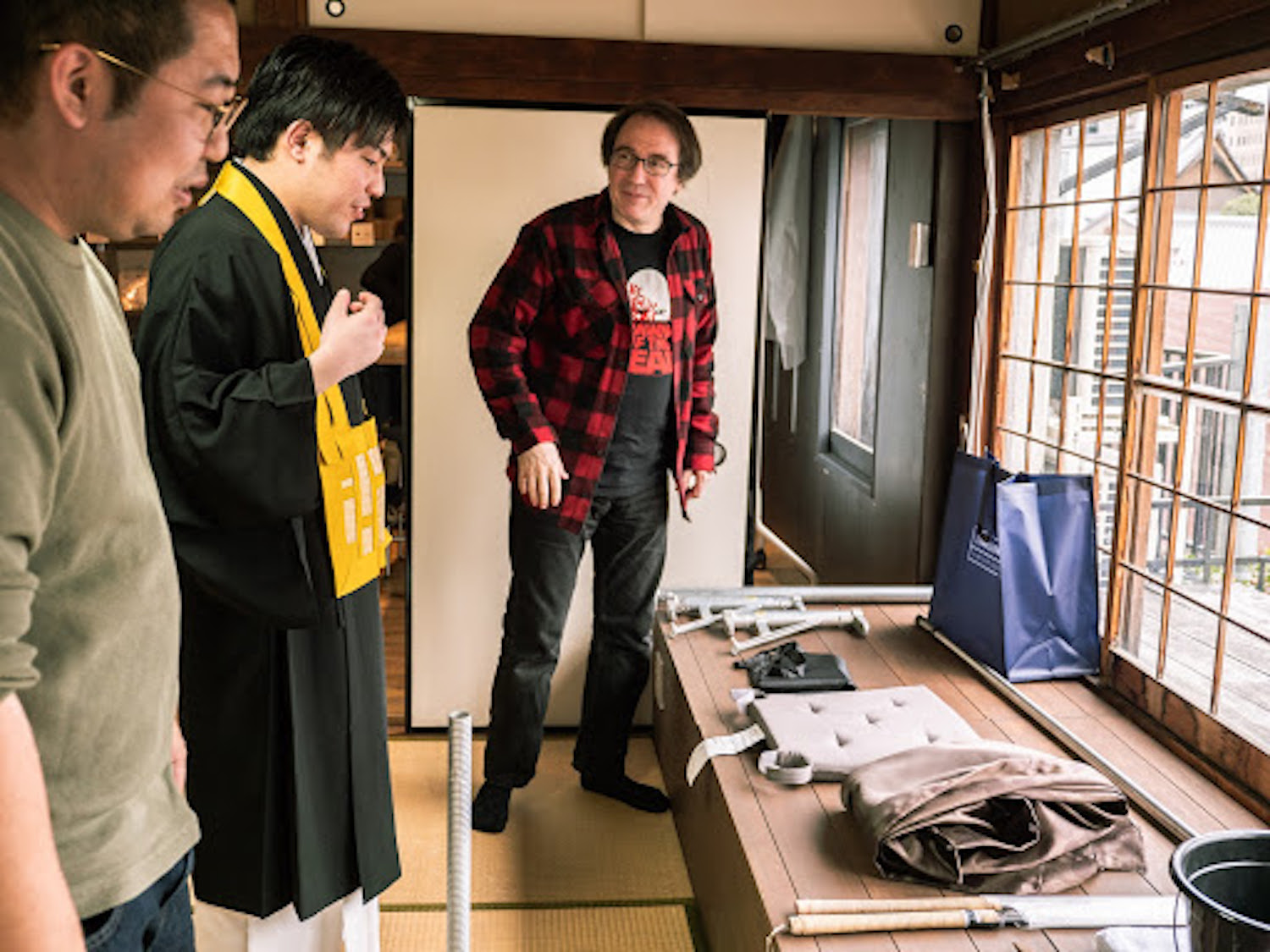
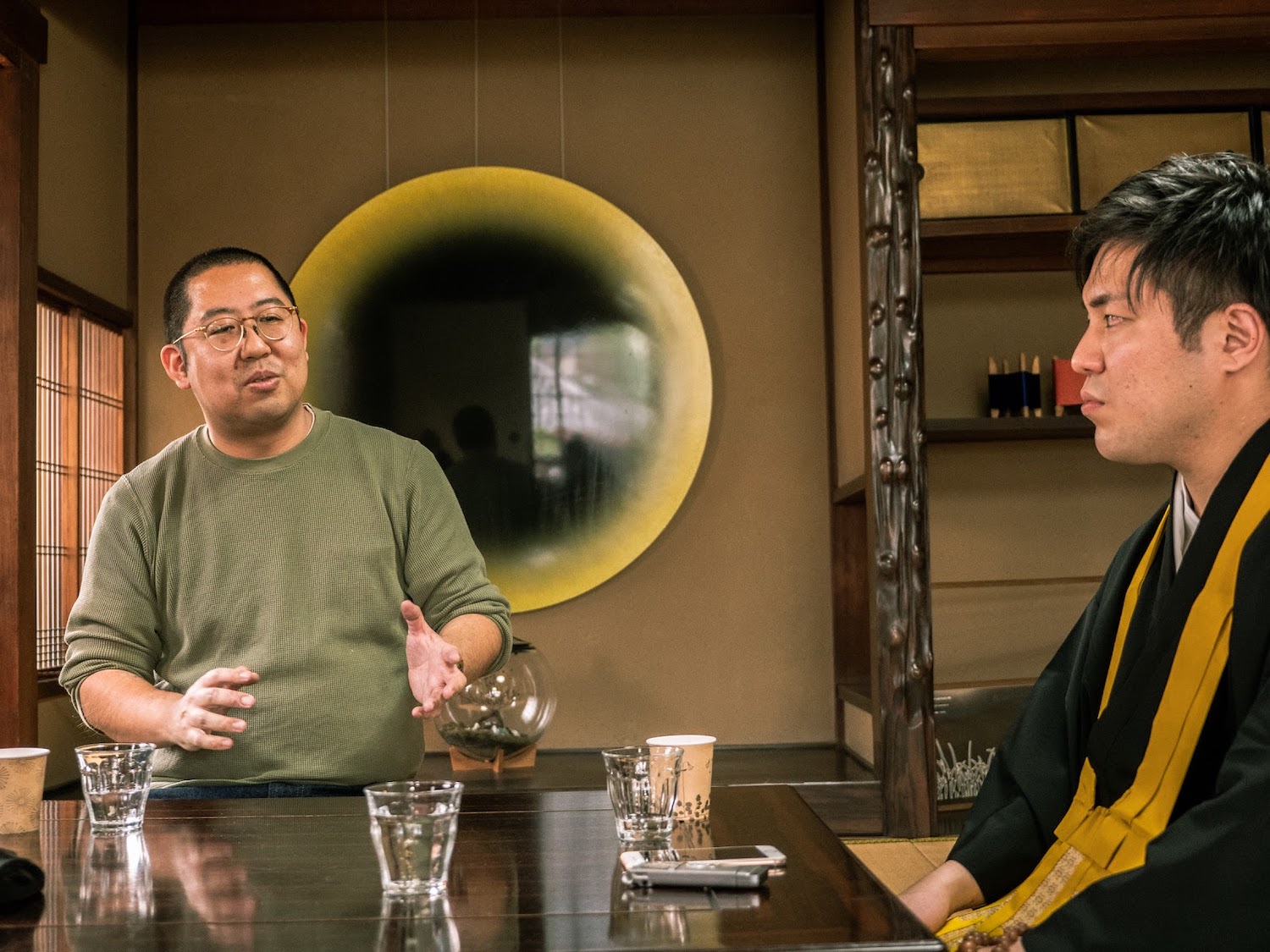
For some reason, the navigator is me, a Buddhist monk (far right).
So, this time we gathered two zombie professionals and had them talk about themes such as "The defense methods in this zombie movie are amazing!" and "If it were me, I would defend myself against zombies like this!" We will look for unexpected hints for "everyday defense methods" from those scenes in classic zombie movies.
First of all, build a barricade.
Inada: You two have seen a lot of zombie movies, so I'd like to ask you two, if zombies were to appear in real life, what would you do first?
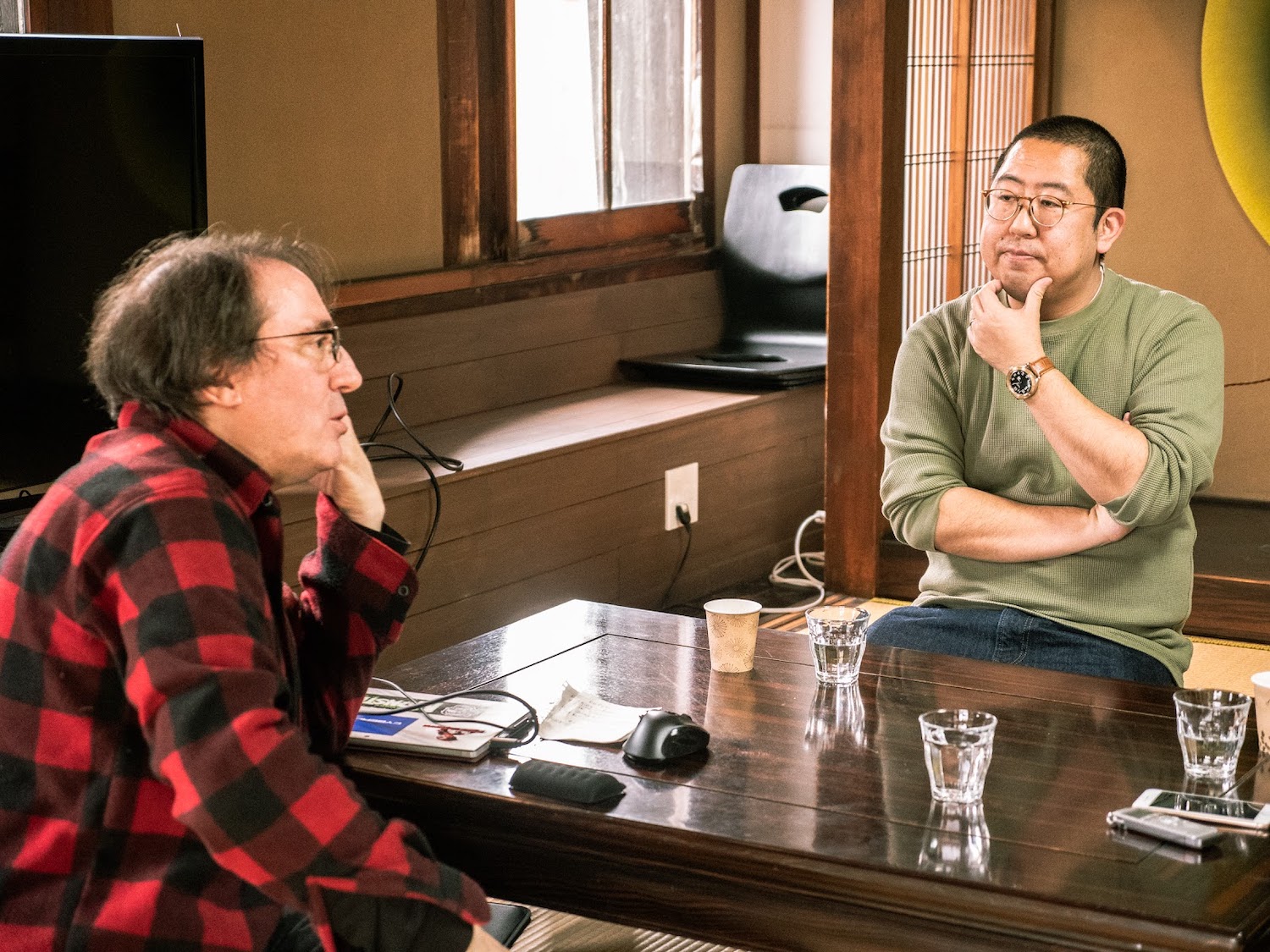
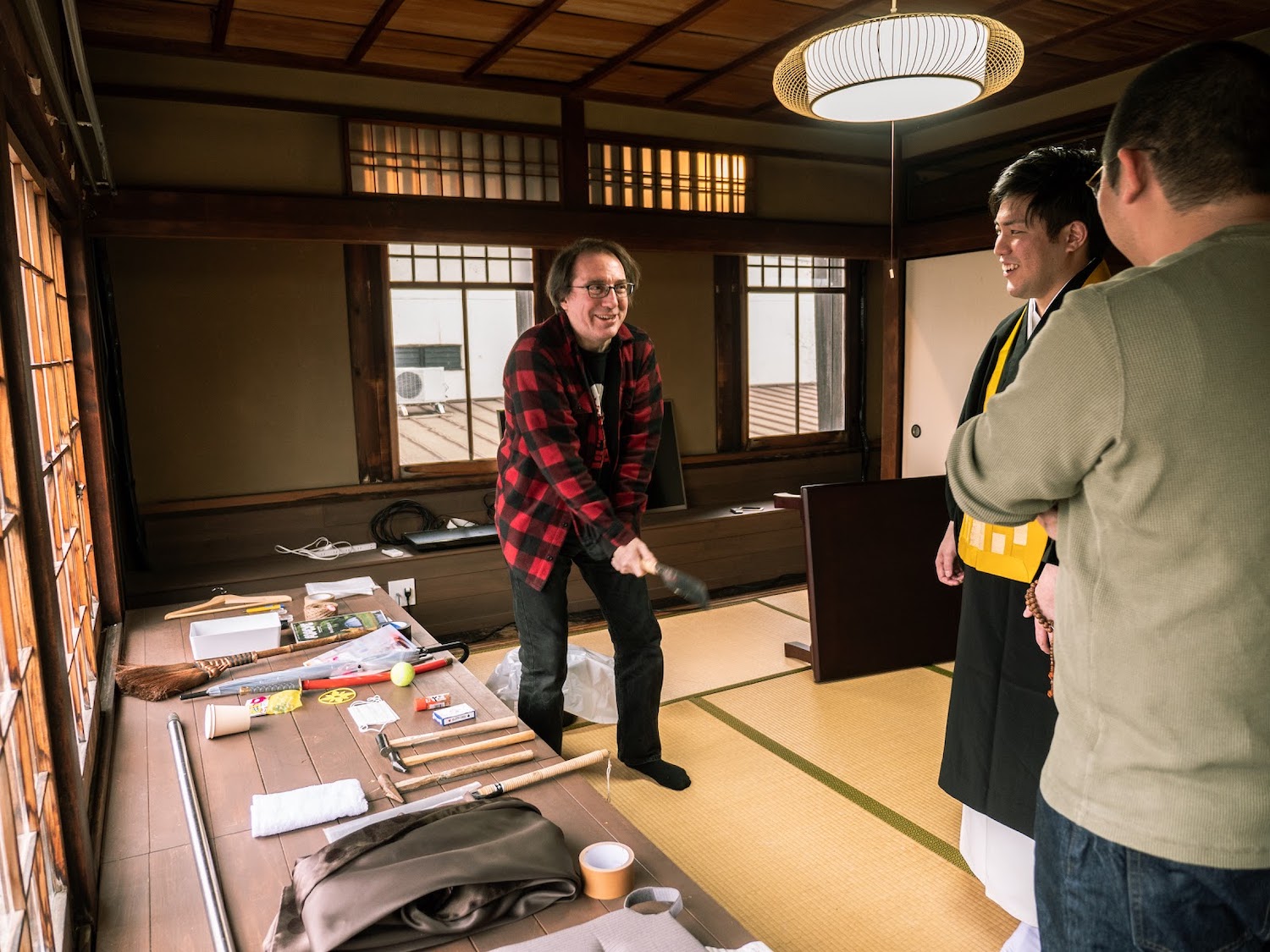
The two of them looked as if they were saying, "That will really strain your arms."
Okamoto: It depends on the situation, but first of all, it's best to avoid combat as much as possible. Since we don't know what kind of zombies the enemy has or how far the zombies have spread around the world, I think the first priority is to secure a safe place for now.
Inada: As expected from someone who has studied zombie movies, he is incredibly calm.
Norman: Once you've decided on a place to barricade yourself, the first thing you need to do is build a barricade to stop the zombies from getting in.
Inada: Hmm, how do you prepare barricades?
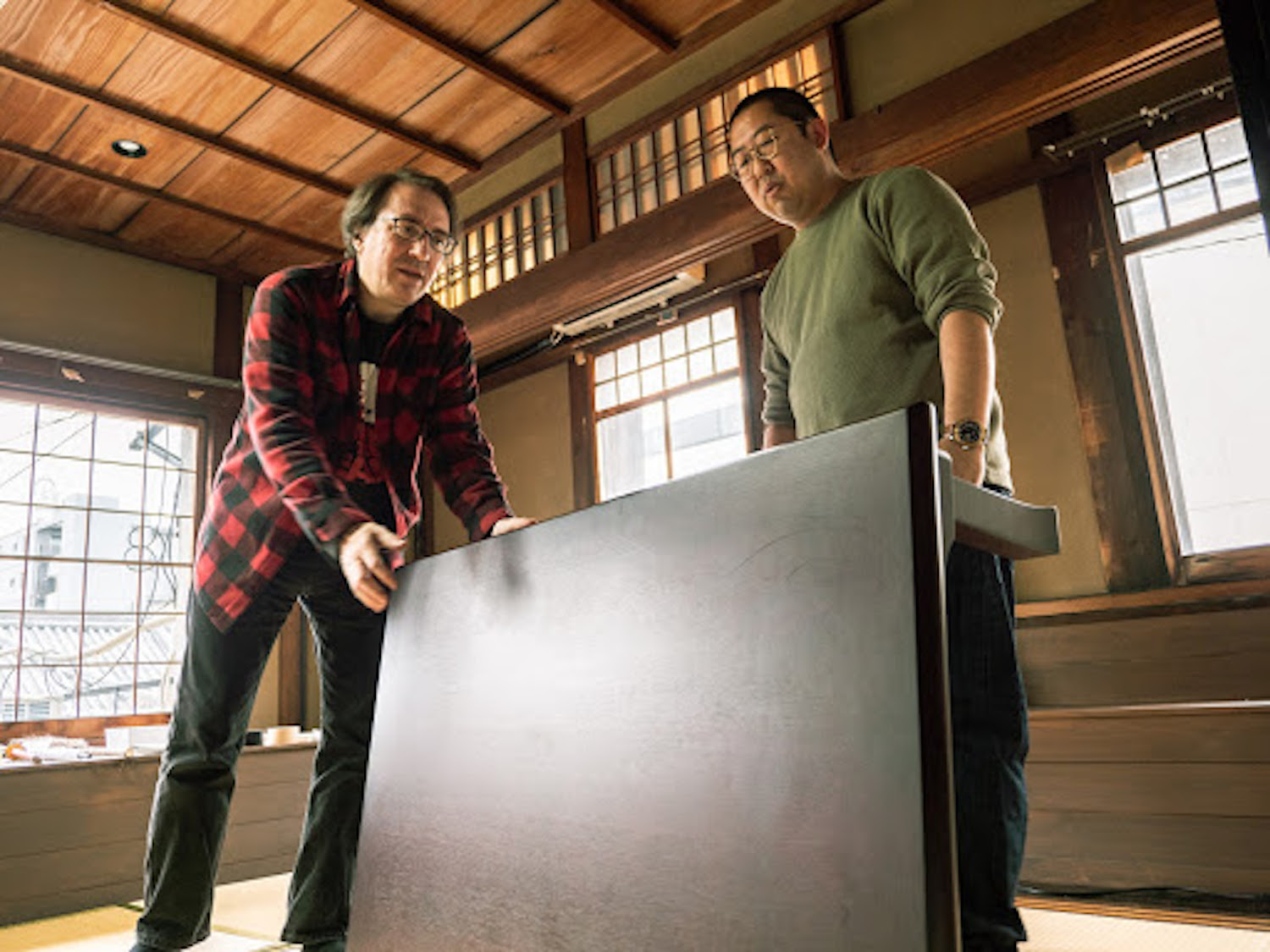
Naturally, the two of them flipped the table.
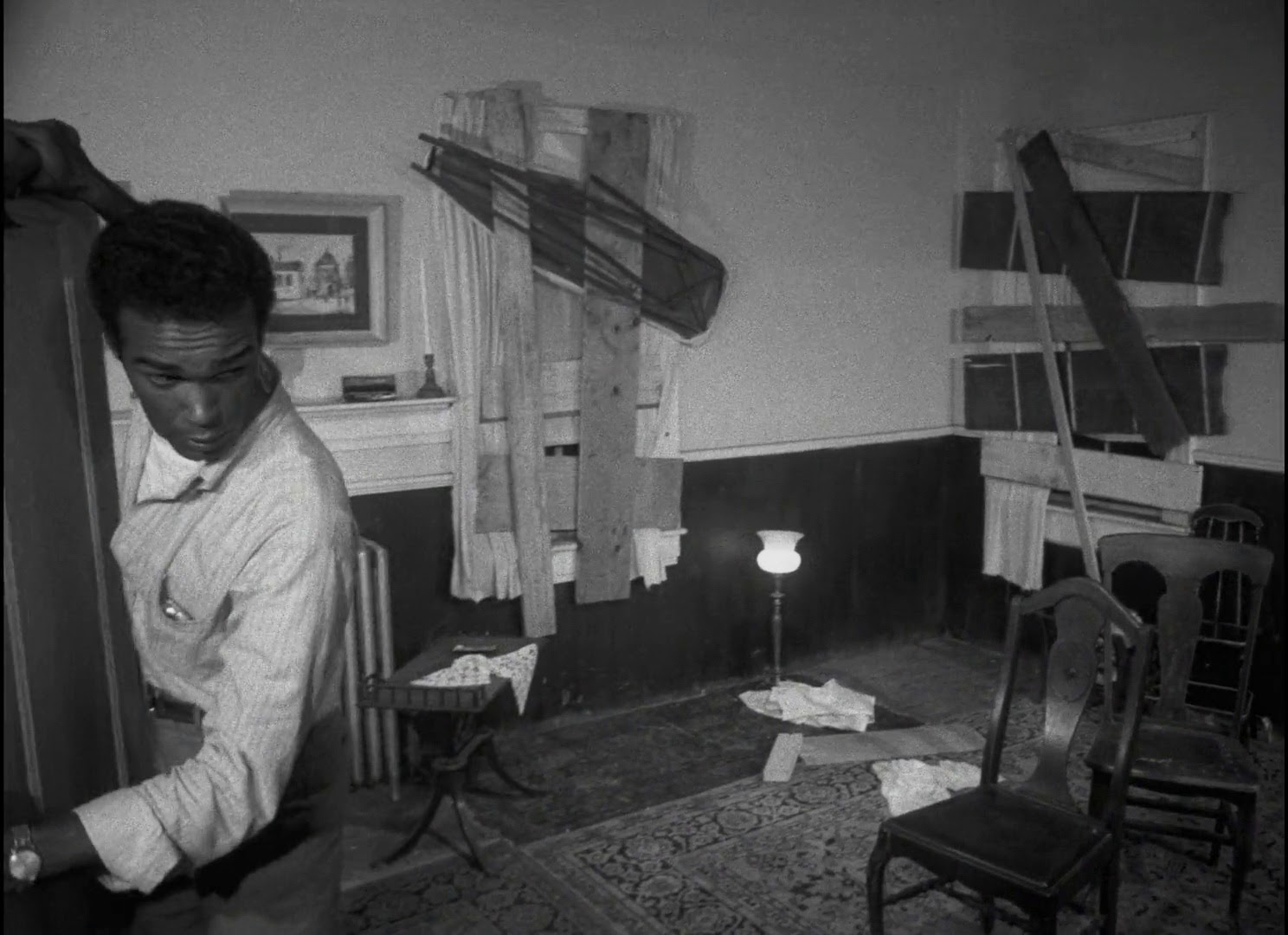
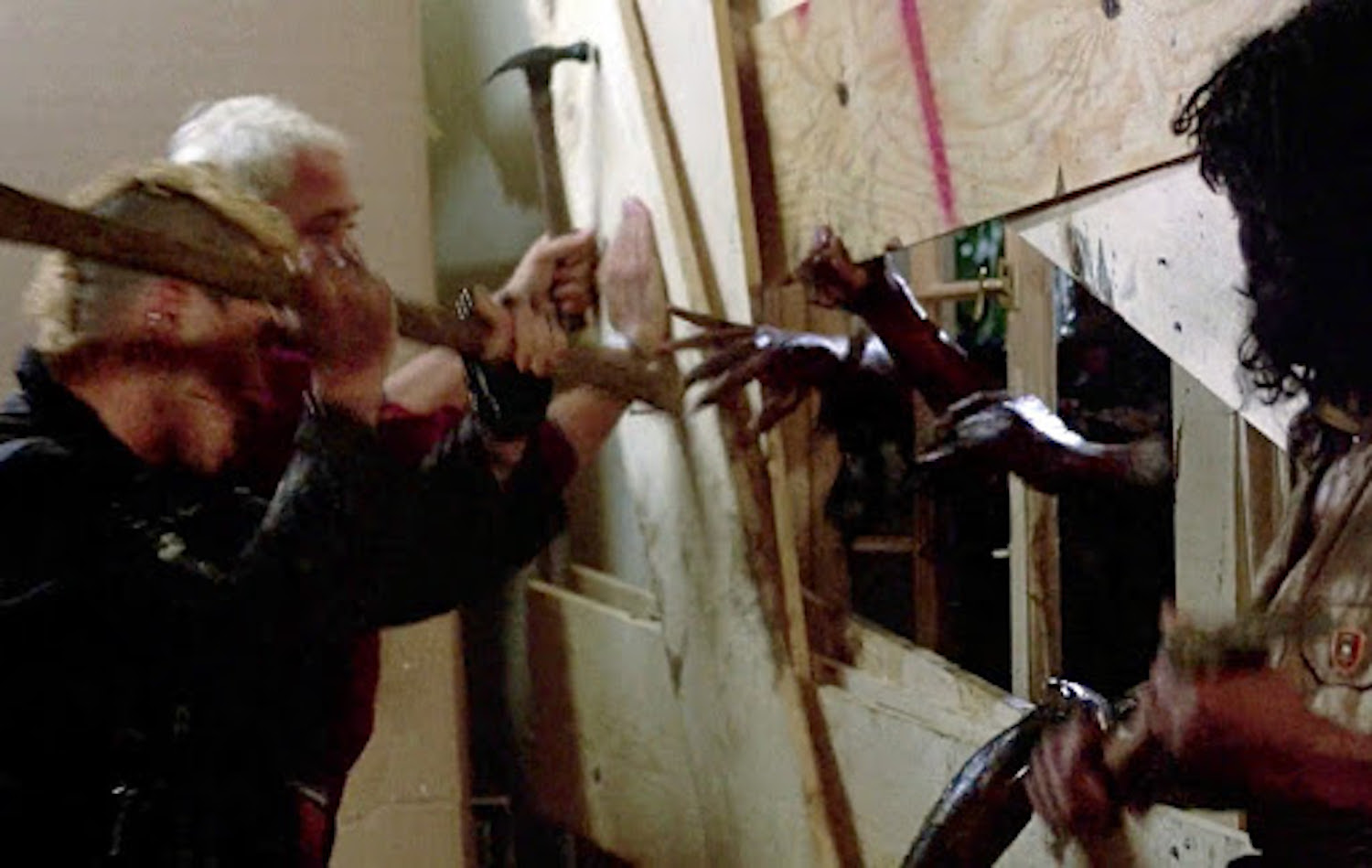
Norman: The basic idea is to turn the table over and drive nails into the doorway and windows. In any zombie movie, the barricade is always there. The point is to use whatever you have in your house to keep the zombies out.
Inada: To begin with, if the zombies were like this, they would walk around slowly and look weak, right? Is it really necessary to go to such lengths?
Norman: That's a good question. I love these slow zombies (laughs). In recent movies, zombies often move quickly, but all the zombies in Romero's work walk slowly. So, if you want to run away, you might be able to. But in the midst of all this fighting, we have to sleep, we have to go to the bathroom, and we have to secure a minimum standard of living somewhere, without even knowing the number or range of the enemies. When you notice an opening, they're silently closing in on you from behind... that's the great thing about Romero's zombie works.
Inada: I see. So combating zombies will be a long-term battle, so quick fixes are a no-no.
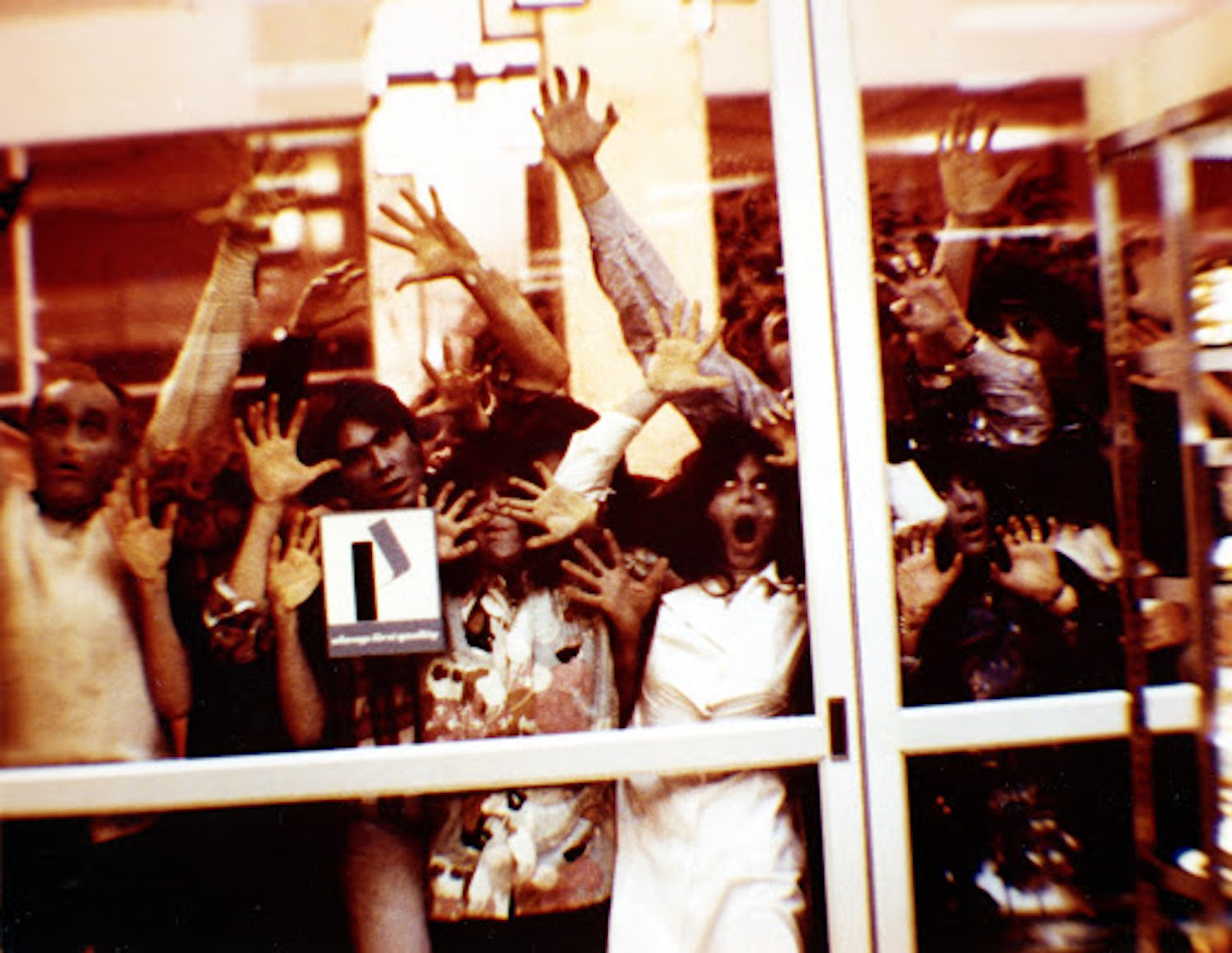
Okamoto: Also, although each individual one looks weak, the fact that zombies have human bodies is a big factor. I don't usually think about it much, but when they come in groups, they become quite heavy.
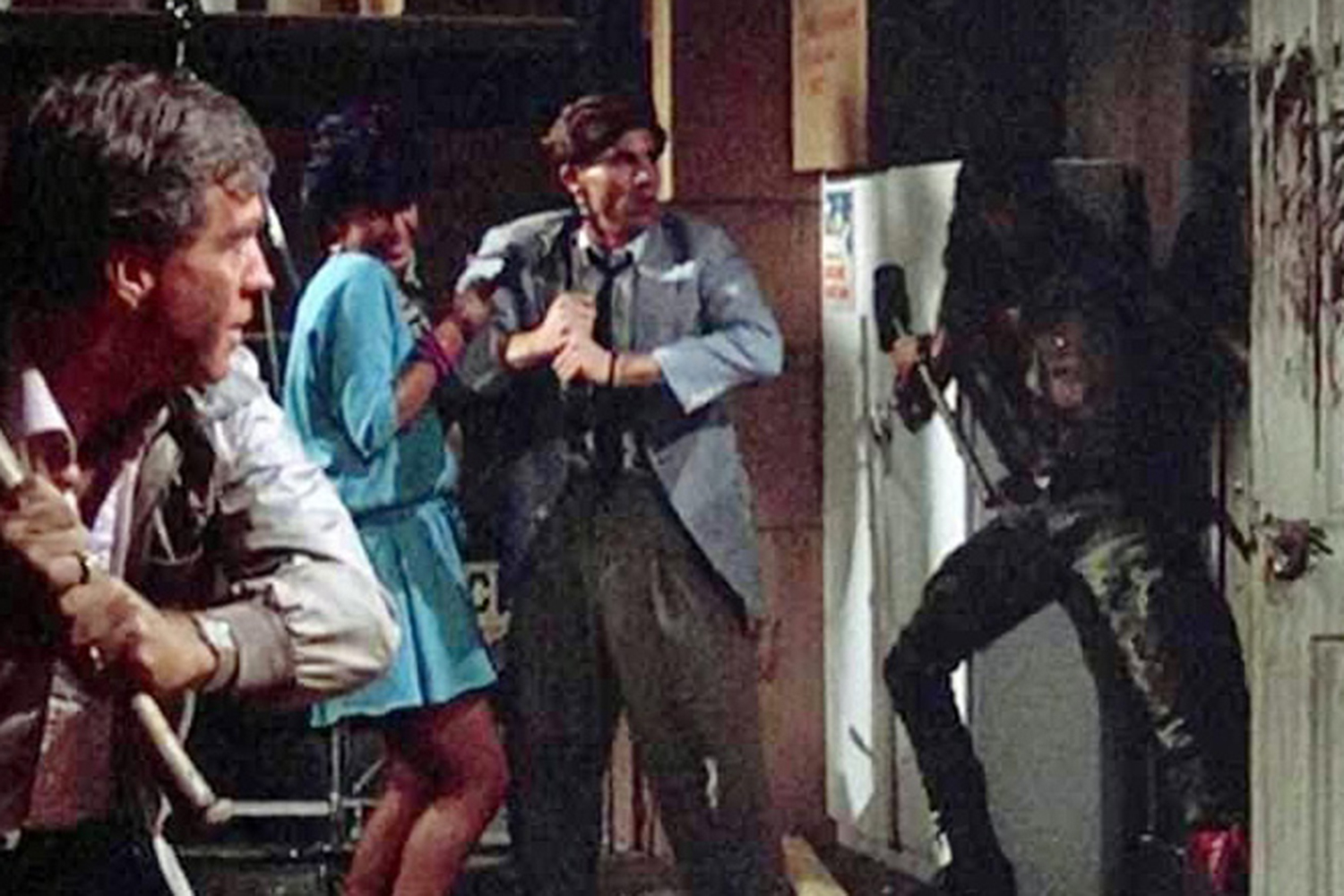
(C) The MKR Group Inc. Zombie
Inada: It's certainly frightening to think of a group of people swarming into one house. It really does feel like a disaster.
I'm starting to feel like doing a simulation of building a barricade using everyday items just in case.
Okamoto: Barricades can be substituted for various things other than tables. For example, in the zombie anime "School-Live!", which is set in a school, they stacked desks and tied them with string to make barricades.
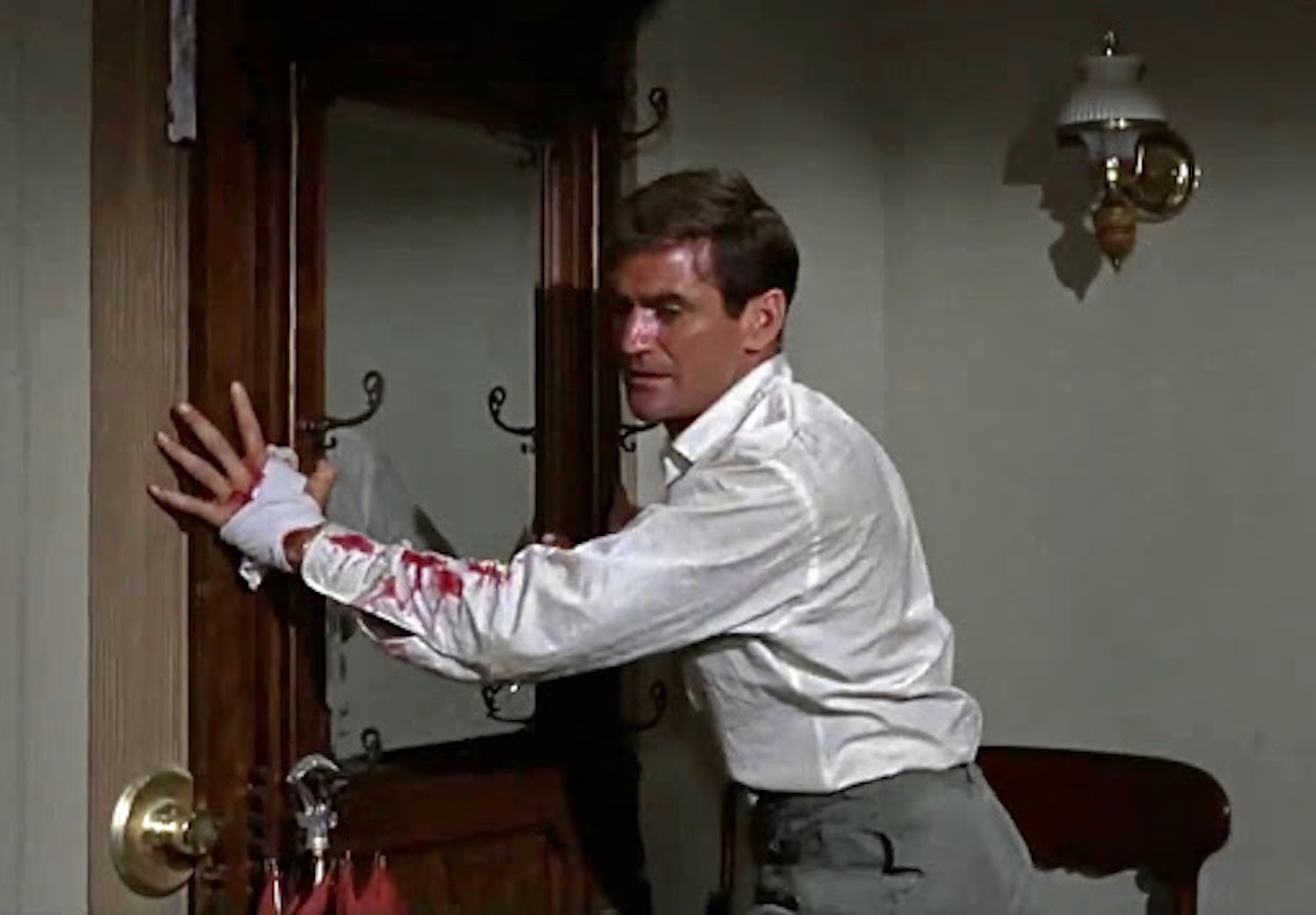
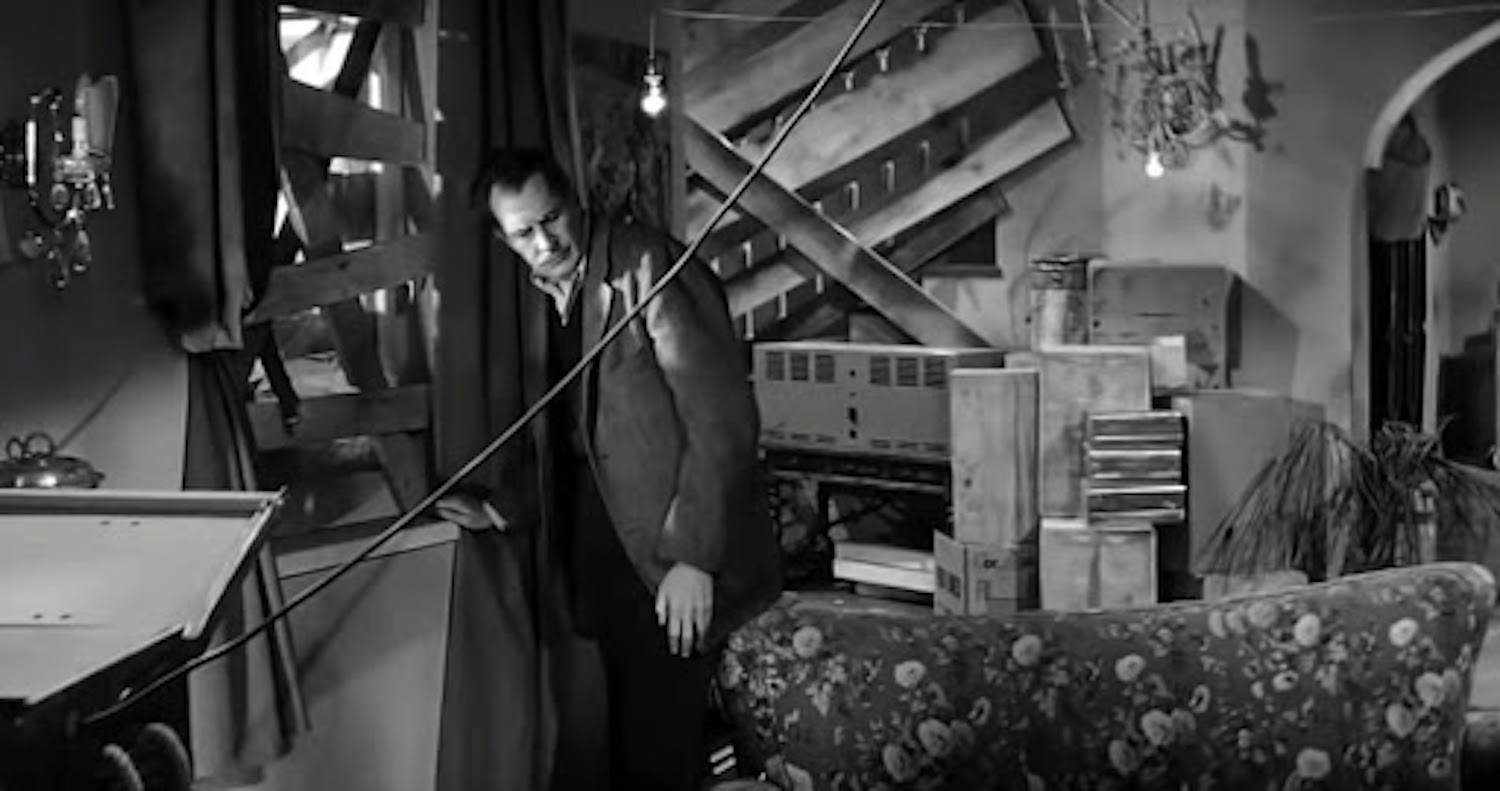
Norman: It's not a zombie movie, but in Hitchcock's film "The Birds," a large dressing table was placed at the entrance to prevent zombies from entering. There are a lot of cheap furniture these days that are light and easy to move, but if you buy good, heavy furniture just in case, it might be useful for zombie prevention (laughs).
Each individual person looks weak, but the fact that zombies have human bodies is a big deal. I don't usually think about it that much, but when they come in groups, they become quite heavy.
Okamoto
A minimum of DIY skills and kits you should have
Inada: I see. I understand that barricades are the basics. But to begin with, there may not be many households that keep hammers and nails on hand...
Norman: Is that so? Tools are definitely found in the average American household. American culture originally began when Europeans crossed the continent and started pioneering there. Perhaps that's why many Americans have hobbies that involve DIY and making things. In Japan, we have a culture of craftsmen, so perhaps that's why there aren't many tools in the home.
Okamoto: Zombie movies can be broadly divided into two types: "barrier" and "flee." Now that you mention it, it seems that in Japanese zombie movies the characters often don't decide to barricade themselves in a house, but rather flee.
Inada: I think you've gone too far in your analysis by starting from the statement that Japanese households don't have tools...
Okamoto: But we must be careful, because in a crisis, even the "society" that we have taken for granted up until now can collapse. In zombie movies, survivors are always divided into groups, and they are often forced to decide whether to cooperate with other groups, but in most cases, if they cooperate, they are deceived (laughs). That shows how desperate everyone is to survive. At the very least, it might be better to make the basic principle "protect your own life" yourselves.
Inada: So that you can protect your own life, it's good to have a minimum of DIY spirit and DIY kits on hand at all times.
My best recommendation is to live next to a 100 yen store or a home improvement store!
Norman
The "minimum culture" necessary to fight the long-term battle
Inada: So, let's say you've created a base to protect yourself from zombies. What should you do after that?
Shall we fight?
Okamoto: It might be best to wait until winter. Zombies are basically corpses, so the cold often makes their bodies stiffen and they can't move.
Norman: Yes, that's why it's good to escape to a cold region. Canada in the US, Hokkaido in Japan, etc. However, if you stay locked up in your house for a long period of time or stay alone without talking to anyone, your mental health will not last. That's why the key point in a zombie movie is how to create a "lifestyle."
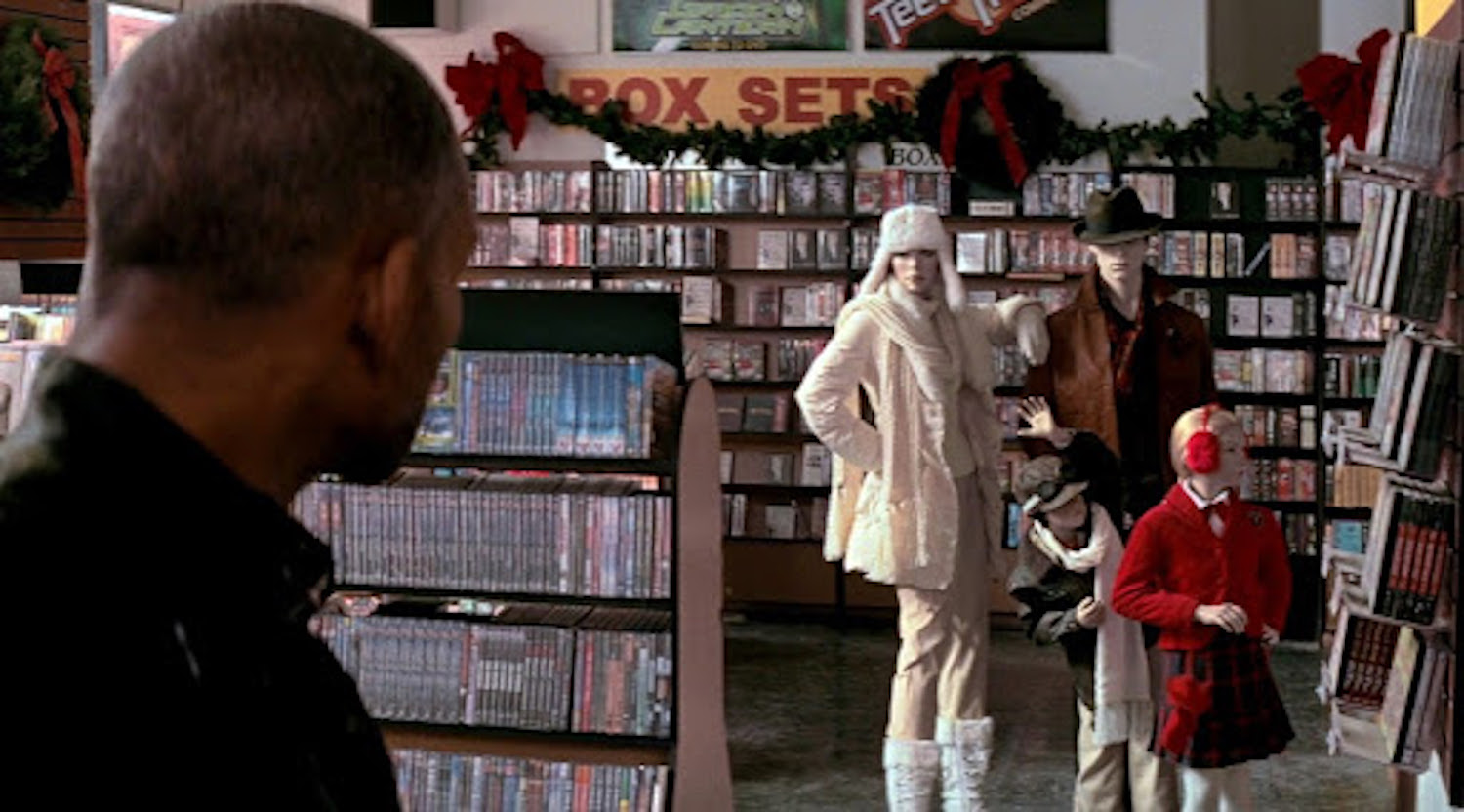
Norman: In the film "I Am Legend," the main character is the only human left on Earth. In this extreme situation, he puts mannequins in video rental stores and on the streets.
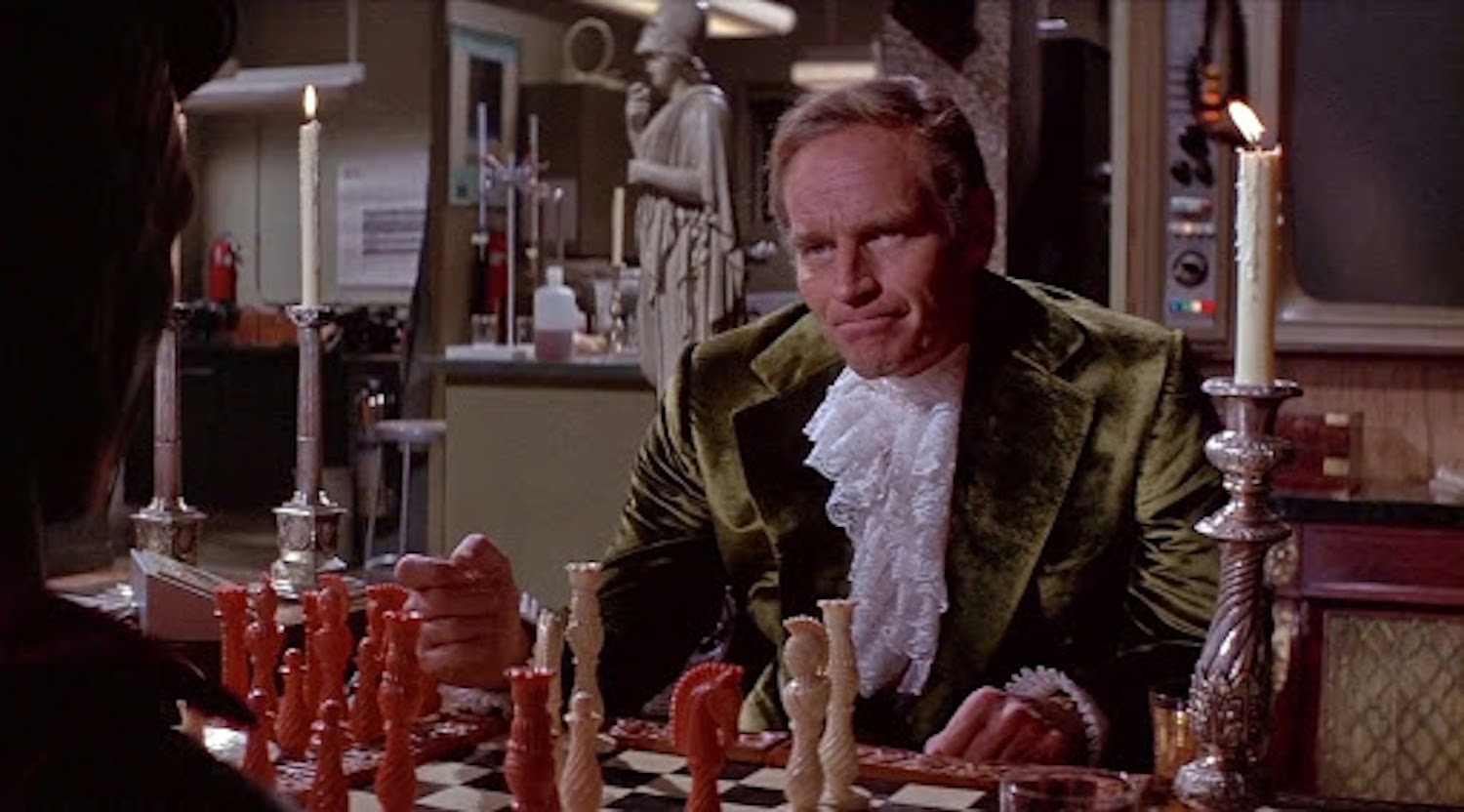
Norman: The Last Man on Earth is also based on the same novel, but the protagonist plays two roles, plays chess, and wears aristocratic clothes. It's a long-term battle, so you can't give up on your lifestyle.
Inada: I see. So it's precisely because this is an extraordinary world that they spare no effort in creating a sense of normalcy. They hold on to the bare minimum of culture; the same thing can be said about life.
Entertainment like playing cards is also important for a humane life
Okamoto: In a zombie world, information would be cut off and infrastructure would stop. So entertainment that doesn't require electricity, like board games or cards, would become a lifeline.
Norman: You can also create temporary toilets and other basic infrastructure for daily life. You can also turn the accumulated feces into fertilizer and use it for your vegetable garden.
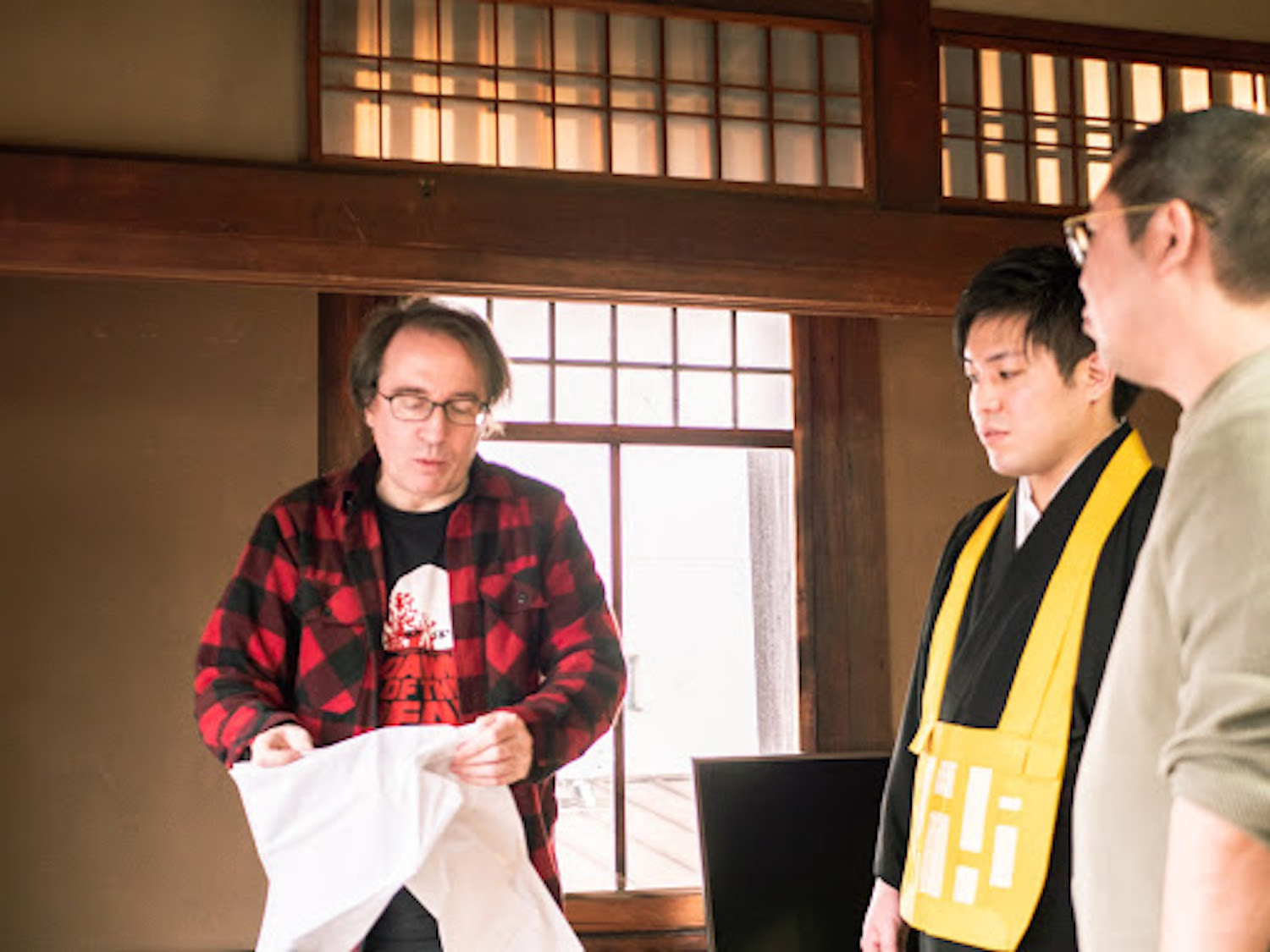
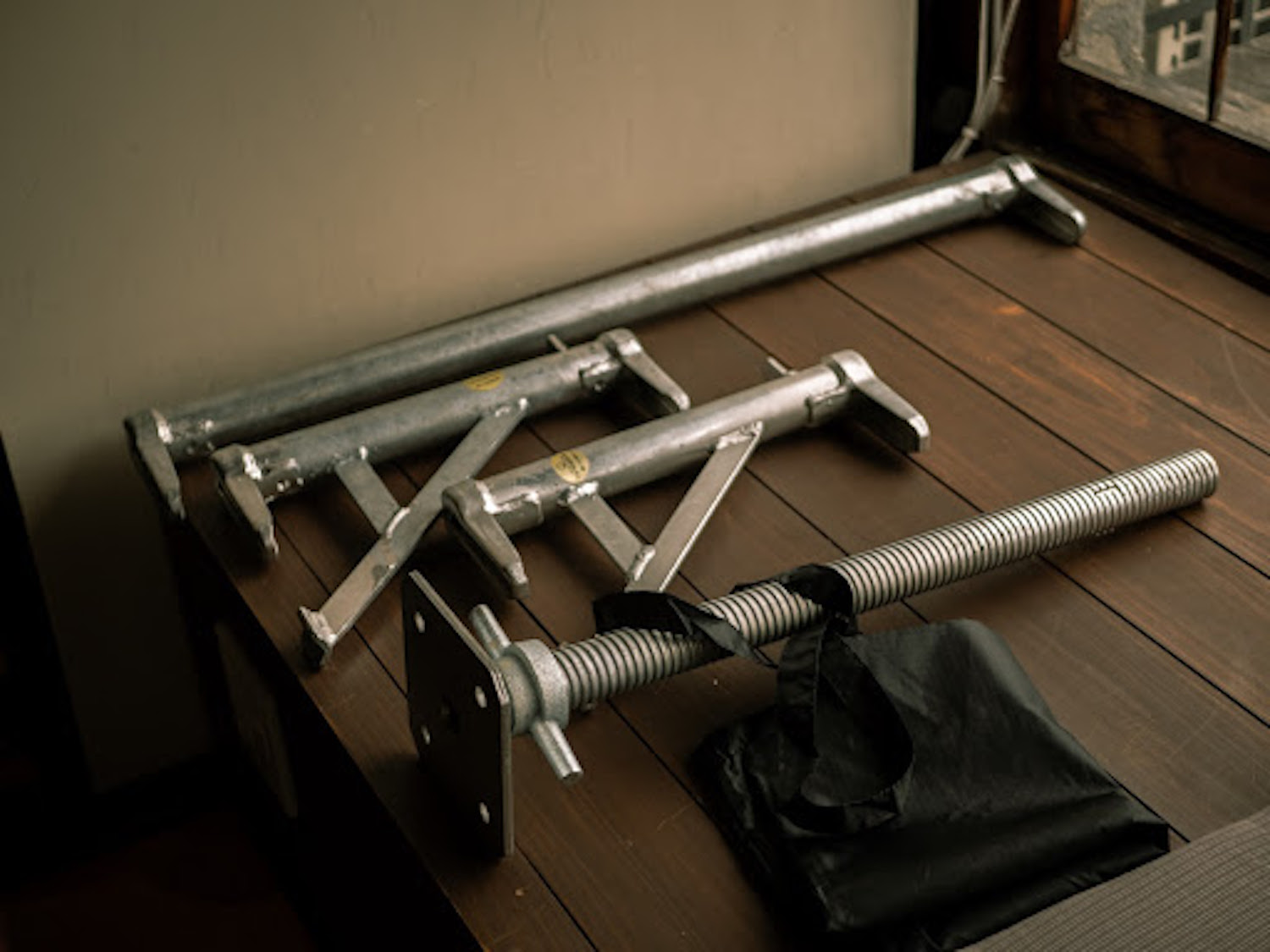
Okamoto: When you go outside, you see these construction scaffolding. If you put a cloth on it, it can be used as a camouflage curtain to hide from zombies.
Inada: It's amazing how ideas just come in droves like a fountain!
This is a long-term battle, so you must never give up on your lifestyle.
Norman
Everything around you can become a weapon to protect yourself.
Okamoto: If you stay in your castle forever, your food will run out and you will start to feel depressed. So it's a good idea to go outside when the zombies start to get weaker. In that sense, Japan has high humidity, so it's a good condition for zombies to decay quickly. Well, there are hardly any corpses in the first place because of the cremation culture (laughs).
Inada: So the battle finally begins! What should I do when fighting zombies?
Okamoto: The only rule is that if you get bitten, the game is over, so it's best to attack from as far away as possible. That said, Japan is not a gun-loving society, so there aren't many long-range weapons, so this is where creativity is tested.
Norman: In Japan, I think Kyudo is good. If you have someone who can do Kyudo, you're pretty strong.
Inada: There aren't many people who can do Kyudo! Or rather, most households don't have bows!
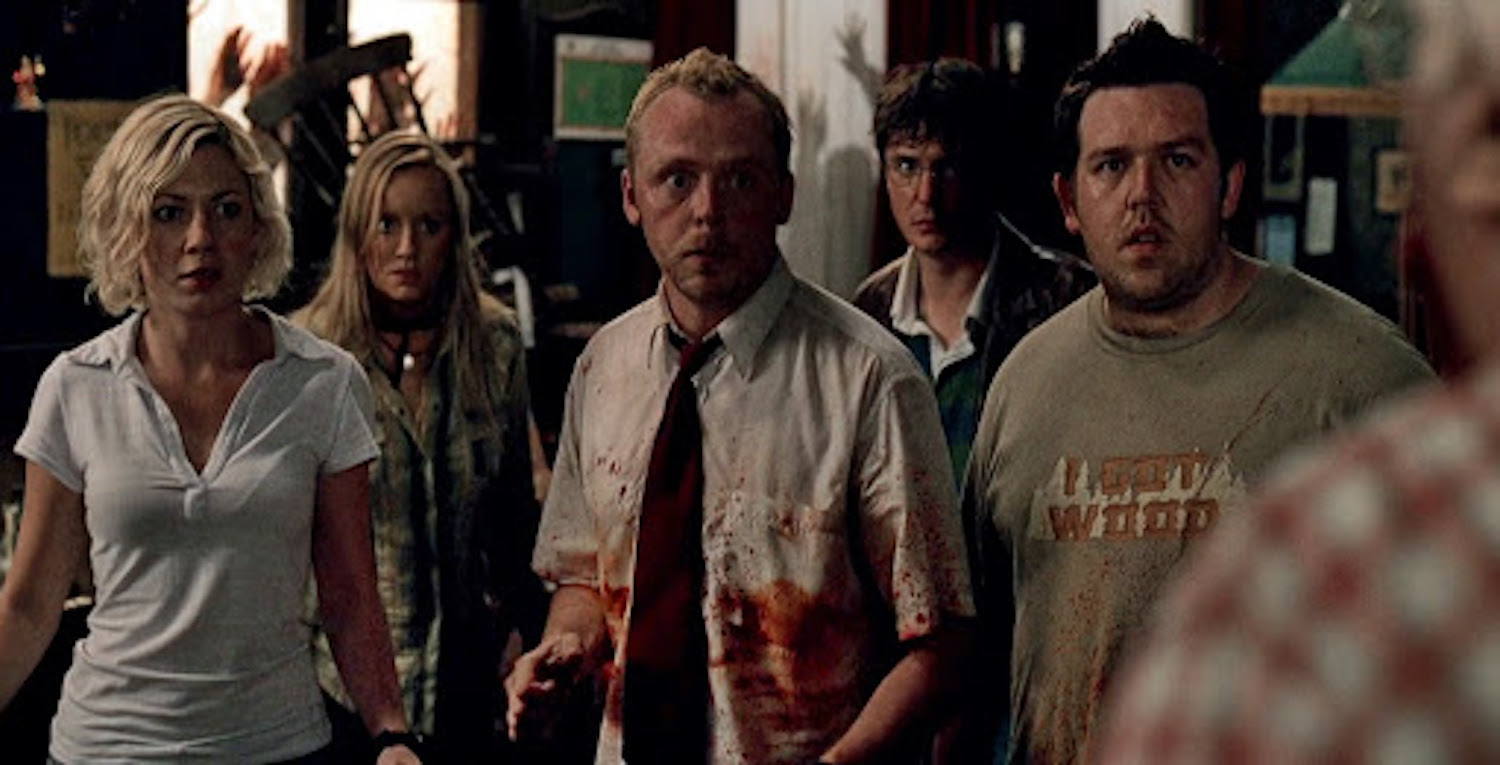
Norman: Really? For example, it's quite a comedy, but in the movie "Shaun of the Dead," he attacks the zombies by throwing records at them. It's one of my favorite scenes, because he hesitates to throw the record because it's a good one (laughs).
Okamoto: In the manga I've been hooked on recently, "100 Things to Do Before You Become a Zombie," they use a strategy of dragging a magazine on the ground to make the zombies slide. The best place to hit a zombie is at their feet.
Inada: Are zombies unsteady on their feet? (laughs)
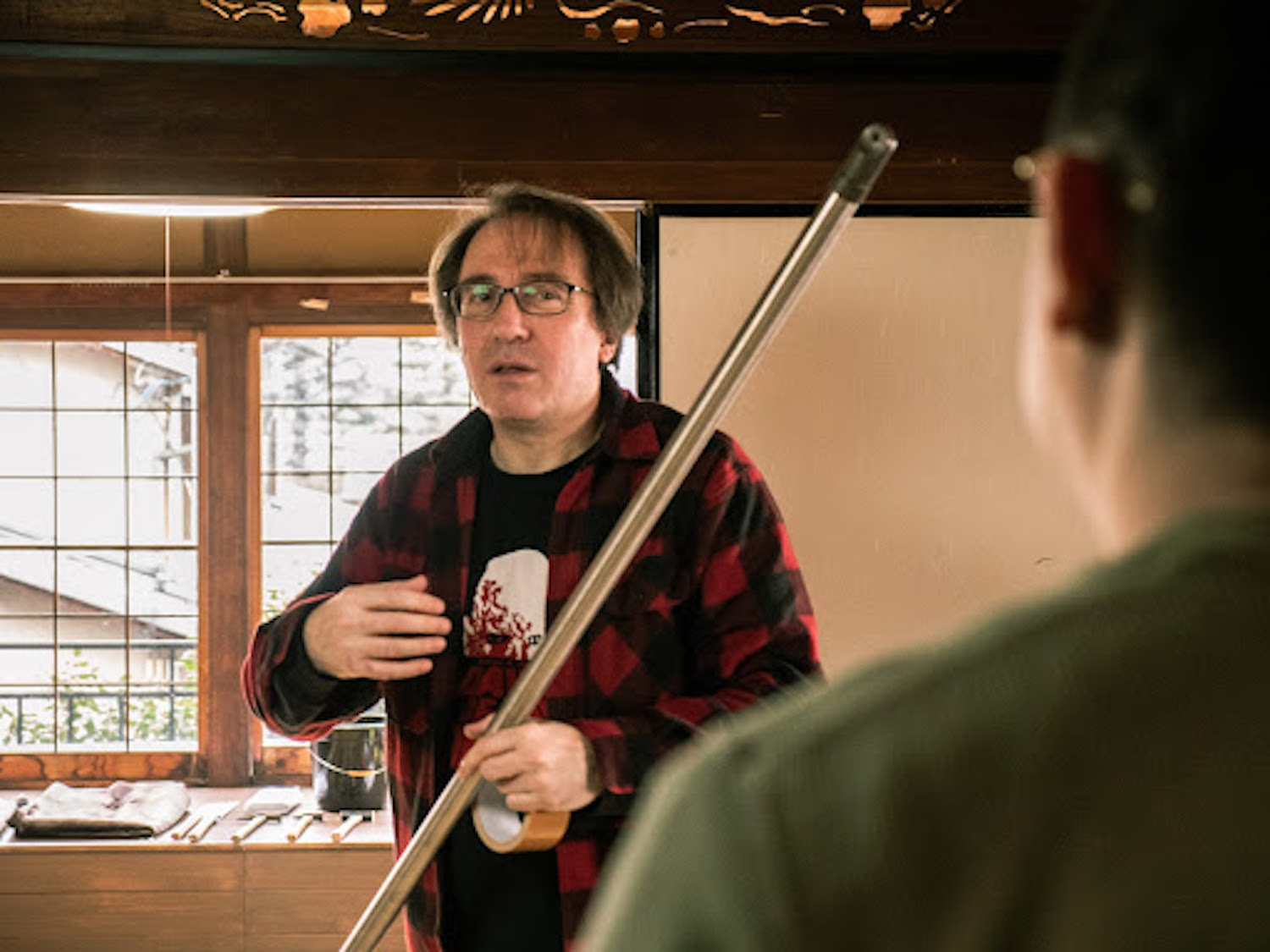
Norman: I definitely recommend this as a mid-range weapon. They don't exist in the US, but most Japanese households have a clothesline, right? I would wrap a knife on the end of this with duct tape and make my own original zombie killer.
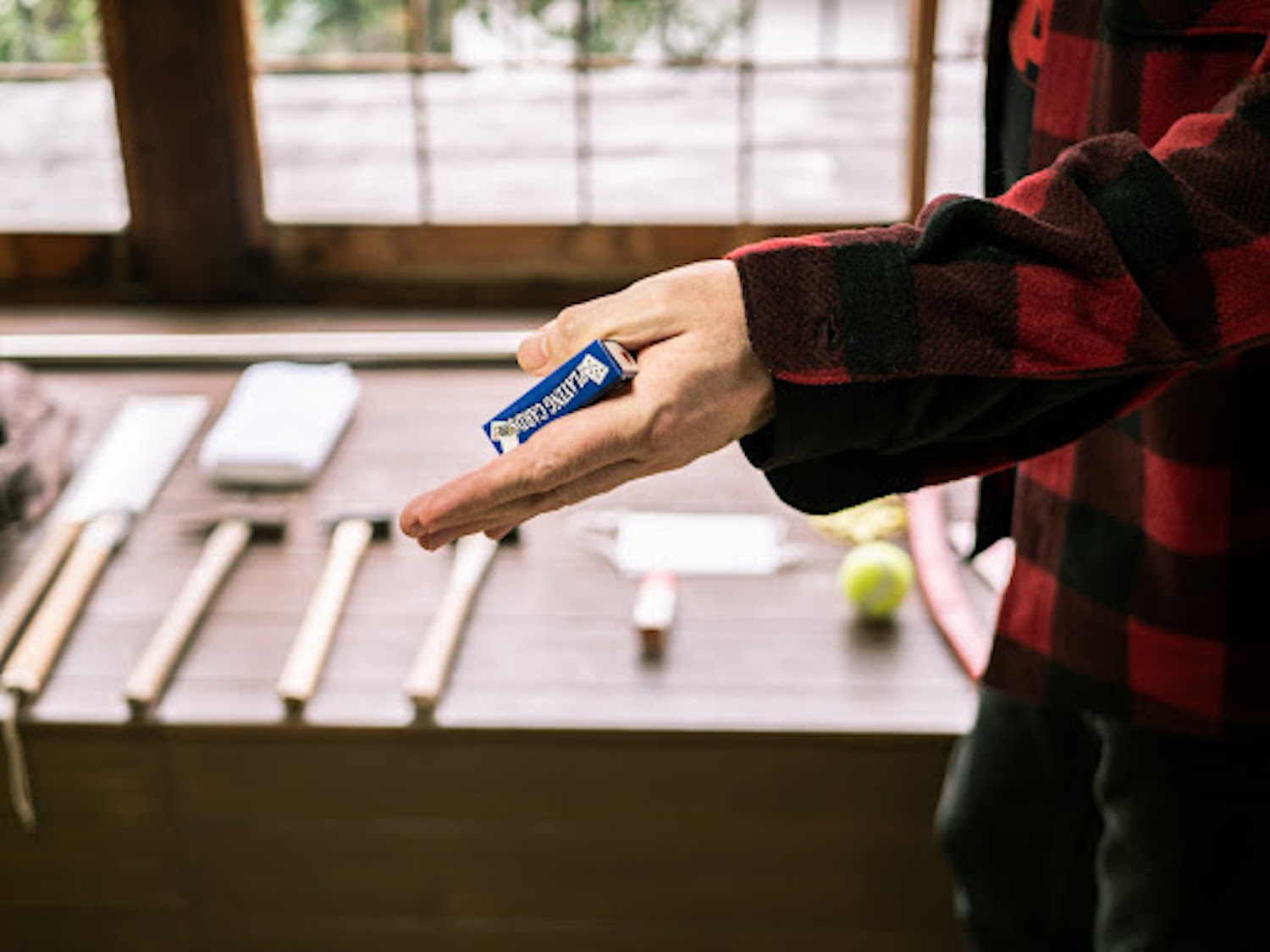
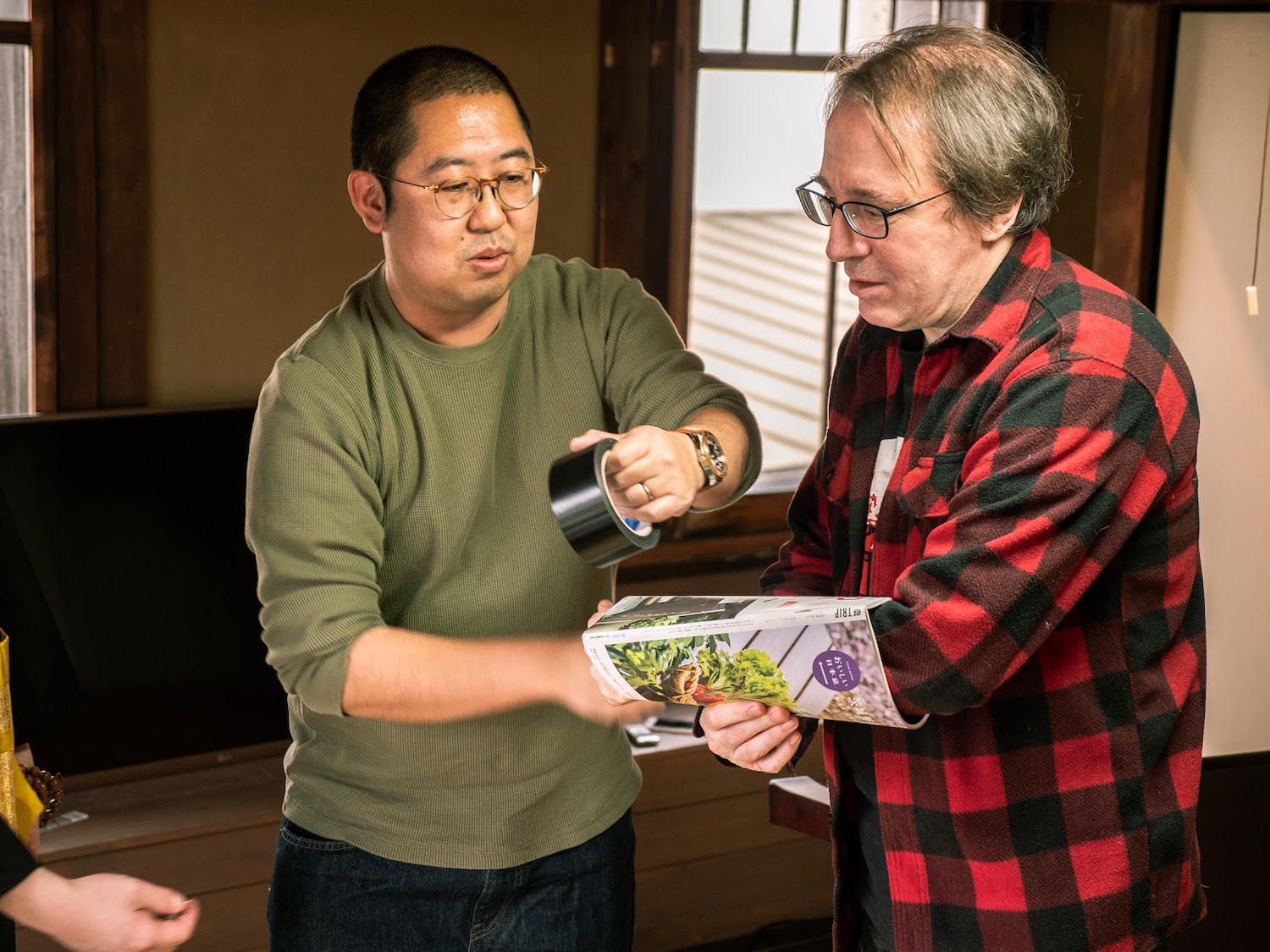
Okamoto: Duct tape has many applications. It can be used to close the mouths of zombies, and in the movie "World War Z," people wrapped magazines around their arms to protect themselves from being bitten. It seems like it could be used in place of duct tape. Duct tape and string can be used for a variety of things, so it's good to have as much as you can.
Inada: Duct tape can be used as both a spear and a shield... In an emergency, I'll just gather up all the duct tape from around the house.
Okamoto: Also, they often come in groups, so it's best to use something that can attack over an area, not just a single point. For example, a dragonfly that flattens the ground can be used to push back zombies.
Norman: In Japan, tatami mats are great! They turn over and make a pretty strong wall!
Inada: Tatami mats? I had never thought of that!
Preparing for a "crisis" through zombie movies
Their conversation gave us a perspective that we don't see in our everyday lives, such as how to act in crisis situations and how to use everyday items to make quick decisions (although it did make us a little more zombie-feverish).
Have a basic DIY mindset and a DIY kit
Buy sturdy furniture in case of emergency
Live near a home improvement center or a 100 yen shop
You can never have too much duct tape
Staying calm and creating a humane lifestyle even in times of crisis
These are essential points that can be applied not only to zombies, but also to disasters and sudden dangers.
Japan is a country where disasters are never-ending. No one can predict when a crisis will suddenly occur. When you see a clothesline, you think, "This could be useful in an emergency..." When you buy a table, you think, "This table can't be used as a barricade because the legs can't be removed..." No one knows when an emergency will actually come, but it's better to be prepared.
Learning to have a basic DIY mindset and the habit of simulating through zombie movies on a daily basis is surely the first step to protecting your own life. Zombie movies can be said to be the most familiar "textbook on how to protect yourself from sudden danger."
"POP UP SOCIETY" is an irregularly published magazine that ASNOVA ran from March 2020 to March 2022 with the aim of getting the general public interested in the industry and contributing to the mid-to-long term shortage of young talent in the temporary construction industry. It introduces unique and experimental initiatives from Japan and abroad through interviews with people and companies, experience reports, and more, focusing on temporary construction.